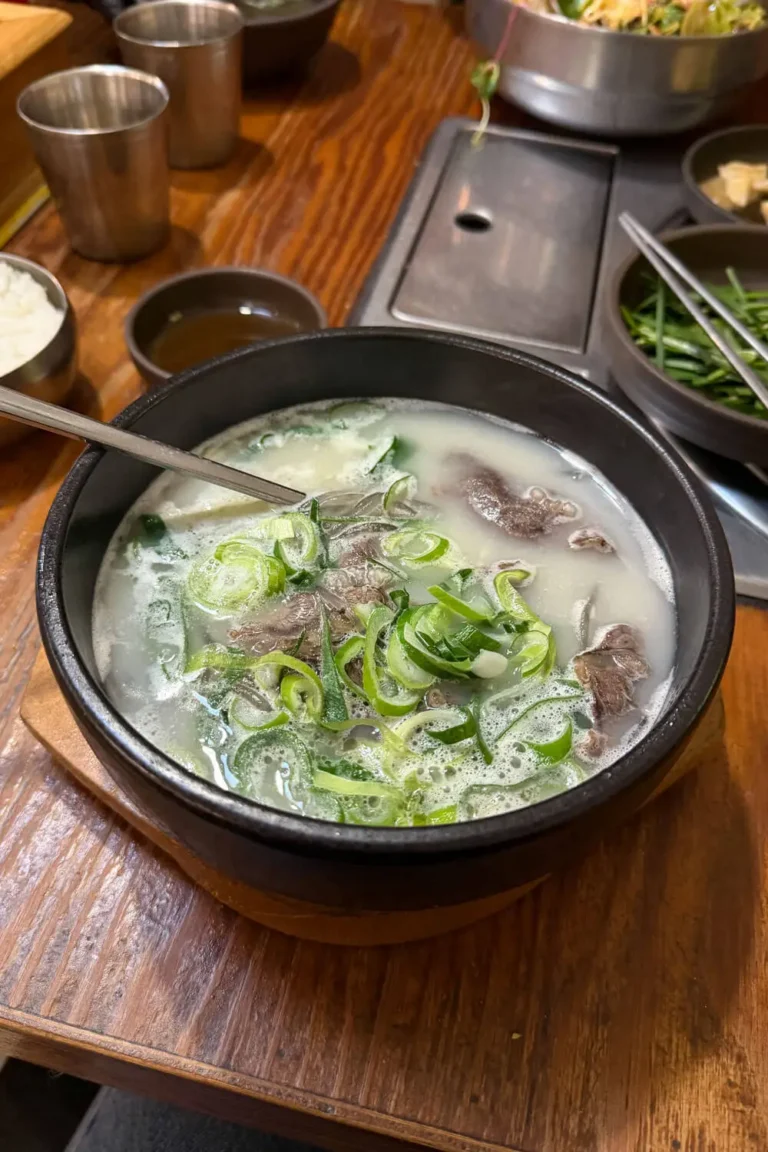

If you’re a foodie visiting Nara, I’m sure you’ll want to try as many traditional Japanese foods as possible. As a food-lover myself, however, I was not satisfied with only trying cute snacks – I wanted to create a food guide with foods that actually originated in Nara!
So, I’ve compiled this food guide with 9 of the best foods from Nara that you must try during your Japan trip – and where to eat them.

What food is Nara famous for?
As Japan’s first permanent capital, Nara boasts a regional cuisine rooted in its ancient fermentation culture and seasonal farming, which set the foundations for modern Japanese cuisine.
Due to Nara’s privileged position at the end point of the Silk Road, the exchanges with neighbouring countries like China and Korea allowed external influences to reflect in Japan’s gastronomy.
For example, Yamato tea is considered to be the origin of Japanese tea, after tea seeds were brought from China in 806 and planted in Uda city, in Nara Prefecture. Chinese influence also contributed to the development of Japanese sake production in Nara.
Out of the local fruits and vegetables available, persimmons, strawberries, rice, and Yamato vegetables are some of Nara’s most prized crops.
Best Food Tours and Experiences in Nara
*Use my code “JESSVKLOOK” for 10% off your first purchase, or 3% off for existing customers
Klook.comBest Food in Nara: 9 Local Foods to Try
1. Chagayu (Rice and tea porridge)

Chagayu (茶粥) is a tea and rice porridge originally from Nara, dating back over 1,200 years!
We know that tea seeds were brought to Nara from China in 806, but rice porridges are very common throughout Asia – so the roots of the dish might be even more ancient.
Nara’s chagayu is a very simple and cosy dish, made by cooking rice with tea (normally hōjicha, but it can be made with any Japanese tea). Chagayu differs from ochazuke in that the rice is cooked with the tea, instead of the tea being poured over pre-cooked rice.

Where to eat it
Chagayu is a popular dish eaten in the morning, so you may find it served at hotels for breakfast. However, it is also commonly served at local restaurants.
I ate the cosy bowl pictured above at Kasuga Ninai-jyaya, a small restaurant serving regional food in Nara’s Deer Park. I’d advise going early, because when I visited after 1 PM, many dishes were already sold out.
Eating chagayu is also a core part of the Shuni-e ceremony, a traditional Buddhist festival held in March at the famous Tōdai-ji Temple.
2. Kakinohazushi (Persimmon leaf sushi)


Persimmon leaf sushi (kakinohazushi, 柿の葉寿司) is a special kind of leaf-wrapped sushi from Nara.
The classic version involves pressing salted mackerel over vinegared rice, and then wrapping it in a persimmon leaf. I love how the fragrance of the persimmon leaf transpires onto the sushi piece, adding to its flavour. Nowadays, you can also find variations made with salmon and other kinds of fish.
Much like many kinds of sushi in Japan, kakinohazushi originated out of necessity during the Edo period (1603–1867), when fish needed to be preserved before refrigeration technology.
Because Nara Prefecture is landlocked, mackerel needed to be salted for transport from the coast. Persimmons are common in Nara, and persimmon leaves have antibacterial properties, which helped preserve the fish along with the vinegar rice.
Where to drink it
You can find kakinohazushi for sale in many shops around Nara. I got a lovely variety box with different kinds of fish pieces from Kakinohasushi Hompo Tanaka, right at the start of Higashimuki Shopping Street.
3. Kuzumochi
Kuzumochi (葛餅) is a Japanese confectionery with a jelly-like consistency and milky-white colour, usually eaten during the summer.
This sweet snack is made with kudzu root starch (kuzuko), water, and sugar, and served chilled with roasted soybean flour (kinako) and black sugar syrup (kuromitsu).
The name “kudzu” is believed to be linked to the Kuzubito people, who lived in the Yoshino region of Nara Prefecture, and who produced kudzu powder. We don’t know exactly when kuzumochi was first invented, but it is said to be an ancient regional specialty in Nara.
More recently, during the Edo period (1603–1867), a variant of kuzumochi made with wheat flour (久寿餅) also gained popularity in Tokyo.
Where to eat it
You can find kuzumochi in specialty stores and local sweet shops in Nara. One of the most popular places to sit down and try kuzumochi is at Sakura Café.
4. Narazuke


Nara’s ancient fermentation culture is still very much part of the local gastronomy, and you can experience it by trying narazuke.
Narazuke (奈良漬) are traditional pickles from Nara, made from fresh fruit or vegetables preserved in salt, rice vinegar, and sake lees (a byproduct of sake brewing). This process not only extends the produce’s shelf-life, but it also intensifies and enriches its flavour.
The first written records about the origin of narazuke date back to the 8th century, when Nara was the capital of Japan. The use of sake lees in the fermentation process emerged with the refinement of Japanese sake production around the 15th century, and soon, Nara’s sake-rich pickles became popular throughout Japan.
Where to eat it
Narazuke are usually enjoyed as a side dish, as part of restaurant set meals. Some restaurants serving local set meals include Ashibiya Hompo, and Kasuga Ninai-jyaya, in Nara’s Deer Park (where I tried narazuke for the first time).
You can also buy narazuke from several souvenir shops in Higashimuki Shopping Street or at Yumekaze Plaza, near Tōdai-ji Temple.
5. Manju


Manjū (まんじゅう) is a type of wagashi (Japanese sweet) that is now popular all over Japan, but which is said to have originated in Nara in the 14th century, after being introduced by a Chinese monk called Lin Jingyin.
Originally an adaptation of the Chinese mantou, these buns used to be a savoury food. After Lin Jingyin’s introduction, the steamed, dense buns made with flour and filled with sweet bean paste (anko) that we know as manjū today, were born.
Where to eat it
You can find manjū for sale at most souvenir shops and specialty sweet stores in Nara. I bought mine from Honke Kikuya, but Nakanishi Yosaburo, Shiratama-ya Eiju, and Kashiya also sell them.
Rin-jinja Shrine (also known as Hayashi Shrine) in Nara is Japan’s only “manjū shrine”, dedicated to Lin Jingyin. Every year, on April 19, the shrine hosts the Manjū Festival, with traditional ceremonies where tea and manjū are served. Make sure to visit if you’re in Nara during this time!
6. Miwa Somen
Miwa Somen (三輪素麺) are extremely thin hand-pulled noodles, made from simple ingredients: wheat flour, water, and salt.
The texture of somen noodles is firm and smooth, and they are usually served chilled during the summer. In winter, the noodles are served as a hot dish with a warm broth soup and called nyumen.
The origin of Miwa Somen goes back 1,200 years in the Miwa district of Sakurai City, Nara Prefecture. During the Edo Period, Miwa was a common rest stop for pilgrims on the way to Ise Shrine, who would buy the noodles to bring with them. This helped spread the word about Miwa Somen, and turned the noodles into one of Japan’s representative traditional foods.
Where to eat it
To eat Miwa Somen at its birthplace, the best way is to have them in Sakurai City, at restaurants around the sacred Omiwa Shrine.
If you’re only visiting Nara City, you can try Miwa Somen at specialised noodle restaurants like Somen-Dokoro Surusuru.
7. Yomogi mochi (Japanese mugwort mochi)


Yomogi mochi (蓬餅, Japanese mugwort mochi) or kusa mochi (草餅, grass mochi) is a rice cake, distinguished by its vibrant green colour. The outside is chewy and earthy (maybe even a little grassy), while the inside is sweet.
It’s made by kneading Japanese mugwort into glutinous rice mochi, filling it with sweet red bean paste, and dusting it with kinako (roasted soybean flour). Although the one I tried kept some whole beans in the filling, it can also be filled with a smooth paste.
Mugwort mochi was introduced to Japan from China, with evidence of its presence in the country during the Heian period (794–1185). Prior to this, it used to be made using a plant called Jersey cudweed.
Where to eat it
The Mochi-pounding demonstrations at Nakatanidou are an unskippable item in every Nara itinerary. The store has been open for over 30 years, and you can see the Mochi-making process live, which is very cool.
The mochi here is affordable, but I will admit that the purchase process is not the most relaxing. Expect long queues and a very fast-paced service, as the workers try their best to serve everyone. They do Mochi-pounding demonstrations several times a day, and the times are usually announced outside the shop.
8. Yamato vegetables

Yamato vegetables (大和野菜, Yamato yasai) are grown locally in Nara Prefecture, and they are recognised for their high quality and nutrient density, with a rich flavour and sometimes unique shapes.
Currently, there are 19 varieties of vegetables certified as traditional Yamato vegetables. These include Yamato-mana (a leafy green), Yamato Maru Nasu (a round eggplant), and Katahira Akane (a red turnip).
Where to eat them
Yamato vegetables are used to make Nara’s famous Narazuke pickles, served as a side dish in local restaurants, and sold at local markets and shops.
I had Yamato vegetables as part of my set meal at Kasuga Ninai-jyaya, a small restaurant serving regional food in Nara’s Deer Park.
9. Warabimochi
Warabimochi (蕨餅) is one of the most popular Japanese sweets (wagashi) in the Kansai region, especially in the summertime due to its cool, soft, and chewy jelly-like texture.
While similar to kuzumochi, warabimochi differs in that it’s made with warabiko (bracken starch) instead of kudzu root starch. However, warabimochi is also usually served dusted with roasted soybean flour (kinako) and black sugar syrup (kuromitsu).
The origins of warabimochi date back to the Heian period (794-1185), when it was a popular aristocratic delicacy, and one of Emperor Daigo’s favourite treats. Later, during the Edo Period (1603-1868), warabimochi became more widespread as it was served during traditional Japanese tea ceremonies.
Where to eat it
You can try warabimochi in Nara at tea houses like Ryubido right outside Tōdai-ji Temple, or Senjuan Yoshimune.
Final thoughts
I hope this local Nara food guide with the best traditional foods and where to eat them is helpful for your upcoming trip. There are many more typical Japanese dishes that you can discover in the city, but this list is a good start.
If you have questions about any part of this post, feel free to reach out in the comments below!
Check out my Japan guides:
Visiting Japan soon and looking for the best food to try in Nara? Pin this Nara food guide to save it for later!