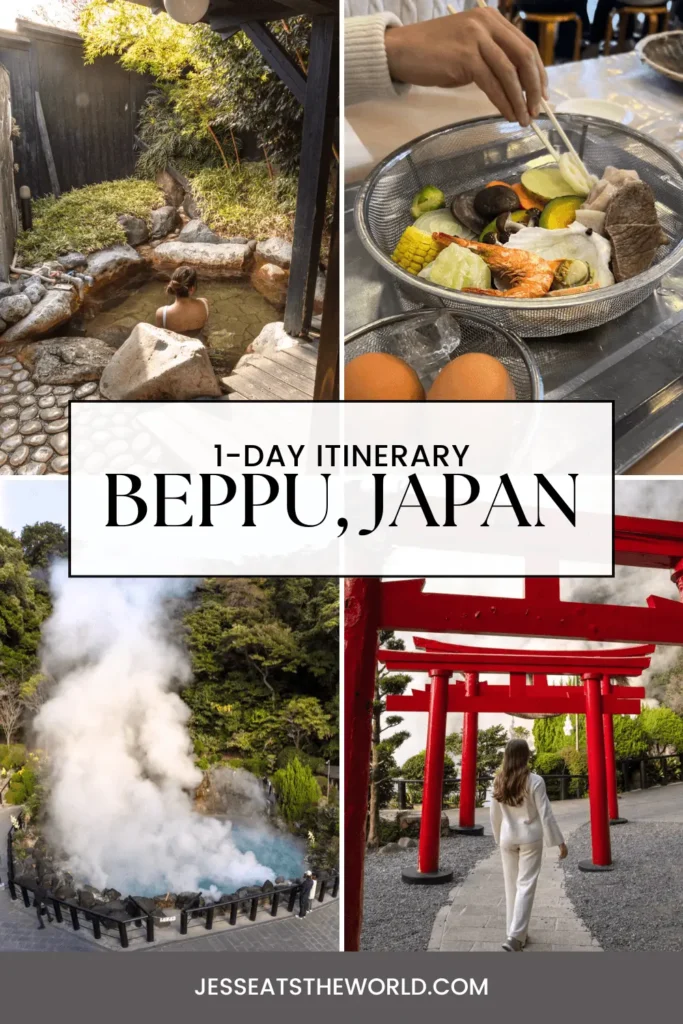


Down in the southernmost island of the country, Beppu is the Japan’s onsen capital, with almost 3,000 hot springs that fuel the city’s day-to-day life in more ways than you think!
I wrote this guide to help you plan the perfect 1-day itinerary in Beppu, and explore everything that this unique hot spring city has to offer – from the Hells to its food, baths, and sights.
Disclosure: This post may contain affiliate links for products or services that I personally endorse and love. Should you make a purchase, I may make a commission at no additional cost to you. Thank you for supporting Jess Eats The World!
Beppu Quick Travel Guide

Best time to visit
April – May and October – November
Nearest airports
Oita Airport (OIT), Kumamoto Airport (KMJ), Fukuoka Airport (FUK)
Currency
Japanese yen (JPY, ¥)
¥150 = approx. 1 USD
Ideal trip duration
1-2 days
(see my 2-3 day Beppu itinerary)
How to get around
Bus, Car, Walking
Internet
Holafly eSIM (get 5% off with my discount code “JESSICAVIANA”)

Hotels I recommend:

Activities you cannot miss*:
*Use my code “JESSVKLOOK” for 10% off your first purchase, or 3% off for existing customers

Best Restaurants
Jigoku Mushi Kobo Kannawa
Beppu Brewery
Somuri Teppanyaki
Ikkyu no Namida
Rokusei
Ramentei Ichiban
Bungo Chaya Beppu
Best Onsen
Hyotan Onsen*
Takegawara Onsen*
Sakura-yu
Tanayu at Suginoi Hotel
Myoban Yunosato Onsen*
*fully tattoo friendly
When is the best time to visit Beppu?
Beppu is a coastal city known for its hot springs, so the best time to visit needs pleasant temperatures for both sightseeing and enjoying the local onsen culture.
The Spring months of April and May offer this, alongside cherry blossoms around the city. This is when you can enjoy Beppu’s chilled noodles before the weather becomes too hot and humid in the summer.
Between October and December, temperatures become pleasant again, together with beautiful Autumn foliage. However, many people also enjoy Beppu in winter, when the hot springs feel particularly cosy due to the low temperatures.
Can you see Beppu in a day?
Despite being a decently sized, spread-out city, one day is enough to enjoy Beppu’s main sights. However, I really recommend staying overnight to better experience what the city has to offer.

Got more time? Check out my 2-3 Days Beppu Itinerary!

How to get to Beppu
Beppu is located in Japan’s southernmost island, Kyushu, and easily reachable by train, bus, car, flight, and ferry!
I travelled to Beppu from Osaka by train – I took the Shinkansen towards Hakata, only changing at Kokura Station onto a Limited Express train towards Oita. You can also easily reach Beppu by train or bus from Fukuoka City in 2-3 hours.
However, if you don’t want to spend daytime hours getting to Beppu, there is also an overnight ferry connecting Beppu and Osaka. The Sunflower is a luxury ferry that feels more like a floating hotel, complete with shared baths and all! The overnight journey takes about 12 hours.
Where to stay in Beppu
Even if you only visit Beppu for a day, I would always suggest staying overnight to best enjoy the city (and especially if you’ve travelled far to get there).
For a first visit to Beppu, I highly recommend staying at a hot spring hotel or ryokan (since the city is most famous for being the largest hot spring resort in Japan!). If you need to stay close to transport links in and out of the city, it’s also a good idea to prioritise staying near Beppu Station.


Since I used Beppu as a base for a few day trips during my 4-day visit, I stayed at the AMANEK Beppu YULA-RE hotel, less than a 5-minute walk from Beppu Station.
The hotel is modern and comfortable, the room was spacious, and as we stayed in a high-floor room, we could see the steam from the Hells of Beppu from our window! The hotel also has shared baths, sauna, jacuzzi, and a rooftop pool and bar with stunning 360-degree views of the city.
Other accommodations I also recommend in Beppu:
Budget ($)
Capsule Hostel Beppu Tower
If you’re on a budget, this hostel offers a great opportunity to have the Japanese capsule hotel experience, only a few minutes’ walk from Beppu Station.
Mid-range ($$)
Nishitetsu Resort Inn Beppu
This hotel is a good mid-range option close to Beppu Station and with a hot spring bath!
Premium ($$$)
Beppu Hatto Onyado Nono
For a more polished accommodation option with a more traditional feel (yet modern!), this hot spring hotel is a good choice. It’s also just around the corner from Beppu Station.
Luxury ($$$$)
ANA InterContinental Beppu Resort & Spa
If you’re looking for a luxury stay in Beppu, you need to consider this resort! Removed from the hustle and bustle of the city, in the hills of Beppu, the ANA Intercontinental is the ultimate treat.
Beppu 1-Day Itinerary & Things to Do
Morning: Beppu Jigoku (Hells of Beppu)
Beppu’s main attraction is, without a doubt, its Hells. The Hells of Beppu are a collection of seven hot springs dotted around the city, and designated as a Place of Scenic Beauty in Japan.
The hot springs are far too hot for bathing, with temperatures ranging from 78ºC-150ºC (170ºF-300ºF!), so they can only be viewed from the outside.

You can buy a combined ticket for all the 7 Hells, or individual tickets for each one at the door.
*Use my code “JESSVKLOOK” for 10% off your first purchase, or 3% off for existing customers


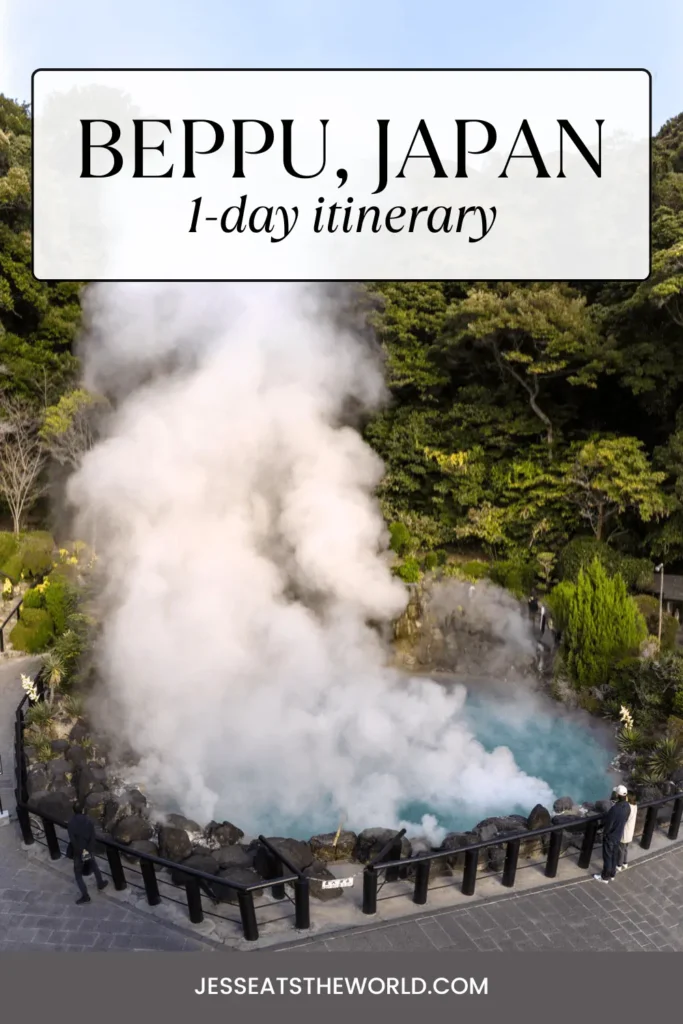
Each Hell is unique – some of them have vibrant blue or red water, while others contain boiling grey mud. One of the Hells even has a geyser that erupts every 30-40 minutes.
Some of the Hells have activities, stalls, and shops inside, where you can taste the hot spring water or eat onsen eggs (eggs cooked in the hot spring water). Each Hell also has a unique stamp that you can use for your own memories – make sure to look for it near each entrance!
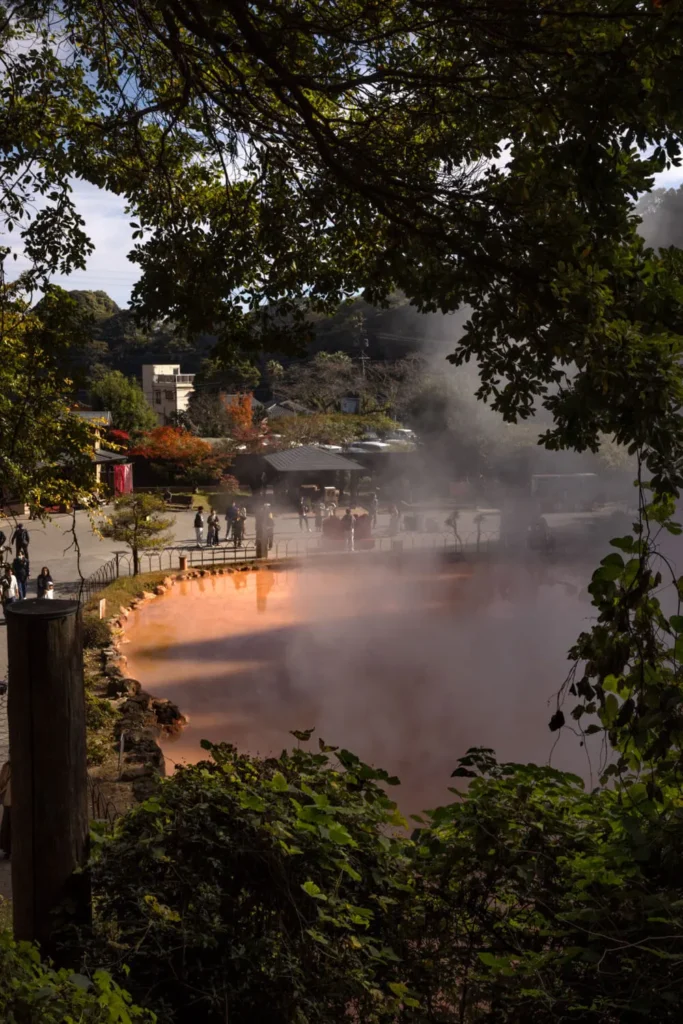

You can visit all the seven Hells on foot or by local bus in 3-4 hours at a leisurely pace, as most of the Hells are not very big. I recommend starting at opening time (8 AM), at the largest and most popular “Sea Hell” (海地獄, Umi Jigoku), to avoid the crowds.
However, I don’t think you need to visit all of them. I visited 5 out of the 7 Hells, and I personally chose to avoid both the “Crocodile Hell” and Shiraike Hell, as I had concerns about the wellbeing of the animals kept there.


Here’s a summary of the 7 Hells of Beppu:
- Sea Hell (海地獄, Umi Jigoku): The largest and most popular Hell, known for its vibrant blue-coloured water. Inside, you can buy traditional onsen-steamed sweets and souvenirs.
- Oniishibozu Hell (鬼石坊主地獄, Oniishibozu Jigoku): Right next to Sea Hell, this one consists of several ponds of boiling grey mud. It also has a nice foot bath that you can use.
- Kamado Hell (かまど地獄, Kamado Jigoku): This is another decently-sized Hell, combining a variety of water and mud ponds in different colours. You can taste the onsen water, and even eat onsen eggs and pudding at the small food market inside.
- Chinoike Hell (血の池地獄, Chinoike Jigoku): Known as “blood pond Hell” for it’s red hue, this pond is actually a reddish-orange colour. This Hell is located in the Shibaeseki District, and can be reached in 10 minutes by car or local bus.
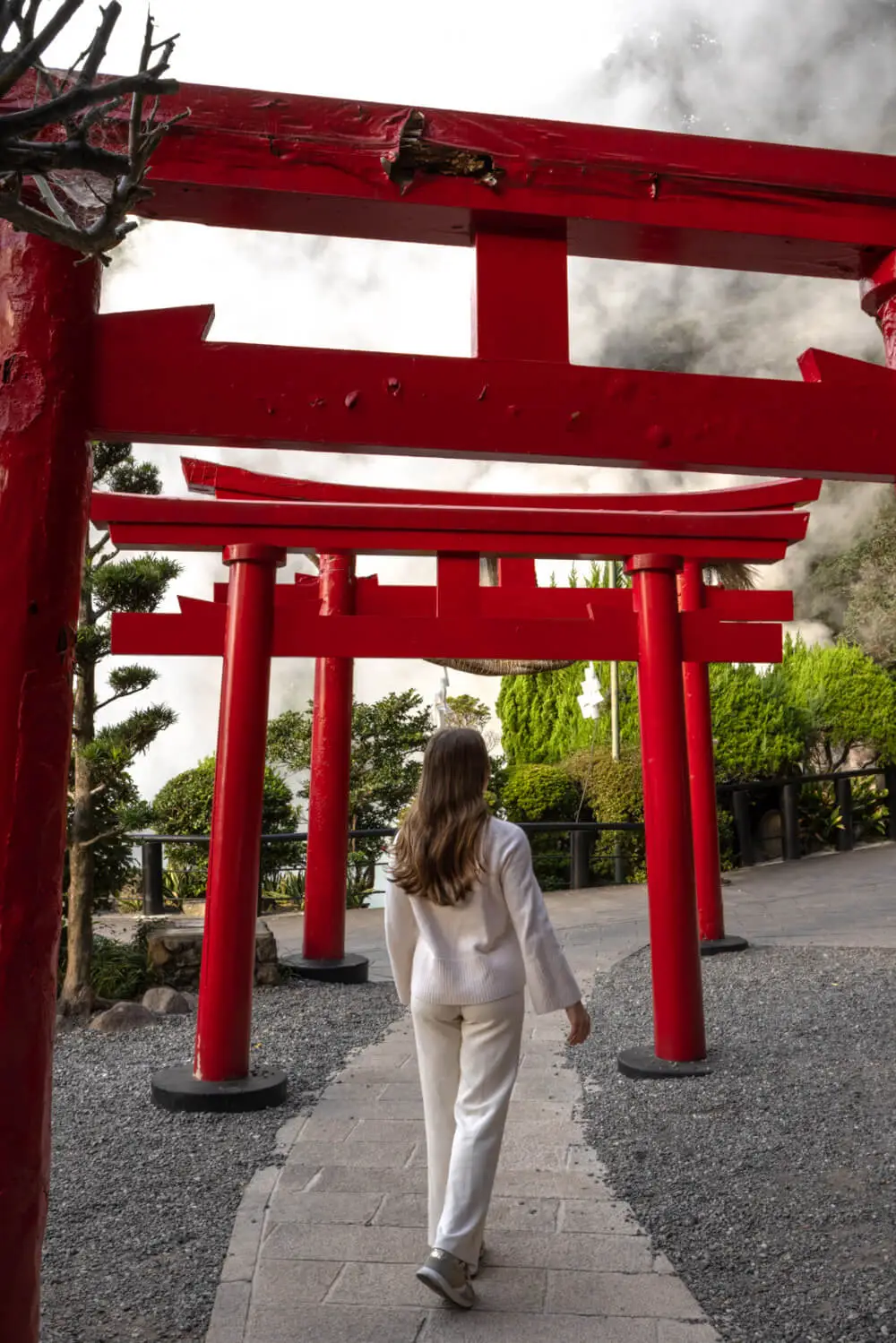
- Tatsumaki Hell (龍巻地獄, Tatsumaki Jigoku): Located next to Chinoike Hell, and meaning “tornado Hell”, this is the only Hell that contains a geyser, which erupts very 30-40 minutes.
- Crocodile Hell (鬼山地獄, Oniyama Jigoku): This Hell is said to contain 80 crocodiles of different species living in concrete pens heated by the hot springs. Note: I personally chose to skip this Hell due to animal welfare and ethical concerns, after reading reviews about the conditions the crocodiles are kept in.
- Shiraike Hell (白池地獄, Shiraike Jigoku): Meaning “white pond Hell“, this Hell includes a pond with light-blue water. The steam of the Hell also heats up an onsite tropical fish aquarium. Note: I also personally chose to skip this one due to animal welfare and ethical concerns.

Lunch: Cook your own steamed lunch (jigoku mushi)
Beppu’s hot springs fuel much of the city, from its Hells to onsen baths… and the cooking, too!
Jigoku Mushi Kobo is probably the most popular restaurant in Beppu for experiencing its traditional jigoku mushi (hell-steamed) cuisine. You pick your meal from the vending machine, lower it into the steamer yourself (the staff help you doing so safely), and enjoy it after a 15-minute cooking time.
This won’t necessarily be the best meal you’ll have in Japan, but it is a fun way to immerse yourself and fully experience Beppu’s traditional cuisine!
Tip: As a very popular place for lunch in Beppu, queueing starts early and waiting times can be long. I recommend dropping by the restaurant around 11 AM (the restaurant is only a few minutes’ walk from some of the nearby Hells) for a ticket. You can continue visiting some of the nearby Hells while waiting for your turn.


Alternatively, Hyotan Onsen (the next stop in this itinerary) also offers a traditional jigoku mushi (hell-steamed) lunch experience as part of the baths. You can make a reservation up to one week in advance.
Afternoon: Visit Japan’s only 3-Green-Michelin-Star Onsen
To experience Beppu’s hot springs in all their forms, I highly recommend walking a few steps from the restaurant for a relaxing afternoon at Hyotan Onsen.
Hyotan Onsen is a tattoo-friendly day-use onsen with 100% free-flowing natural hot spring water baths. It has been operating for over 100 years, and it’s the only onsen in Japan awarded with three Green Michelin Stars.
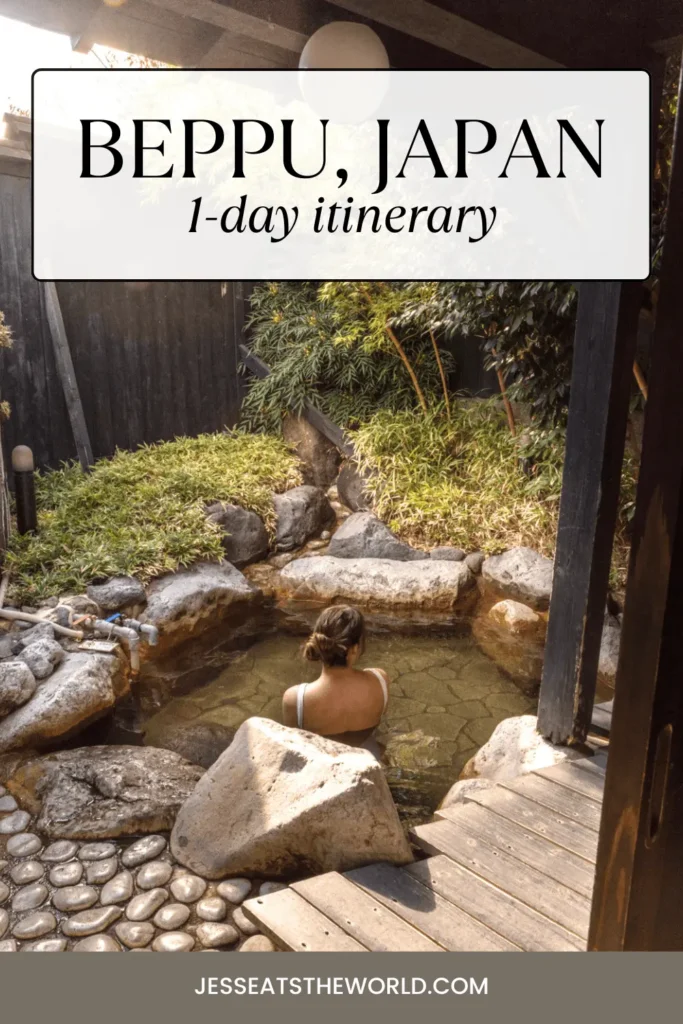
The onsen offers large gender-separated shared baths, a sand bath, and steam rooms. Apart from the shared facilities, you can also book private family baths and open-air baths with sauna (which are great if you are not used to Japanese onsen culture).
Hyotan Onsen is a coin-operated onsen – you can pay for your day-use ticket at the vending machine on arrival, starting from ¥1,160 (approx. USD 7.30 – all prices here).
The private family baths require booking up to one week in advance by phone (contact info here) and the private open-air baths can only be reserved in-person. Prices start from ¥2,400 (approx. USD 15) for one hour.
Opening times: Open every day from 9 AM to 12 AM.
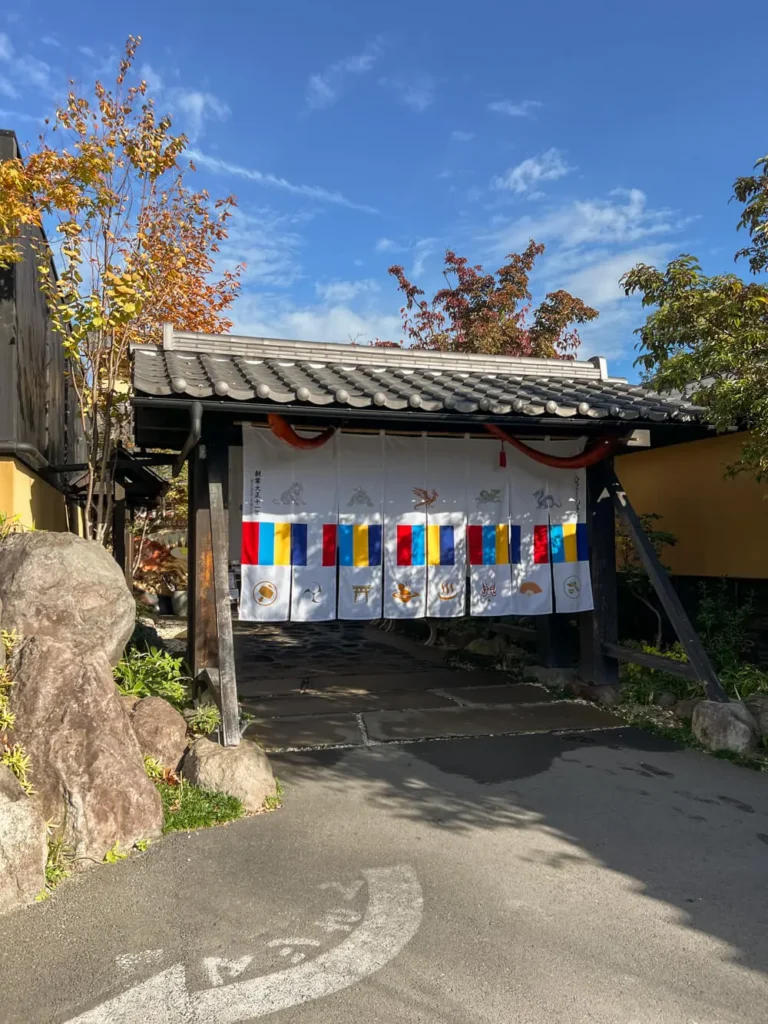

I stopped by the Onsen at opening time during my visit to the nearby Hells and booked a private open-air bath for the afternoon. After lunch at Jigoku Mushi Kobo, I walked to the Onsen for our allocated bath time.
The private bath is also coin-operated and it provides free-flowing hot spring water for one hour. The private bathing experience is ideal if you’re uncomfortable with using a shared bath. Each private bath also has a small sauna room, which fits one person at a time.
After the private bath, we got tickets to use the shared bath. We put on our yukatas and dug our own holes in the hot sand bath room. Of course, I also had to try some of the hot spring snacks!
While you can try onsen eggs in other parts of Beppu, the hot spring steamed pudding at Hyotan Onsen is unique and very creamy! I even added some ice cream to it – delicious!


(Optional): Admire the city from above at Beppu Tower
Depending on how much time you have left of the day (and the time of year of your visit), you may be able to get a 360-degree view of Beppu from Beppu Tower’s Observatory Deck around sunset.
Beppu Tower was built in 1957, designed by Tachyu Naito (who also designed Tokyo Tower and Osaka’s Tsutenkaku Tower). From the Observation Deck, you can admire both Beppu City and the Bay, as well as the surrounding mountains and the steam from the hot springs in the distance.
Beppu Tower tickets* for the Observation Deck cost ¥800 (approx. USD 5) for adults. You can also combine your visit with the Beppu Art Museum for ¥1,300 (approx. USD 8).
Opening times: Open year-round from 9:30 AM to 9:30 PM
*Use my code “JESSVKLOOK” for 10% off your first purchase, or 3% off for existing customers
Dinner: Taste Local Food
Of course, if you are staying at a ryokan that offers a plentiful kaiseki dinner with local ingredients, you should definitely take advantage of this!
However, if you need to head out for dinner, this is a great chance to explore the central part of the city and taste some of Beppu’s traditional foods. Depending on the time of year, you may want to dip into a chilled bowl of Beppu Reimen, or delight yourself with a hearty Bungo Beef meal.
Check out my Beppu local food guide for a full list of traditional foods to try, and where to try them!

1 Day in Beppu: Free Map
Feel free to use my free map to get around Beppu and enjoy the city:
Visiting Beppu, Japan: FAQ
Last thoughts
If visiting Beppu is on your Japan bucket list, I hope my guide helps you plan your journey and make the most of your time!
Feel free to write any questions you may have in the comments – I’ll do my best to help.
Visiting Japan soon? Check out my Japan guides:
Looking to visit Beppu in Japan? Pin this itinerary to save it for later!