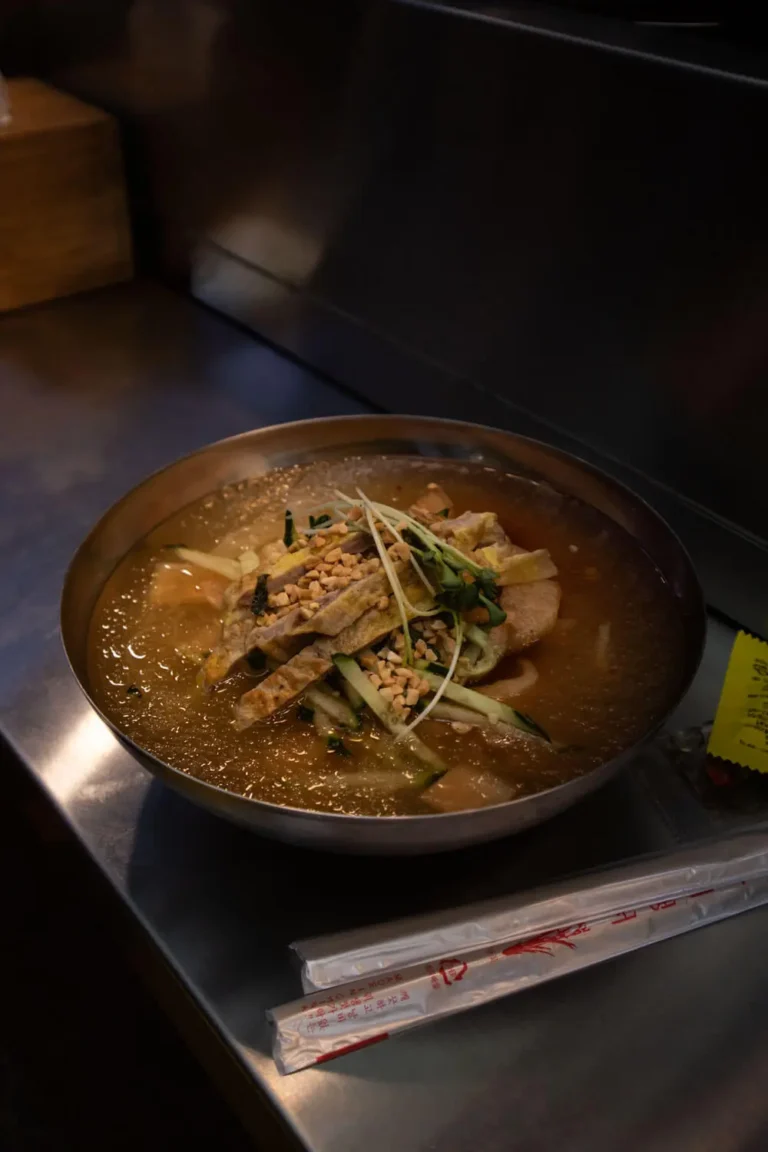


If you’re a foodie visiting Tokyo, I’m sure you’ll want to try as many traditional Japanese foods as possible. As a food-lover myself, I was not satisfied with only trying traditional Japanese foods – I wanted to create a food guide with dishes that actually originated in Tokyo.
So, I’ve compiled this food guide with 15 local foods from Tokyo that you absolutely cannot miss during your trip, and where to eat them!

What is the traditional food of Tokyo?
The typical local cuisine from Tokyo is deeply rooted in the prosperous Edo Period (1603-1868), which established the foundations of modern Japanese food.
This period witnessed the origin, popularisation, and evolution of several modern Japanese food staples, such as sushi, buckwheat soba noodles, tempura, and soy-based products.
Additionally, after the end of the isolation policies of the Edo Period in the 19th century, and especially after after World War II, a lot of Tokyo’s local cuisine was also shaped by foreign influences.
Chūka ryōri (中華料理), for example, is the modern Japanese-Chinese cuisine that adopted the golden trio of gyoza, ramen, and fried rice. On the other hand, Yōshoku (洋食), is the Japanese-style Western cuisine that originated in Tokyo during the Meiji Restoration (1868–1912) and resulted in dishes like curry rice, korokke, and katsu.
Best Food Tours in Tokyo
*Use my code “JESSVKLOOK” for 10% off your first purchase, or 3% off for existing customers
Klook.comTokyo Food Guide: 15 Best Local Foods to Try in Tokyo
1. Abura Soba

Abura soba (油そば, oil noodles) was one of my favourite culinary finds in Tokyo. The idea of a dry ramen dish doesn’t sound very cosy, especially if you visit Tokyo in the winter – but, trust me, this dish packs a serious flavour punch!
Also known as monjasoba, tenukisoba, abu ramen or shirunashi ramen, abura soba is a brothless ramen dish served with soy sauce and lard sauce at the bottom of the bowl. The toppings are usually simple, including seaweed (nori), chashu pork, bamboo shoots, green onions, and hot spring eggs.
You may be also instructed to drizzle vinegar and chili oil to your own noodles at the table in some restaurants.

Where to eat it
Abura soba originated in the 1950s and became popular among university students. One of the restaurants that is believed to have invented the dish is Chinchintei.
I had my first abura soba at Tokyo Abura Soba in Akasaka, and I absolutely loved it. They have a few other branches around Tokyo, as well.
2. Chankonabe


A must-try in any Tokyo food guide, Chankonabe (ちゃんこ鍋) is the daily staple dish in the diet of sumo wrestlers – who can consume up to 10,000 calories a day!
This rich hot pot dish, also known as sumo stew, does not usually follow a fixed recipe, and varies depending on the ingredients available.
Usually, the soup base includes dashi or chicken broth, and sake or mirin, and it’s topped abundantly with vegetables and protein (normally chicken, but also sometimes fish balls, tofu, and beef). Chankonabe is normally served with beer and rice on the side.
Where to eat it
I chose to combine eating all-you-can-eat chankonabe and learning about sumo wrestling at the Asakusa Sumo Club experience* (I even got to challenge the sumo wrestler myself!).
*You can get up to 10% off with my code “JESSVKLOOK” at checkout.
Alternatively, other good places to try chankonabe in Tokyo are Chanko Kawasaki, Chanko Edosawa and Chanko Kirishima. They’re all located in Ryogoku – the historic center of sumo wrestling.
3. Sakuramochi


Sakuramochi (桜餅) is a traditional sweet resembling a cherry blossom. It’s made with a pink-coloured rice cake filled with anko (red bean paste), and wrapped in a salty, pickled cherry blossom leaf.
It has a delicious balance of sweet and savoury flavours, and it is one of my favourite Japanese treats (the pink colour also makes it one of the prettiest, in my opinion!).
It is believed that sakuramochi was invented in 1717 by Shinroku Yamamoto, a gatekeeper at Chōmei-ji Temple. He started collecting fallen leaves from cherry-blossom trees along the banks on the Sumida River, which he preserved and used to make sakuramochi. He sold them at his own teahouse, in front of the temple.
Where to eat it
Shinroku Yamamoto’s teahouse, Yamamoto-ya (Chōmeiji Sakuramochi), still exists today and sells the original version of the sweet.
I got my first sakuramochi from a stall inside Kan’non-dōri, near Sensō-ji Temple, in Asakusa.
4. Gunkanmaki

Gunkanmaki (軍艦巻, “warship roll”) is a type of sushi roll made by wrapping nori seaweed around sushi rice formed into an oval shape, and traditionally topped with sea urchin (uni) or salmon roe (ikura).
The name comes from its resemblance to a battleship (gunkan, in Japanese).
Where to eat it
This type of sushi roll was invented in 1941 at the prestigious Ginza Kyūbey restaurant, and you can still taste it there!
I made it my mission to visit Kyūbey for omakase during my trip to Tokyo, and it was truly one of the best meals of my life. You can only book over the phone (try asking your hotel to do this for you), or using a concierge service like JPNEAZY for a fee (this is what I personally used).
Of course, nowadays you can also find gunkanmaki at most sushi restaurants around Tokyo.
5. Shōyu Ramen

Shōyu ramen (醤油ラメーン, soy sauce ramen, also known as Shina soba, Chūka soba, or Tokyo-Style Ramen) is one of the four major groups of ramen, and it originated in Tokyo in 1910 at the original ramen shop Rairaiken.
What distinguishes shōyu ramen from other types of ramen is its clear, dark, and savoury broth, made with pork and chicken bones.
Tokyo-style ramen is usually served with thin, curly noodles, and popular toppings like chashu pork slices, bamboo shoots, seaweed (nori), green onions, and soft-boiled egg.
Where to eat it
As one of the most popular types of ramen in Japan, you can easily find shōyu ramen all over Tokyo.
However, some of my fancier recommendations include Menya Shichisai, Yakumo, Ramenya Toybox, and the Michelin-starred Tsuta.
6. Taiyaki

Taiyaki (たい焼き) is one of Tokyo’s most famous and adorable foods – it’s a fish-shaped pancake, traditionally served warm and filled with sweet bean paste.
Nowadays, you can also find taiyaki with various different fillings, like custard, chocolate, cheese, and more!
Where to eat it
Seijirō Kobe, the founder of the bakery Naniwaya Sōhonten in Azabu Juban is credited with first serving taiyaki in 1909.
According to the story, he was struggling to sell the traditional red bean pancakes (imagawayaki), so he decided to shape them like a sea bream, which is a symbol of good luck and fortune in Japan.
I had my first taiyaki in Tokyo at Taiyaki Sawada, and the cheese filling was my favourite! They have a few branches in Asakusa, Shibuya, and in Oyama.
7. Katsudon

Katsudon (カツ丼) is yet another example of Tokyo’s Yōshoku (Japanese-style Western cuisine) from the early 20th century. It combines tonkatsu (deep-fried breaded pork cutlet) with donburi (rice bowl) to create a comforting and convenient dish.
Because “katsu” also means “to win” in Japanese, katsudon has become a “lucky” meal, and it’s now a popular tradition for students to eat the dish the night before important school exams.
Where to eat it
It’s believed that the restaurant Sanchō-an near Tokyo’s Waseda University invented katsudon in 1918. Unfortunately, it closed permanently in 2018.
However, there are plenty of restaurants serving katsudon around Waseda University, like Kinjo-an.
8. Tsukemen

Tsukemen (つけ麺, dipping noodles) is a unique noodle dish where the cold noodles are served alongside a separate bowl of warm soup or sauce. You must dip the noodles in the broth as you eat them.
Where to eat it
This Tokyo dish was created by Kazuo Yamagishi, who first served it at his restaurant Taishoken in 1961. While the current restaurant is not at its original location, they still serve the original recipe.
Rokurinsha, inside Tokyo Station, is another highly-recommended option for tsukemen.
9. Chūkadon

I had to add Chūkadon (中華丼, Chinese rice bowl) to this food guide, because it is a popular example of Chinese influence on food in Tokyo (chūka ryōri).
Chūkadon is believed to have originated in a Chinese-style restaurant in Tokyo in the 1930s, adapted to the local Japanese palate.
The dish is a quick and comforting adaptation of the traditional Chinese “eight-treasure vegetables” stir-fry. Chūkadon combines stir-fried seafood, meat, and vegetables with a thickened, starchy soy-based sauce, served over steamed white rice.
Where to eat it
While a bit elusive, you can find chūkadon at restaurants specialising in donburi or chukaman (Japanese-Chinese steamed buns) in areas like Shinjuku, Shibuya, and Ginza.
I ended up trying it at Hidakaya, an unassuming but authentic salaryman diner in Shinjuku. I recommend typing the dish name in Japanese (“中華丼”) on Google Maps or Tabelog to find restaurants serving it.
10. Nigiri

Nigiri (にぎり寿司, nigirizushi) is a type of sushi where fresh, marinated, or cooked fish is hand-pressed on top of sushi rice.
Chef Hanaya Yohei is credited to have popularised nigiri in Tokyo in the early 19th century. Originally, the fish used for sushi-making was freshly-captured from Tokyo Bay, but it required light cooking or marinating in vinegar or soy sauce for safety, prior to the invention of refrigeration.
Nigiri emerged as a quick alternative to earlier fermented and preserved sushi styles (narezushi), and it’s considered to be the original type of modern sushi. As such, it’s a must-try on every Tokyo food guide!
Where to eat it
You can find nigiri at any sushi restaurant in Tokyo – from affordable conveyor-belt sushi chains to high-end omakase experiences, and anywhere in between.
11. Mame daifuku


Mame daifuku (豆大福) is a traditional sweet dating back to the early Edo Period, originally popular as an affordable snack for commoners.
It consists of a rice cake filled with anko (red bean paste) and dotted with whole red peas or soybeans, which result in a sweet-savoury flavour.
Nowadays, mame daifuku is considered a high-quality traditional sweet (wagashi), and it’s often served at Japanese tea ceremonies. You should eat mame daifuku on the same day it’s made for the best taste and texture.
Where to eat it
You can find mame daifuku for sale in many specialty sweet shops around Tokyo, as well as on Nakamise Shopping Street, near Sensō-ji Temple, in Asakusa.
Asakusa is one of the best districts in Tokyo for food, and I also got my first mame daifuku from a nearby stall selling sweets inside Kan’non-dōri.
12. Menchi-katsu


Menchi-katsu (メンチカツ, mince meat cutlet) is a Western-style Japanese dish which originated in Tokyo during the Meiji era (1868-1912).
It is essentially a breaded and fried meat patty, made with a mix of ground beef, ground pork, panko breadcrumbs, onion, milk, egg, oil, black pepper, and nutmeg.
This golden and crispy meat cake can be served alongside white rice and miso soup as a set meal, with curry, with tonkatsu sauce, in sandwiches, as a burger, or on its own as a snack.
Where to eat it
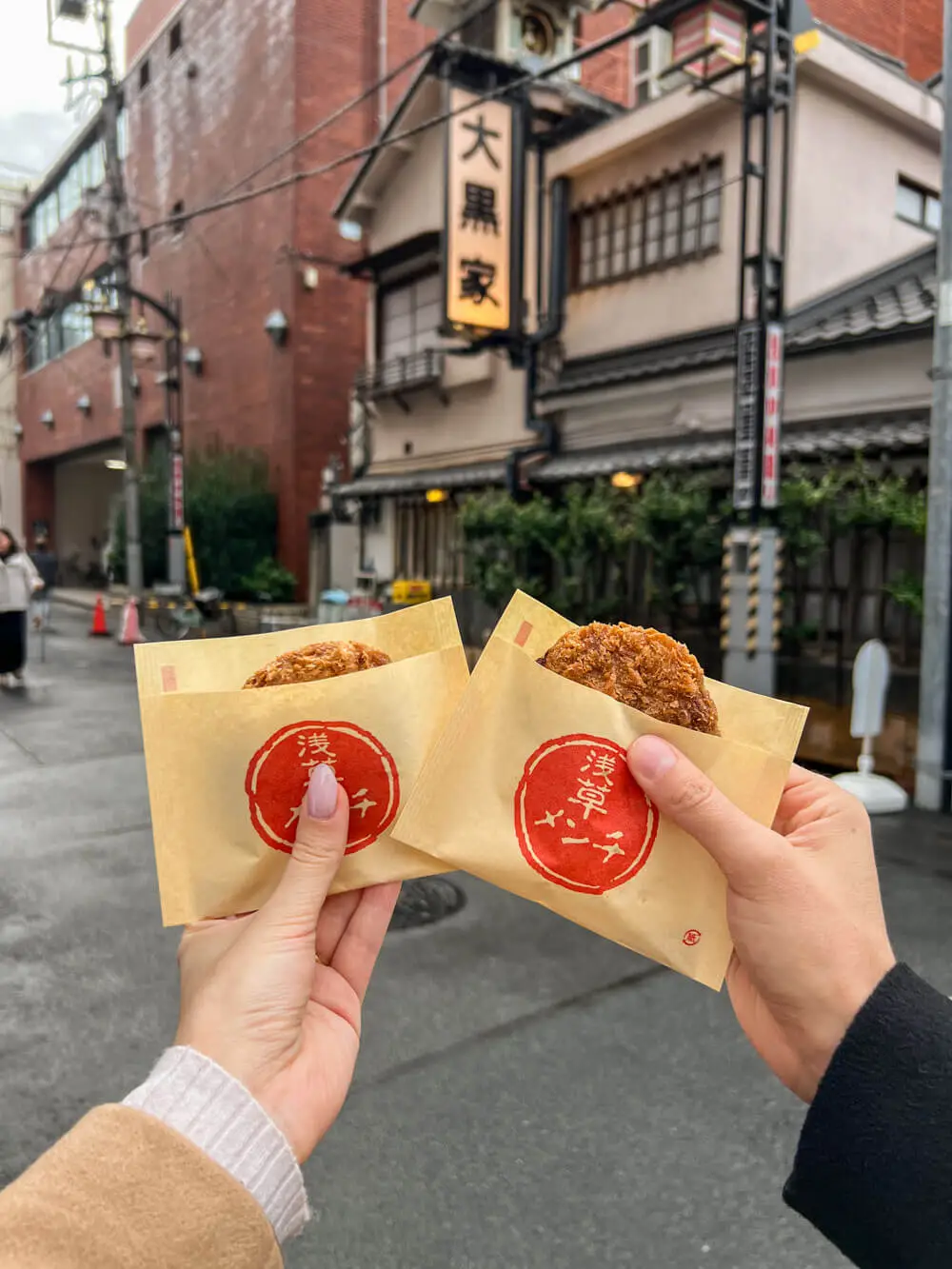
I had my first taste of menchi-katsu as a snack at Asakusa Menchi, near Sensō-ji Temple. This one has a decent amount of onions, so it is juicy, sweet, and piping hot inside, as well as crispy on the outside.
Other good places to try menchi-katsu in Tokyo are Niku No Sato and Kichijoji Satou.
13. Anpan


Anpan (あんパン) is a popular golden sweet roll filled with red bean paste (anko). The bun contrasts the sweet filling, the soft dough interior, and a crispy crust, and it’s traditionally sprinkled with poppy or black sesame seeds.
Sakura Anpan is a special variety of anpan (shown in the first photo above, and on the right on the second photo), which is topped with a salted cherry blossom.
The Western-style bread popularised in Japan during the Meiji era (1867 to 1912) didn’t appeal to the wider public, as it was hard and acidic. Anpan was inspired by western baking culture, but created using a Japanese yeast called sakadane, which results in a soft, moist dough.
Where to eat it
The invention of anpan is credited to Kimura Yasubei, a former samurai turned baker and founder of Kimuraya Sohonten, in Ginza – established in 1869 and still open today.
I had breakfast here, which included two kinds of anpan and a special-blend coffee, created specifically to be paired with the sweet buns.
14. Kaminari-okoshi

Kaminari-okoshi (雷おこし) is a traditional Japanese puffed rice snack and a popular Tokyo souvenir.
The expanded rice is typically held together using a mix of sugar and starch syrup, but nowadays there are also many variations with modern flavourings like miso, green tea, almond, and others.
The origin of kaminari-okoshi dates back to the middle of the Edo Period, in the 18th century. Originally, the snack was thought to bring good luck, and it was sold by street vendors to worshippers near the Kaminarimon (Thunder Gate) entrance to Sensō-ji Temple.
Where to eat it
You can buy kaminari-okoshi from street vendors around Asakusa, especially near Sensō-ji Temple.
Tokiwado Kaminari Okoshi is one of the most famous shops selling them. If you arrive early in the morning, you may be able to watch the snacks being made fresh (it’s also the best time to buy them!).
15. Curry bread (karē pan)

Of course, karē pan (カレーパン, curry bread) couldn’t be missed in this Tokyo food guide. It’s a deep-fried bun covered in panko breadcrumbs and filled with Japanese curry.
This snack is another example of the influence of Western cuisine in Japan (yōshoku) in the 20th century.
Curry was introduced to the Japanese by Anglo-Indian Royal Navy officers in the 1860s, and bread-making had been evolving in Japan since the Portuguese introduced it in the 16th century. Mixing the two, curry bread was originally called “Western bread” (yōshoku pan) when it was first sold in Tokyo in the 1920s.
Where to eat it
The origin of curry bread is not exactly known, but it’s often credited to Nakata Toyoharu, the owner of the Cattlea bakery in Tokyo, who started serving it in 1927. The bakery still sells the original version.
There are a handful of other bakeries that claim to have invented curry bread, but you can easily find it all over Japan, from bakeries to convenience stores, like 7-Eleven.
How much is food in Tokyo?
To understand the average cost of food in Tokyo, you should understand a little about Japan’s current economic situation.
The Japanese yen has significantly weakened over the last years. This, combined with a long period of low inflation, stagnant wages, and intense competition among restaurants make eating out feel very cheap when compared to other developed countries.
Of course, food in Tokyo is slightly more expensive than in smaller cities. Nonetheless, I found it extremely easy to eat cheap in Tokyo, as there are restaurants and small eateries on any street you stumble into.
For reference, it was not uncommon for me to find ramen for 500 yen (USD 3.25) in small shops, and most restaurant meals I had averaged around 1,500 yen (USD 9.70) or less, per person.
Of course, Tokyo is also the city with the most Michelin-starred restaurants in the world, so the dining scene can really look like anything you want. I also indulged in a high-end omakase experience, which was expensive, but one of my favourite memories from my trip.

If you’re planning to visit Tokyo but not yet sure where to stay, check out my Park Hotel Tokyo Review.
Final thoughts
I hope this local Tokyo food guide with the best traditional foods and where to eat them is helpful for your upcoming trip. There are many more typical Japanese dishes that you can discover in the city, but this list is a good start.
If you have questions about any part of this post, feel free to reach out in the comments below!
Check out my Japan guides:
Visiting Tokyo soon and looking for local foods to try? Pin this Tokyo food guide to save it for later!