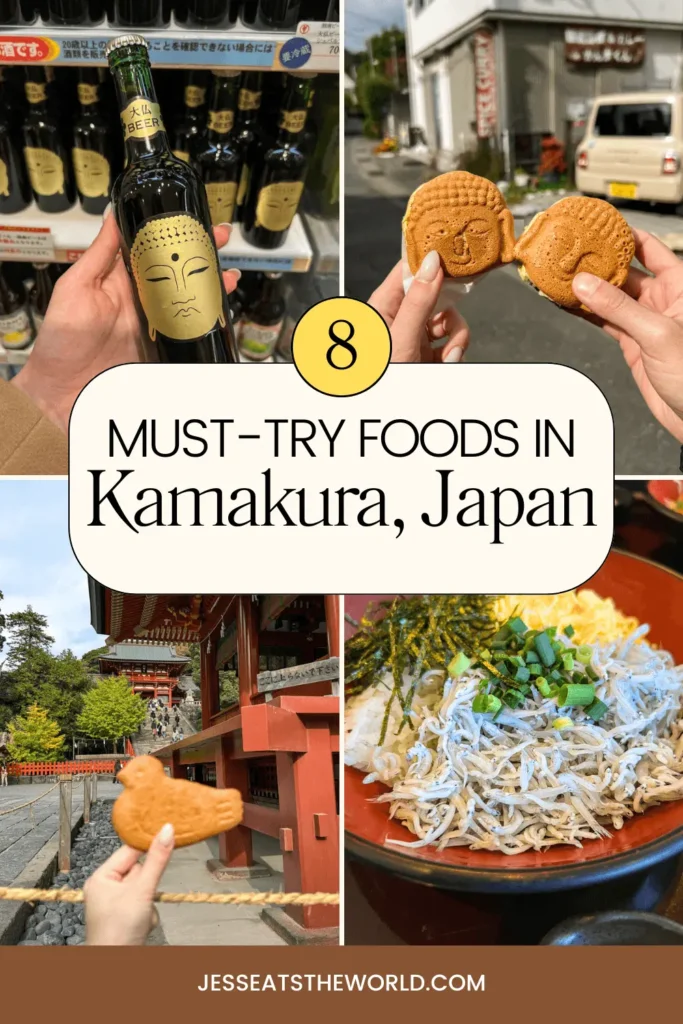

If you’re a foodie visiting Kamakura, I’m sure you’ll want to try as many traditional foods as possible. As a food-lover myself, I wasn’t satisfied with only trying popular snacks – I wanted to create a food guide with foods that actually originated in Kamakura.
So, I’ve compiled this food guide with 8 of the best foods from Kamakura that you must try during your Japan trip – and where to eat them!
What food is Kamakura famous for?
As Japan’s ancient capital during the Kamakura period (1192-1333), the city of Kamakura also has a long history as the birthplace of Nichiren Buddhism. During the Edo Period (1603-1868), Kamakura was a popular religious destination, and Komachi Street was the main path for pilgrims visiting the temples.
The historic temple traditions are still heavily present in Kamakura’s local foods, from the typical Buddhist vegetarian cuisine to snacks directly inspired by the Great Buddha of Kamakura (Kamakura Daibutsu) statue at Kotoku-in temple.
At the same time, Kamakura’s rich soils and coastal location by Sagami Bay produce high-quality seasonal vegetables and seafood that the local cuisine is known for. As a popular touristic destination, Kamakura also has a vibrant street snack culture (particularly along Komachi Street), as well as many famous local souvenirs and treats.
Visiting Kamakura from Tokyo? Check out these tours:
*Use my code “JESSVKLOOK” for 10% off your first purchase, or 3% off for existing customers!
Klook.comBest Food in Kamakura: 8 Local Foods & Drinks to Try
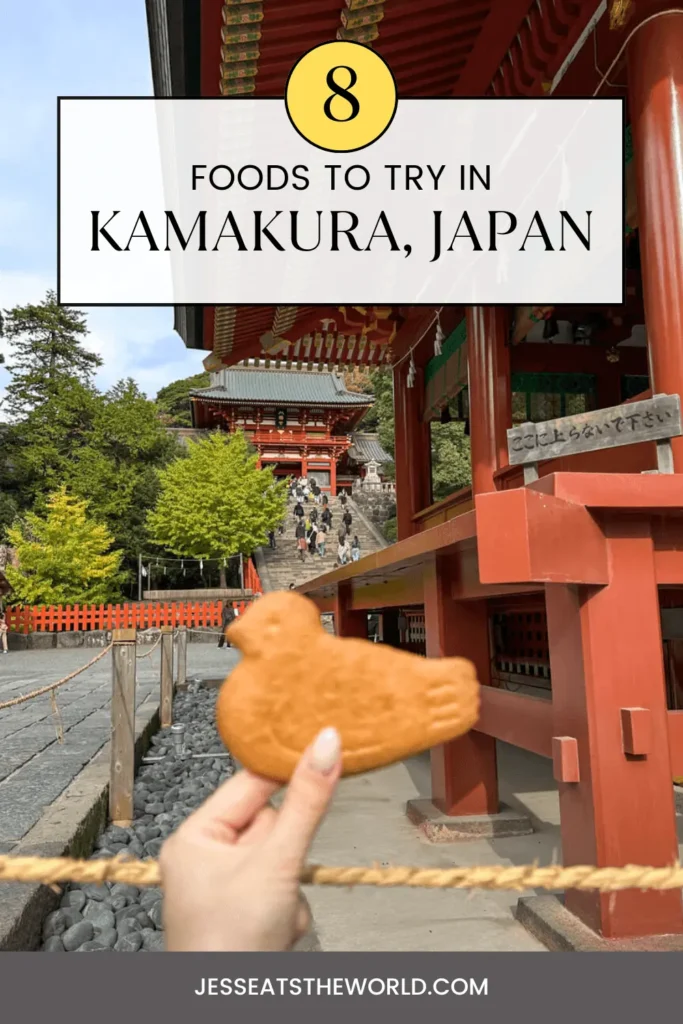
1. Hato Sabure (Dove-Shaped Butter Cookies)
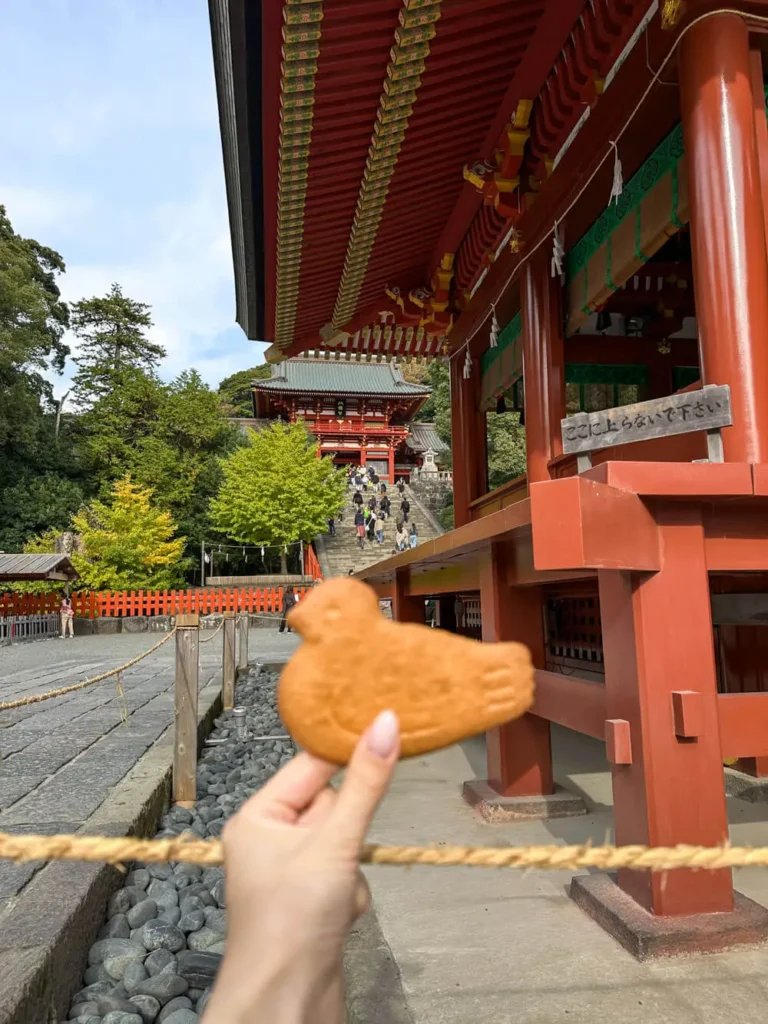
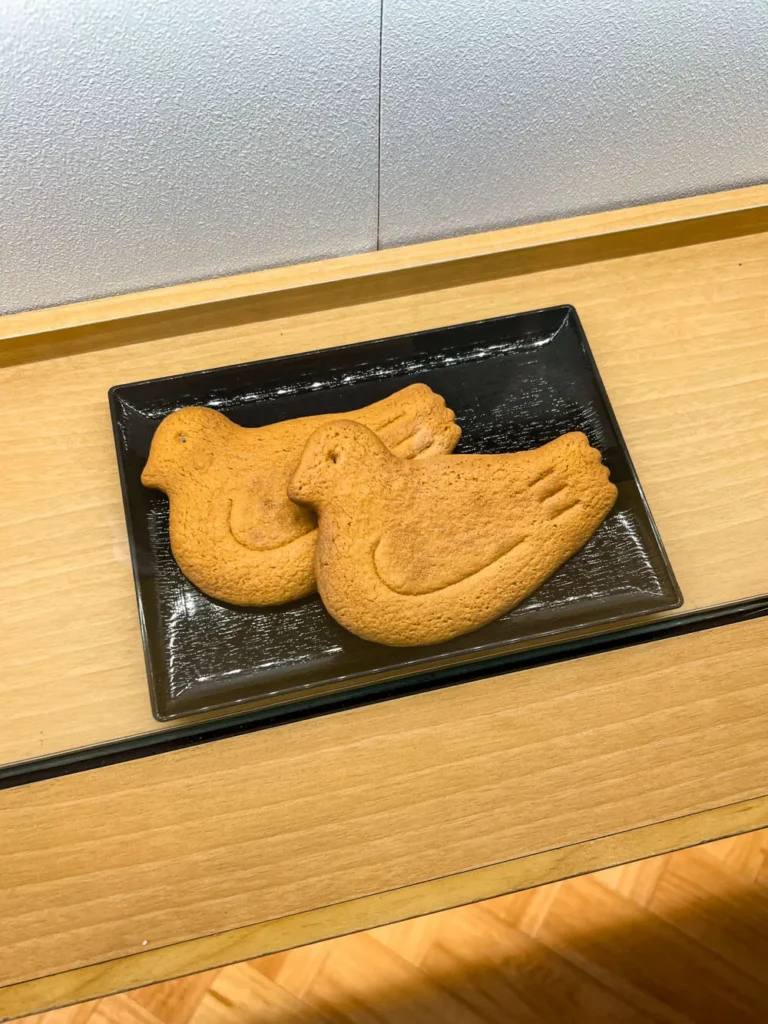
Arguably Kamakura’s most famous souvenir, Hato Sabure (鳩サブレー, and Japanese term for “dove sablé“) are butter cookies shaped like doves.
The story goes that, in 1897, a foreign visitor to the Toshimaya confectionery shop gifted the owner a large oval butter cookie (sablé). The founder of the shop, Kyujiro Kubota, loved the cookie so much that he decided to experiment with recipes to create a similar treat, despite butter being very precious back then.
Inspired by the doves on the grounds of Tsurugaoka Hachimangu Shrine, which children loved, he decided to shape the cookies like doves – and so hato sabure was born!

Where to eat it
Of course, you should buy hato sabure from one of the Toshimaya shop branches (this link directs you to the original shop). I visited the one near Kamakura Station, but there’s also another one along Komachi Street.
2. Shirasu (Whitebait)
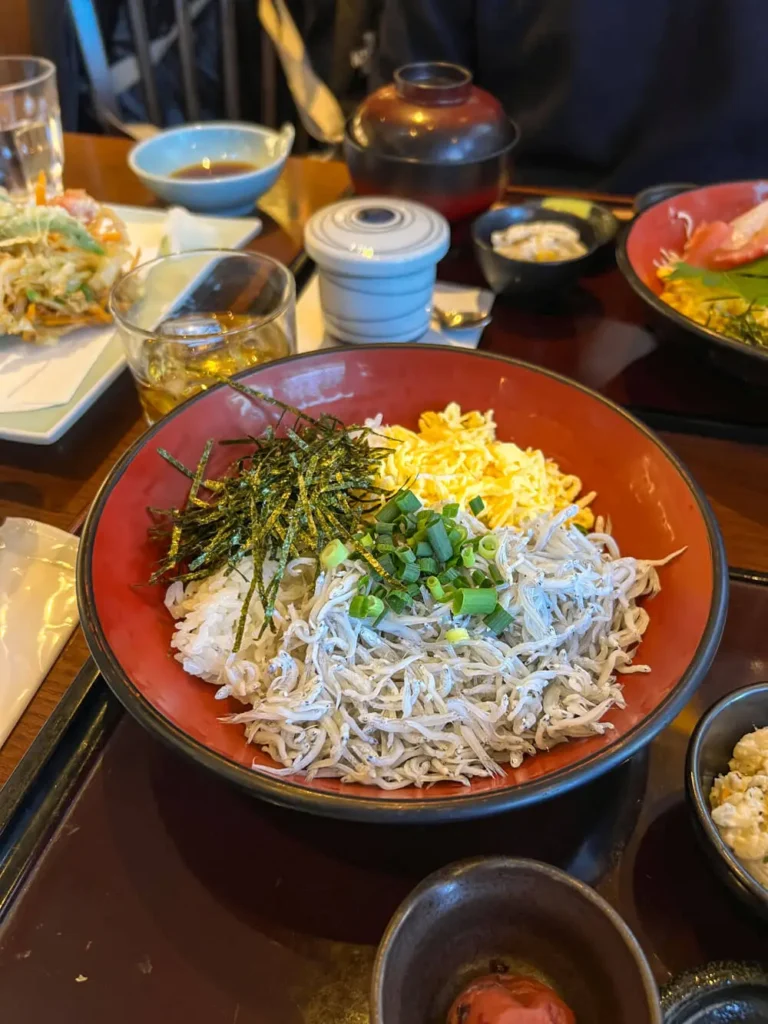
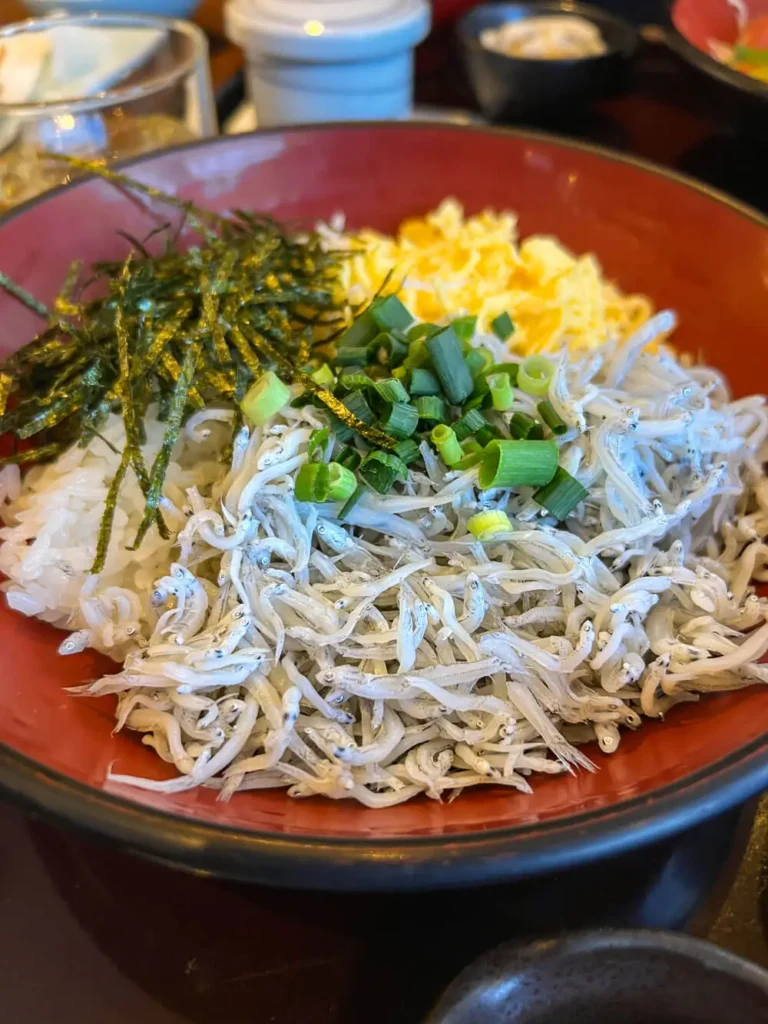
Shirasu (シラス, whitebait) is the signature delicacy of Kamakura. These tiny translucent fish are found in abundance in Kamakura’s Sagami Bay, featuring in the menus of many local restaurants.
Whitebait can be eaten dried, raw, or lightly boiled in salt water (釜上げしらす, “boiled whitebait”). Each preparation method gives the fish a distinct texture, so definitely try it cooked in different ways if you can!
I tried shirasu for the first time as shirasu-don (over a bowl of steamed rice), which is a great way to try it if you are a bit unsure whether you’ll like it. Boiled whitebait isn’t as strange as it seems – it has a mild savoury taste, similar to regular white fish.
Where to eat it
I tried the above whitebait bowl at Wasai Yakura, along Komachi Street – they also serve local beer, cider, and great sashimi bowls!
There are also many more restaurants in Kamakura specialising in shirasu dishes, especially along the coast. One of the most popular ones is Tobiccho, on Enoshima island.

Visiting from Tokyo? Check out my Tokyo Food Guide!
3. Kamakura Craft Beer
Kamakura Beer, brewed by Kamakura Beer Brew Co., is the most famous local craft beer in Kamakura, with styles that are produced to pair perfectly with the local cuisine. The same company also produces local ciders for those who don’t drink alcohol.
Alternatively, craft beer enthusiasts should look out for small local brands like Yorocco Beer, which is produced in very small batches and highly praised!
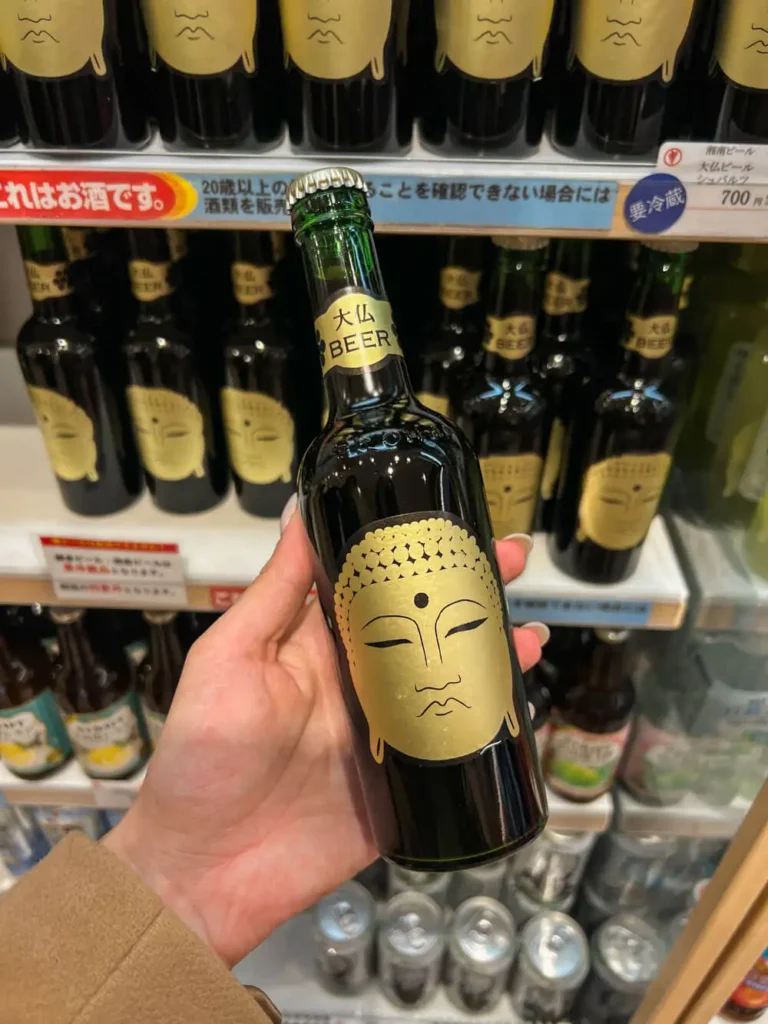
If you’re looking for a bottle to bring home as a souvenir, then Daibutsu Beer (Great Buddha Beer) by Kumazawa Brewery is one of the best options, as the label design is inspired by the Great Buddha of Kamakura.
Where to drink it
You’ll be able to find these local craft beers at many local restaurants in Kamakura, and I also spotted them often at local souvenir shops like Kamakuraya, on Komachi Street.
If you’d like to take a break and taste various local craft beers, head to VANAVASA, near Kamakura Station. They sell Yorocco Beer, as well as bottles and cans to take away.
4. Daibutsuyaki (Buddha Cake)
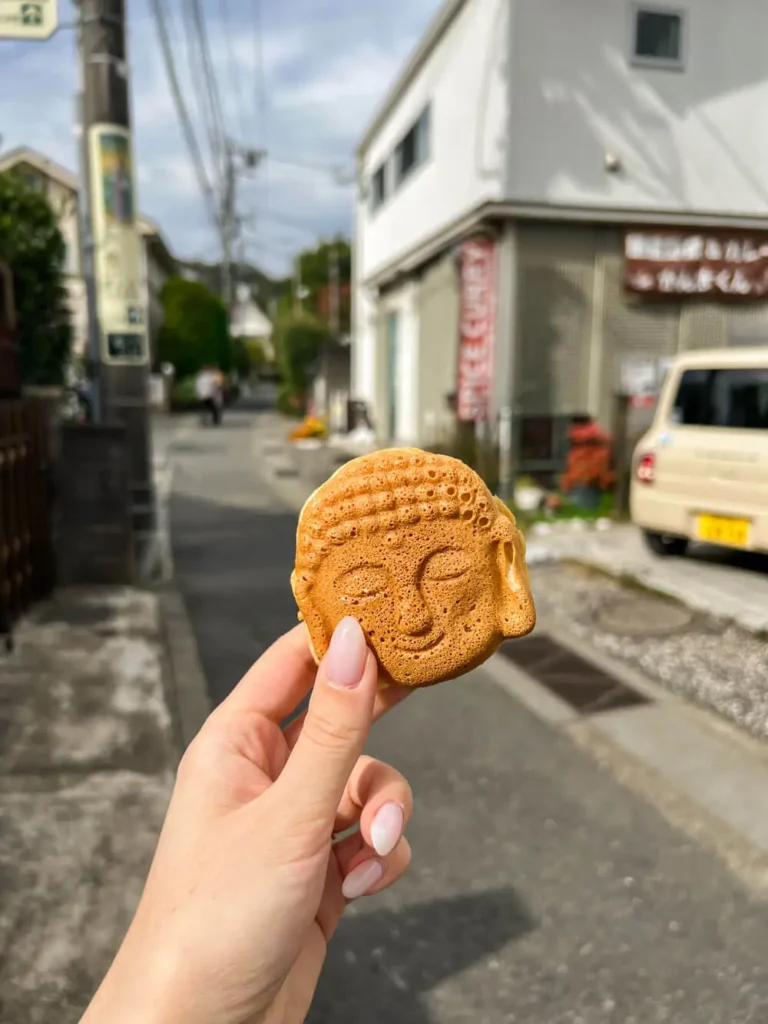
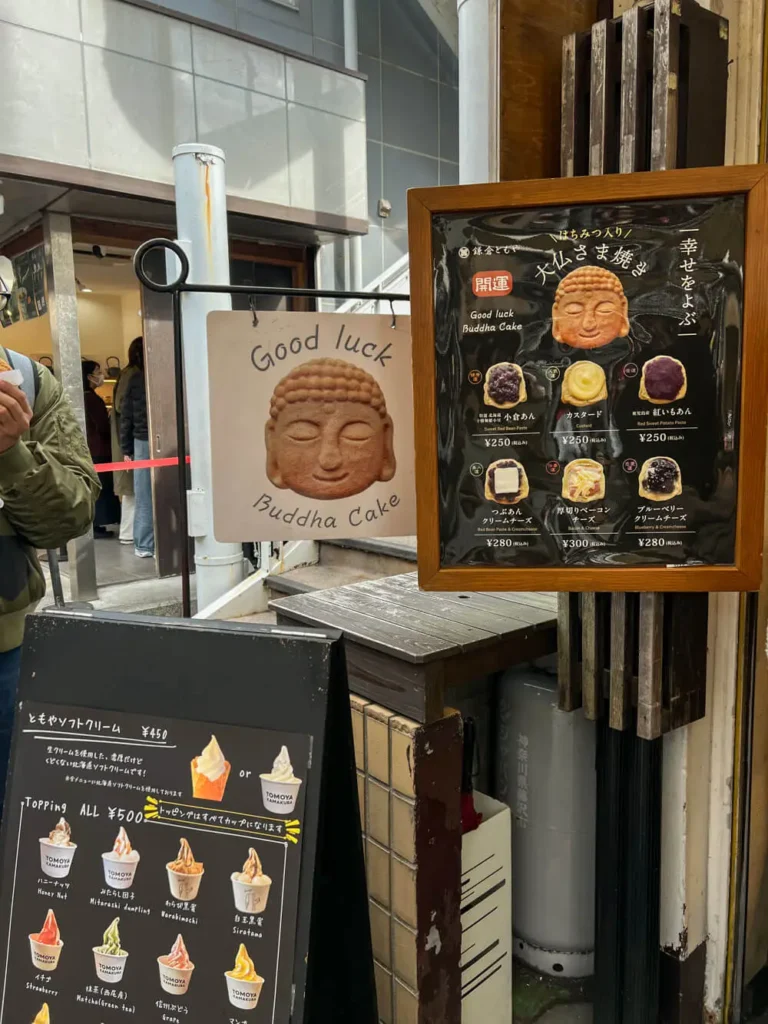
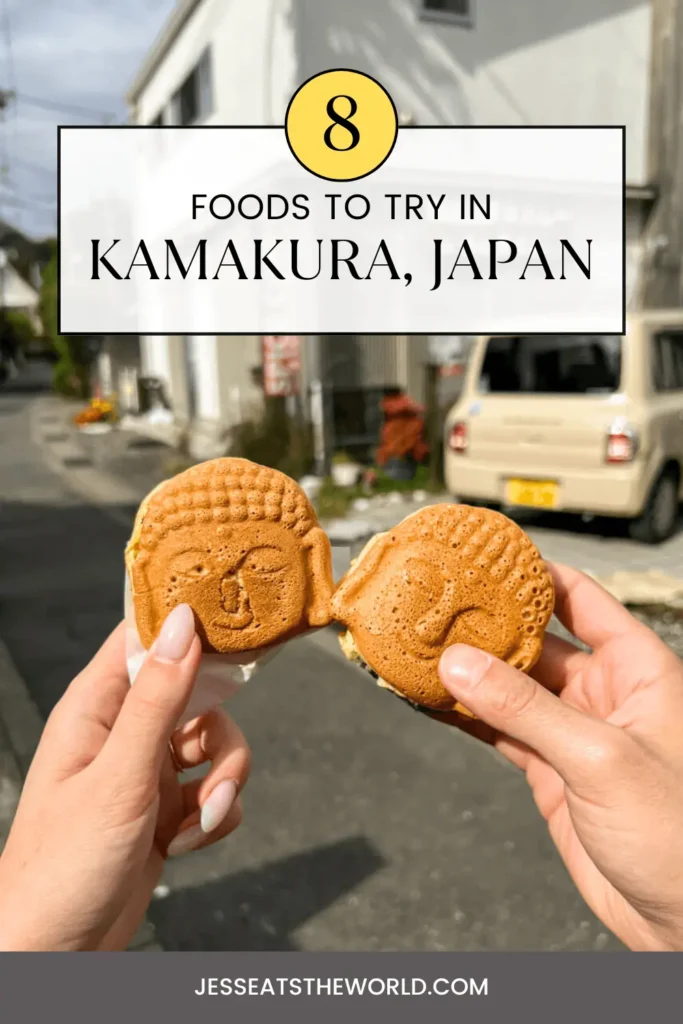
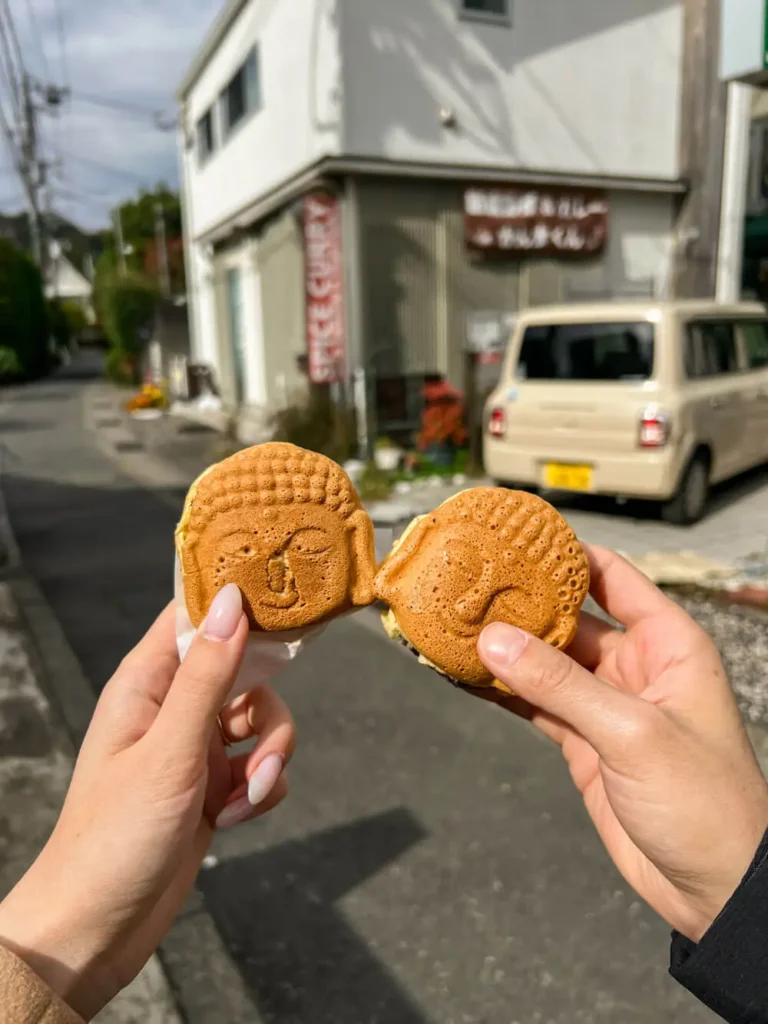
Undoubtedly the most adorable snack that you must try in Kamakura is the Buddha Cake (Daibutsuyaki, 大仏焼き). They say the cake is a lucky snack, so that’s another very good reason to try it apart from taking a cute photo for Instagram!
The Buddha Cake is a kind of waffle pancake filled a choice of six filling flavours – from red sweet potato to blueberry and cream cheese – each bringing their own type of good fortune (health, popularity, money, beauty, career, and love). I found it very similar to a taiyaki, but of course shaped like the Great Buddha of Kamakura!
Where to eat it
This cake was created by the Tomoya Kamakura Komachi shop on Komachi Street, so this is the place to try it!
5. Kamakura Kamaboko (White Fish Cake)
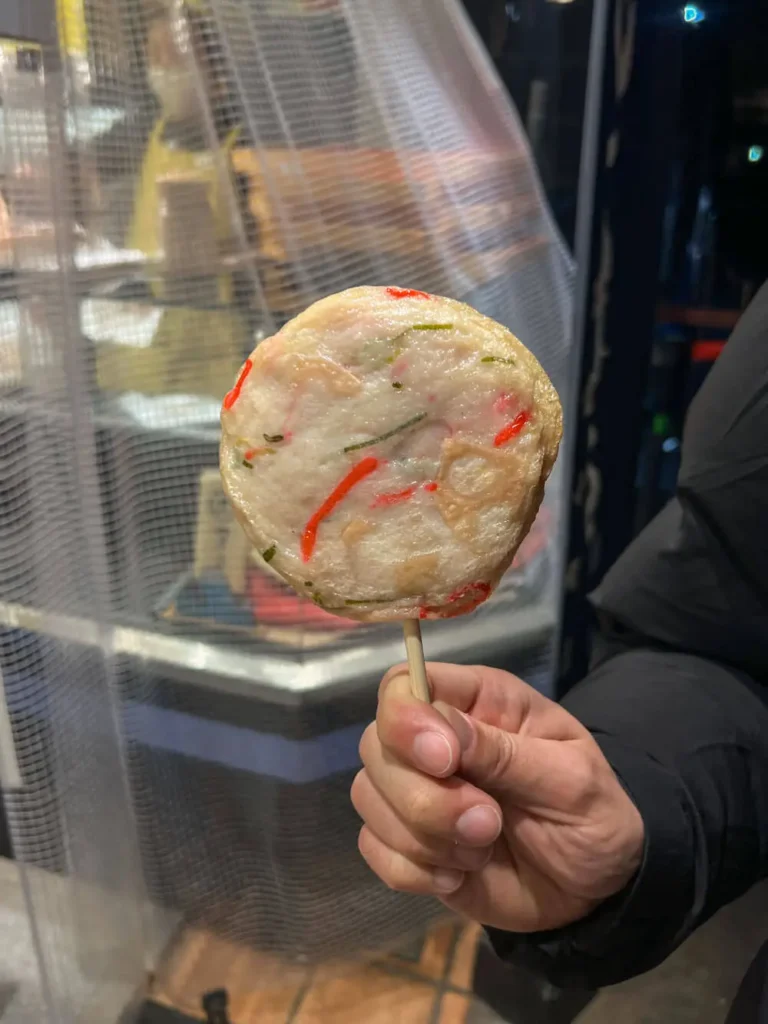
There isn’t really a precise translation for kamaboko (蒲鉾) in English, but it is closely related to fish paste (surimi) or a fish cake.
Japanese kamaboko has been around since the 8th century and it originated as a way to preserve whitefish. It’s usually made with puréed white fish that’s seasoned, kneaded, and moulded into shape.
Kamakura’s kamaboko is renowned for using premium white fish and not adding any preservatives or chemical seasonings. There are a few different shapes to try and they can be fried, grilled, or steamed. The oval, thick fried fish cakes come in many flavours, and the plum blossom hanpen is a beautiful snack to try when in Kamakura!
Where to eat it
There are a few street food stalls and shops selling fried fish cakes along Komachi Street, but the most iconic place to buy Kamakura’s kamaboko, especially as a souvenir, is Inoue Kamaboko. This historic shop has been crafting and selling kamaboko since 1931.
6. Senbei (Japanese Rice Crackers)

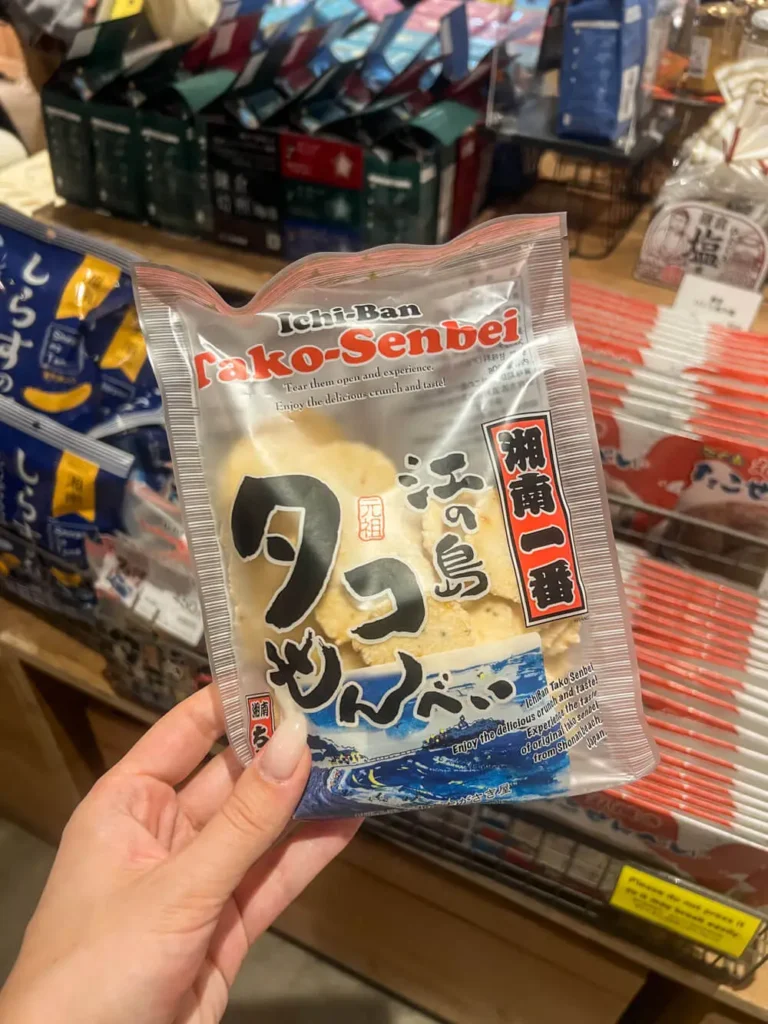
Senbei (rice crackers) are very popular throughout Japan. They were introduced from China in the 8th century and evolved during the Edo period (1603-1868) into the modern version of the snack.
In Kamakura, the local rice crackers are distinguished by both traditional flavours and bold, unique local specialties.
The most curious type of senbei in Kamakura is the Maruyaki Tako Senbei (丸焼きたこせんべい, “whole grilled octopus cracker“) – it’s made by coating whole baby octopuses in potato starch and flattening them in a hot iron plate into a paper-thin, crispy cracker. It’s a modern invention, created in 2003 at the shop Asahi Honten in Enoshima island.
Where to eat it
You can find traditional rice crackers at souvenir shops along Komachi Street, such as Kamakura Ichibanya, where I bought my own packet of senbei.
For the most unique grilled octopus cracker, make sure to try it at one of the two branches of the original Asahi Honten shop if you visit Enoshima island.
7. Kamakura Cider
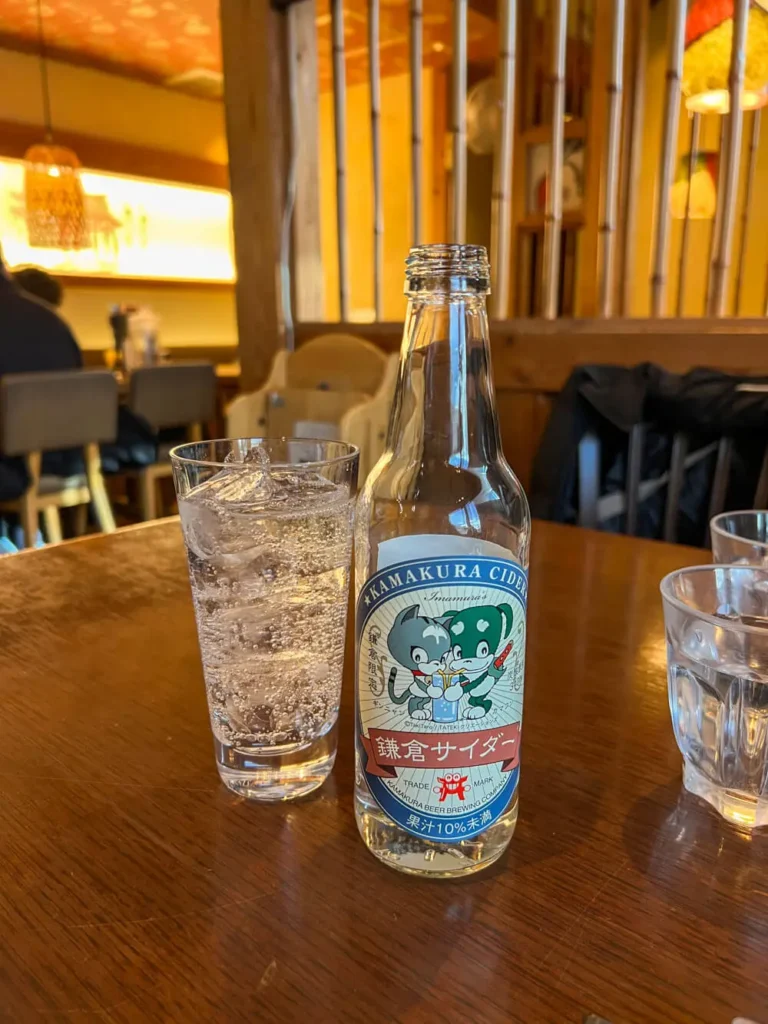
Kamakura Beer Brew Co., the most famous producer of local craft beer in Kamakura, also produces local ciders for those who don’t drink alcohol.
Kamakura Cider and Enoshima Cider are both local ciders that you can find in many restaurants. These ciders are non-alcoholic soft drinks with a refreshing lemon flavour, and a beautiful label design that makes for a great local souvenir!
Where to drink it
You’ll be able to find these local ciders at many local restaurants in Kamakura. I tried mine with my lunch at Wasai Yakura, but I also saw bottles being sold at convenience stores along Komachi Street.
8. Kenchinjiru (Japanese Vegetable Soup)
This hearty vegetable soup is one of the best examples of Zen Buddhist temple cuisine (shōjin ryōri) in Kamakura.
Kenchinjiru soup (けんちん汁) was originally called Kenchōji-jiru (Kenchō Temple soup), as it originated in the temple over 700 years ago. The story goes that a Buddhist monk accidentally dropped a block of tofu on the kitchen floor and, to avoid food waste, he decided to crumble the tofu into the soup – which became its signature element.
The soup ingredients usually include stir-fried tofu and root vegetables like burdock, radish, taro root, sweet potato, and carrots in a shiitake mushroom dashi stock. As a Buddhist cuisine dish, the soup is completely vegetarian.
Where to eat it
Tenshin-an is a restaurant located at the entrance of Kenchō-ji which is officially approved by the Temple to serve the traditional soup. This is the best place to taste it!
Final thoughts
I hope this local Kamakura food guide with the best traditional foods and where to eat them is helpful for your upcoming visit! There are many more typical dishes that you can discover in the city, but this list is a good start.
If you have questions about any part of this post, feel free to reach out in the comments below!
Visiting soon? Check out my Japan guides:
Visiting Japan soon and looking for the best foods to try in Kamakura? Pin this Kamakura food guide to save it for later!