
If you’re a foodie visiting Kyoto, I’m sure you’ll want to try as many traditional Japanese foods as possible. As a food-lover myself, however, I was not satisfied with only trying traditional Japanese foods – I wanted to create a food guide with dishes that actually originated in Kyoto.
So, I’ve compiled this food guide with 18 local foods from Kyoto that you must try during your trip, and where to eat them!
What is the traditional food of Kyoto?
As the former capital of Japan for over 1,000 years, Kyoto’s long and rich heritage turned it into the heart of Japanese traditional cuisine. It was also the efforts of chefs from Kyoto that propelled Japanese cuisine to be recognised as an Intangible Cultural Heritage by UNESCO in 2013.
Unlike the coastal, seafood-rich Japanese cuisine, Kyoto’s distance from the coast and unique climate and geography contributed to its very own style of cooking, with high-quality ingredients.
Kyōyasai encompasses 19 varieties of nutrient-dense heirloom vegetables native to the Kyoto region, which are crucial to its traditional Obanzai home cooking and vegetarian Buddhism temple cuisine (shōjin ryōri), still consumed today.
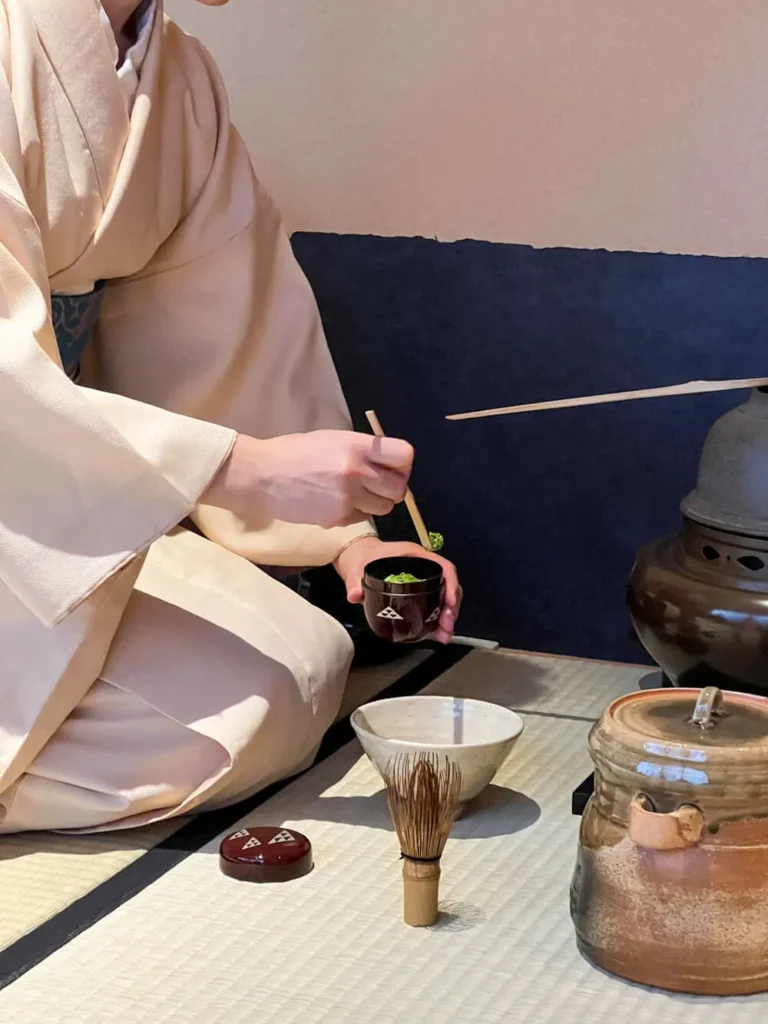
Of course, the introduction of tea seeds by Zen monks in Kyoto in the 12th century led to the region’s establishment as the highest-quality matcha producer. This is evident in Kyoto’s strong tea ceremony culture, which is deeply-intertwined with the production of local sweets (wagashi).
Best Food Tours in Kyoto
*Use my code “JESSVKLOOK” for 10% off your first purchase, or 3% off for existing customers
Klook.comKyoto Food Guide: 18 Best Local Foods to Try
1. Kaiseki Ryori: Traditional Multi-Course Meal
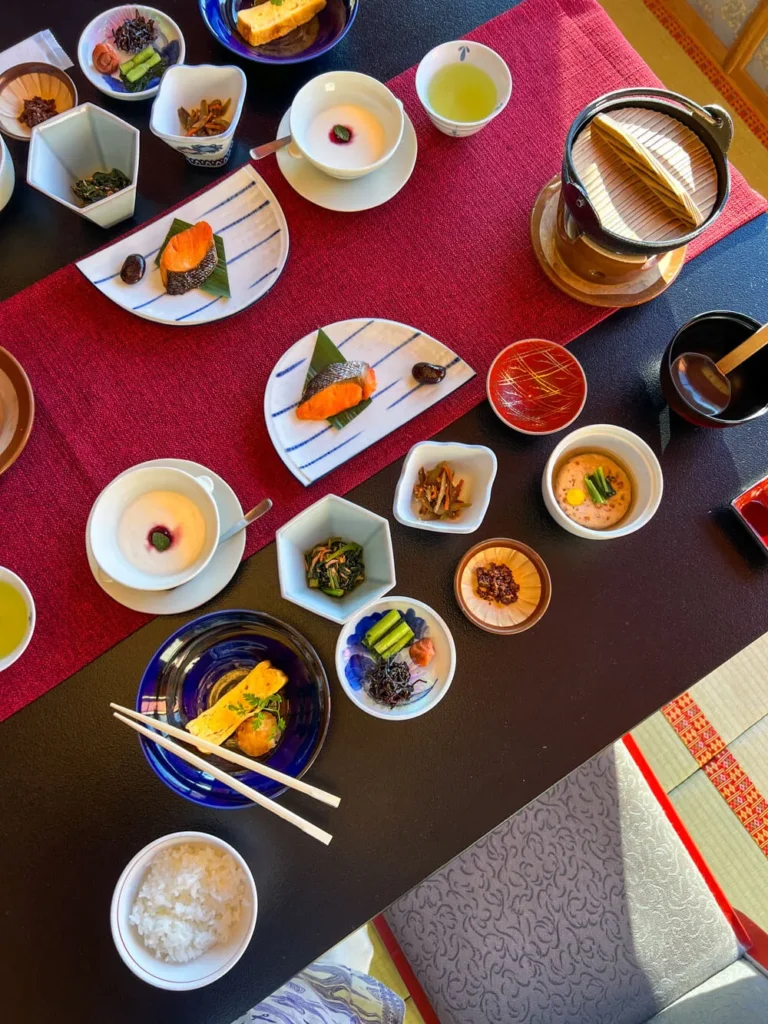
Kyoto is the birthplace of kaiseki-ryōri (懐石料理, Kaiseki cuisine), a traditional Japanese multi-course meal that uses seasonal local ingredients and typical skills and techniques to prepare and present food in a sophisticated manner.
The roots of kaiseki cuisine date back to the Heian period (794-1159), heavily influenced by imperial court dining and tea ceremonies, as well as by shōjin ryōri (vegetarian Buddhist cuisine).
Historically, the multi-course meal ranged from modest to lavish. While kaiseki chefs have freedom to add, omit, or substitute courses, typical kaiseki meals may include an aperitif, appetisers, soup, sashimi, rice, pickles, sweets, and boiled, fried, steamed, and vinegared dishes.

Where to eat it
You can experience Kaiseki cuisine in specialised restaurants in Kyoto, or as part of staying in a traditional ryokan (a Japanese-style inn).
Best Kaiseki Dining Experiences in Kyoto
*Use my code “JESSVKLOOK” for 10% off your first purchase, or 3% off for existing customers
Klook.com2. Matcha

Matcha is probably the main food product Kyoto is known for, as the region of Uji is recognised as the birthplace of the traditional Japanese tea ceremony.
The origins of matcha can be traced to China, before its introduction to Japan by a Buddhist monk in the 12th century. However, the original tea brought from China was dark-brown and roasted.
By the 16th century, Japan had developed the shade grown cultivation method that led to the modern bright-green matcha powder we know today. At the time, only Uji tea masters were permitted to use this cultivation method, cementing Uji as the core of high-grade matcha production early-on.
Where to drink it
I think you would have more trouble finding places where you can’t find matcha in Kyoto – it’s everywhere!
Of course, I would always recommend anyone visiting Kyoto for the first time to experience a tea ceremony, where you learn the process of preparing and drinking matcha. It’s one of the best activities to do in Kyoto, and some even include kimono rental and hairstyling.
Best Tea Ceremony Experiences in Kyoto
*Use my code “JESSVKLOOK” for 10% off your first purchase, or 3% off for existing customers
Klook.com3. Nishin soba
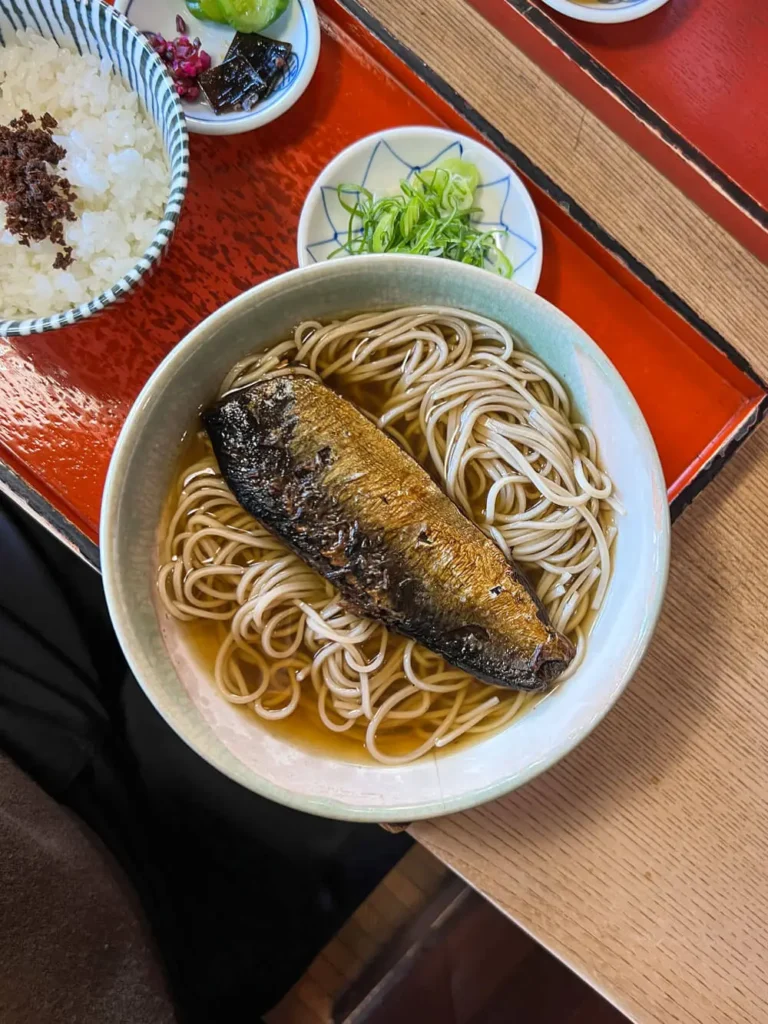
Nishin soba (にしんそば) is a traditional winter dish, consisting of buckwheat soba noodles topped with a pickled Pacific herring (nishin) fillet.
I was very surprised with the flavour profile of this dish, as it was very different from others I had tried in Japan thus far. The herring is marinated in a mixture of soy sauce, mirin, and sugar, prior to being pickled for a few days – this gives it a very unique sweet-and-savoury flavour.
The origin of nishin soba dates back to the Edo Period (1603-1868), before refrigeration technology, when it was necessary to preserve the fish caught during the Autumn season. The creation of the dish made it possible for people to get a nutritious meal with a little more substance than the simple dried fish consumed at the time.
Where to eat it
Nishin soba was created by the Sohonke Nishin-Soba Matsuba restaurant, in 1882. The restaurant is still open today and conveniently located right by Shijō Bridge.
This is where I tried nishin soba for the first time in Kyoto, and I recommend it, although other restaurants serve it as well.
4. Mochi

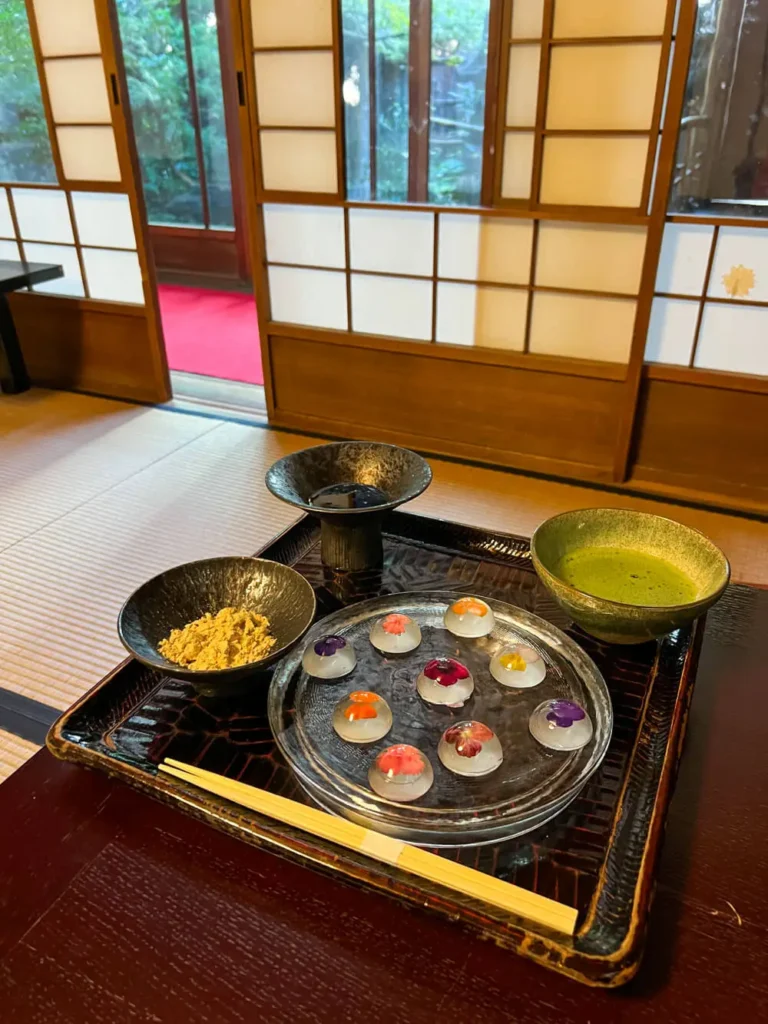
While mochi has ancient origins in Japan, it became a staple of ceremonial food for deities and aristocrats in the Heian period (794–1185), when Kyoto was the imperial capital of the country.
Therefore, Kyoto played a big role in both the development and popularisation of mochi.
Some specific types of mochi, like hanabira mochi (a traditional New Year’s delicacy), aburi mochi (originally a sacred offering at Imamiya Shrine), chie no mochi (“Wisdom Mochi”, sold to worshippers outside Chion-ji Temple), chogoro mochi (a chewy mochi with a long history linked to Kitano Tenmangu Shrine), and nama yatsuhashi (a more modern popular souvenir) all originated in the region of Kyoto.
Where to eat it
There are hundreds (if not thousands!) of sweet shops selling mochi in Kyoto. However, there are a few historical places you might want to visit for specific types of mochi from Kyoto:
You can still taste aburi mochi at Ichimonjiya Wasuke, one of Japan’s oldest restaurants, currently run by the family’s 25th generation since its establishment in the year 1,000.
Chie no mochi can be bought from traditional teahouses outside the Sanmon gate of Chion-ji Temple (Monjudo) in Amanohashidate, while Chogoro Mochi Honpo is the popular place to buy chogoro mochi. Finally, check out the section about nama yatsuhashi further down in this guide.
5. Obanzai: Kyoto Home-Cooking
Obanzai (おばんざい) is Kyoto’s traditional style of home-cooking – what you and I would probably call “grandma-style cooking“.
For a meal to be considered obanzai, at least half of the ingredients used must be produced or processed in Kyoto, and they must also be in season.
Obanzai cuisine follows five core spiritual elements, of which Shimatsu prioritises minimising waste and using as much of the ingredients as possible, including peels and stems.
Meals follow the traditional Japanese layout ichiju-sansai, meaning “one soup, three dishes” – it typically includes a bowl of rice, soup, one main dish and two side dishes.
6. Green Tea (Hōjicha & Genmaicha)

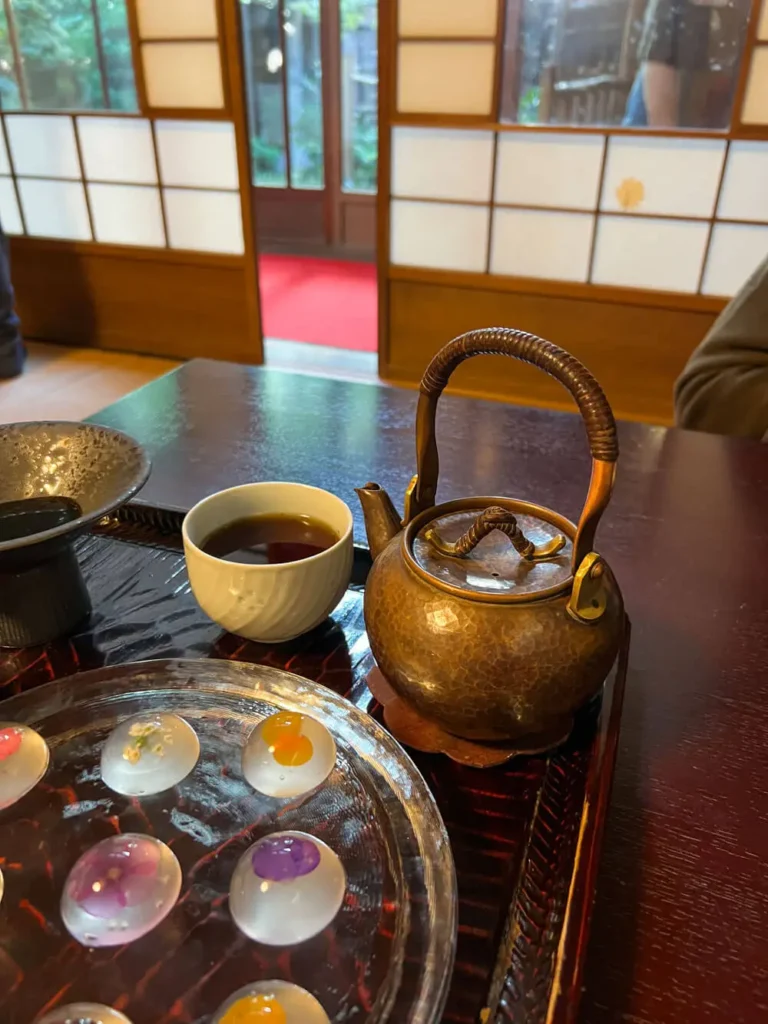
Matcha is not the only type of green tea that you can try in Kyoto.
Hōjicha is a Japanese roasted green tea (made from Bancha or Sencha green tea), which originated in Kyoto in the 1920s. The roasting process gives hōjicha its unique reddish-brown colour, with less caffeine and bitterness than other green teas. It tastes slightly nutty and caramelised.
Genmaicha, or “brown rice tea“, combines roasted Bancha or Sencha green tea with roasted brown rice. This Japanese green tea originated in the Edo period (1603-1868), and it was known as “the people’s tea”, as the brown rice worked as a filler and made it more affordable.
Light-yellow in colour, genmaicha has a lovely warm nutty flavour, making it a milder and less-bitter green tea.
Where to drink it
It’s not hard to find these types of green tea in Kyoto. You can find hōjicha and genmaicha for sale at premium tea shops and teahouses like Ippodo Tea Kyoto and Horaido Tea Stall.
7. Konoha-don

Konoha-don (木の葉丼, short for konoha-donburi) is a dish that is particularly popular in Kyoto and Osaka.
It’s a rice bowl (donburi), topped with thinly sliced kamaboko (fish cake), onions, scallions, and shiitake mushrooms, and covered with raw egg, which cooks with the residual heat from the rice. Sometimes, the dish is finished by sprinkling fried tofu or nori seaweed on top.
We don’t know exactly how konoha-don originated, but it is a variation of the popular egg-and-chicken oyakodon. The use of fish cakes instead of chicken might have been a way to make the dish quicker to prepare and more affordable.
Where to eat it
I ate the above bowl from the photo at Sohonke Nishin-Soba Matsuba, which is the same restaurant that created nishin soba. This way, I got to try both Kyoto dishes in one place!
You can usually find konoha-don in restaurants that specialise in udon and soba noodles.
8. Shojin Ryori: Vegetarian Buddhist Cuisine


Shōjin ryōri (精進料理) is the traditional Japanese Buddhist vegetarian cuisine, eaten at temples across the country.
Rooted in Zen Buddhism and dating back to the 12th century, Shōjin ryōri prioritises the use of local seasonal ingredients. It’s strictly prepared without meat or animal products, as well as pungent ingredients (like garlic and onions).
Shōjin ryōri follows the “rule of five”: the meal should incorporate five colours (white, green, yellow, black and red), five flavours (sweet, sour, salty, bitter and umami), and five cooking methods (raw, stewed, steamed, boiled and roasted dishes).
Where to eat it
Despite the religious origins of this cuisine, you don’t have to follow Buddhism, or even be vegetarian, to enjoy it!
In Kyoto, you can try it at specialised restaurants like this one in Arashiyama, but you can also experience it as part of temple stays across Japan. I had my very own Buddhist temple stay experience in Koya-san (reachable from Kyoto), and it was one of my favourite memories from my trip.
9. Matcha soba (cha-soba)

In the land of high-quality matcha, it’s not just sweets and desserts that get to be turned green!
Matcha soba, or cha soba (抹茶そば, green tea noodles), is considered a modern invention from the late 20th century, combining traditional soba and matcha. Matcha powder is mixed in with the buckwheat flour, resulting in firm noodles with a characteristic green tint.
The noodles can be served cold with a dipping sauce (as zaru soba) in the summer, or in hot soups during the colder months.
Where to eat it
I had the above bowl of noodles at Yosiya, near Arashiyama. Apart from the classic matcha soba, they also seem to be popular for their udon noodles in a creamy Uji matcha broth.
Also, their yuba and cheese sticks are delicious, making it a great opportunity to try two Kyoto foods at once!
10. Yuba


Yuba (ゆば), or tofu skin, is a nutritious and protein-rich food made from the “skin” that forms on top of boiled soy milk (similar to the cream layer that forms on boiled milk).
It has a leathery texture, and takes on the flavour of what it’s cooked with.
Originally from China, yuba was introduced to Japan by Buddhist monks during the Kamakura period (1185–1333). As the spiritual heart of Zen Buddhism in Japan, yuba became a vital part of Zen temple cuisine in Kyoto, before spreading throughout the country during the Edo period.
Today, yuba continues to be an important element in both kaiseki and shōjin ryōri (Japanese Vegetarian Buddhist) cuisines, praised as a source of antioxidants and anti-aging properties.
Where to eat it
You may find yuba served as an accompaniment to meals in some casual restaurants, and even for sale as a snack at street food stalls. But if you’d like a full yuba experience, there are restaurants in Kyoto specialising in yuba dishes.
Yuba Higashiyamayuuzu is known for serving yuba dishes made from locally-grown Kyoto soy beans, and exploring the versatility of this ingredient. Kyo Yubadokoro Seike is another good option near Nijō Castle, for a diverse tasting of yuba in a multi-course meal.
11. Mitarashi dango

Mitarashi dango (みたらし団子) is undoubtedly one of my favourite Japanese snacks! I will never forget the moment I first bit into these deliciously-chewy grilled rice dumpling skewers doused in a caramelised soy sauce glaze.
One of the most popular stories about the origins of Mitarashi dango goes that the shape of the snack was meant to mimic the water bubbles of the mitarashi (the purified water fountain at the entrance of shrines) at Shimogamo Shrine, in Kyoto.
Other theories say that the original skewer with five dumplings was meant to resemble the human body, representing the head and four limbs.
Where to eat it
Kamo Mitarashi Tea House, near Shimogamo Shrine, claims to have invented the modern Mitarashi dango in the early 20th century, with a thickened soy sauce and brown sugar glaze.
However, you won’t have any trouble finding freshly-made Mitarashi dango at street food stalls in Kyoto. For a casual pick-me-up, you can even buy them from convenience stores, like 7-Eleven, Lawson, and Family Mart.
12. Wagashi

Wagashi (和菓子) are traditional Japanese sweets that are typically served to be enjoyed with a cup of green tea. These sweets are a central part of traditional Japanese tea ceremonies.
Typically made from natural, plant-based ingredients like grains, rice flour, and azuki beans, wagashi come in many shapes, sizes, and flavours. There are three main categories of wagashi: namagashi (fresh confectionery), han namagashi (half-dry confectionery), and higashi (dry confectionery).
While the roots of wagashi-making can be traced back to the Nara period (710–794), most modern wagashi originated in the Edo period (1603–1868).
As the former imperial capital of Japan for more than 1,000 years, Kyoto’s wagashi-making was heavily influenced by the Imperial Court and the tea ceremony culture. This led to the development of the beautifully-artistic Kyoto-style confectionery, Kyogashi.
Where to eat it
Wagashi are part of every tea ceremony experience, and this is how I had my first taste. However, you can also have them at cafes, restaurants, temples, and gardens where green tea is served.
I also often found wagashi for sale at specialty sweet shops and tea rooms, like Toraya Kyoto Ichijo and Saryo Housen.
Best Wagashi Tasting Experiences in Kyoto
*Use my code “JESSVKLOOK” for 10% off your first purchase, or 3% off for existing customers
Klook.com13. Hamo (Pike Conger Eel)
Hamo (ハモ, pike conger) is a type of conger eel, and it’s a Kyoto delicacy commonly eaten during the summer.
Because Kyoto is landlocked, the consumption of fish required transporting it from neighbouring cities. As hamo was a robust fish that could survive the transportation process, people from Kyoto have been able to enjoy it for over 1,000 years.
Hamo has many small bones that are difficult to remove, so chefs in Kyoto developed specialised bone-cutting methods (honekiri) to prepare the fish. It can be served parboiled, in skewers, in soup, as tempura, or in sushi.
Where to eat it
As the preparation of hamo requires significant effort, it’s typically enjoyed at restaurants, and it’s an understandably pricey dish. Sangen-an is a popular restaurant for eating hamo in kaiseki-style.
Kyoto’s annual Gion Festival is also known as “Hamo Festival”. The season’s most delicious hamo is served during this time, so make sure to taste hamo if you visit Kyoto during July!
14. Matcha Green Tea Desserts
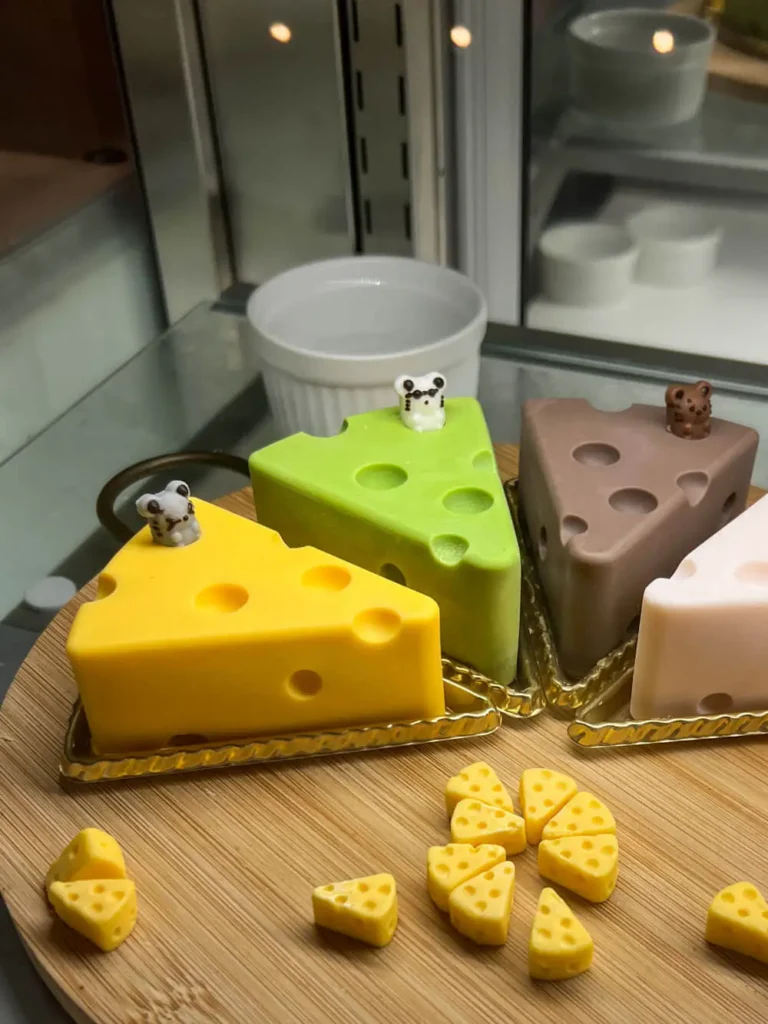

Of course, the popularity of high-quality Uji matcha in Kyoto has led to an explosion of matcha-flavoured desserts and confectionery being sold throughout the city.
From ice cream to mochi, cheesecake, tiramisu, Swiss rolls, jelly, cookies, chocolates, and more, there’s almost nothing that can’t be made in its matcha variant.
Where to eat them
I can confirm that there is truly no shortage of matcha-flavoured desserts and sweets in Kyoto. You’ll stumble upon them in every street, from small cafes to tea houses, food stalls, and sweet shops.
Motoan Tea House is a historical tea room serving both tea and sweets. If you’re looking for the must-try desserts in Kyoto, check out the matcha tiramisu at Maccha House, the matcha parfait at Gion Tsujiri, and the many sweets at Saryo Suisen, as well.
15. Kamo Nanban Soba
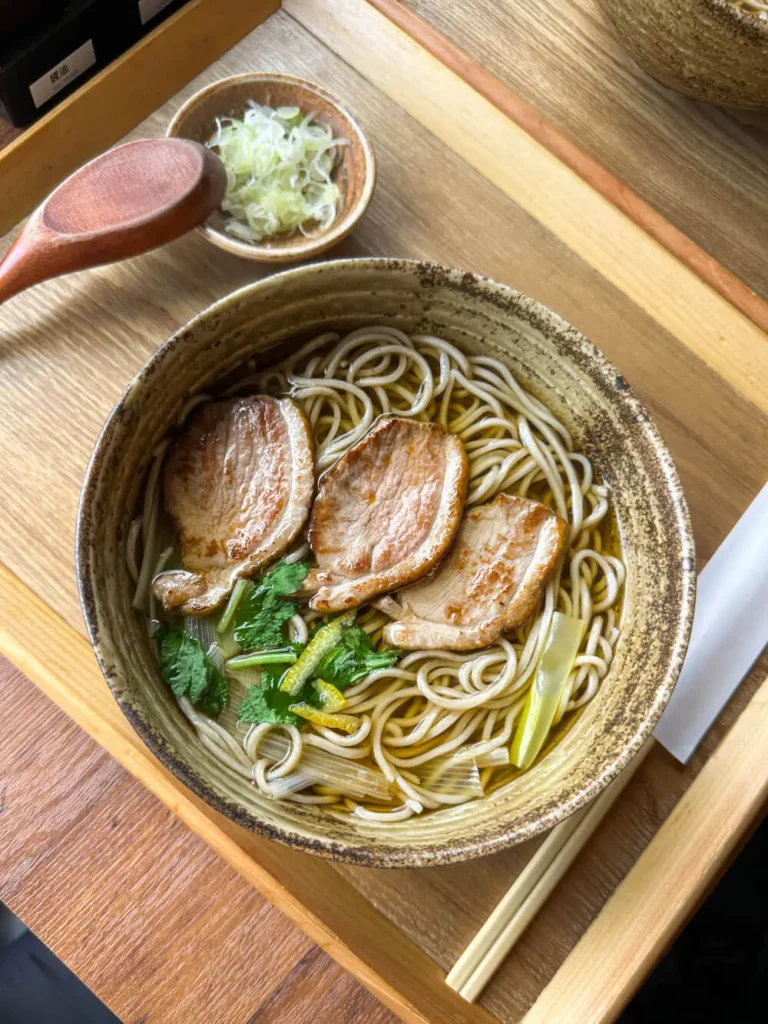
Kamo nanban soba (or kamo nanba, 鴨南蛮) is a noodle dish made with soba or udon noodles in a hot dashi broth, topped with duck meat and green onions.
Originally a winter dish, it can now be enjoyed year-round. Sometimes, chicken may be used instead of duck, in which case the dish is called tori nanban soba or kashiwa nanban soba.
The dish seems to have originated as a variant of bukkake soba (noodle dishes served with a hot broth made with soy sauce and bonito flakes), which became popular in the middle of the Edo period (1603–1868). Kamo nanban soba is believed to have emerged in the Kansai region before being popularised in Edo (Tokyo).
Where to eat it
I had the above bowl of Kamo nanban soba at Ishiusubiki Nihachisoba Sobashiki Kiyomizuten, although I will admit that it is located in a very busy area near Kiyomizu-dera temple.
You can usually find Kamo nanban soba at traditional Kyoto soba restaurants, like Sonoba.
16. Yatsuhashi and Nama Yatsuhashi

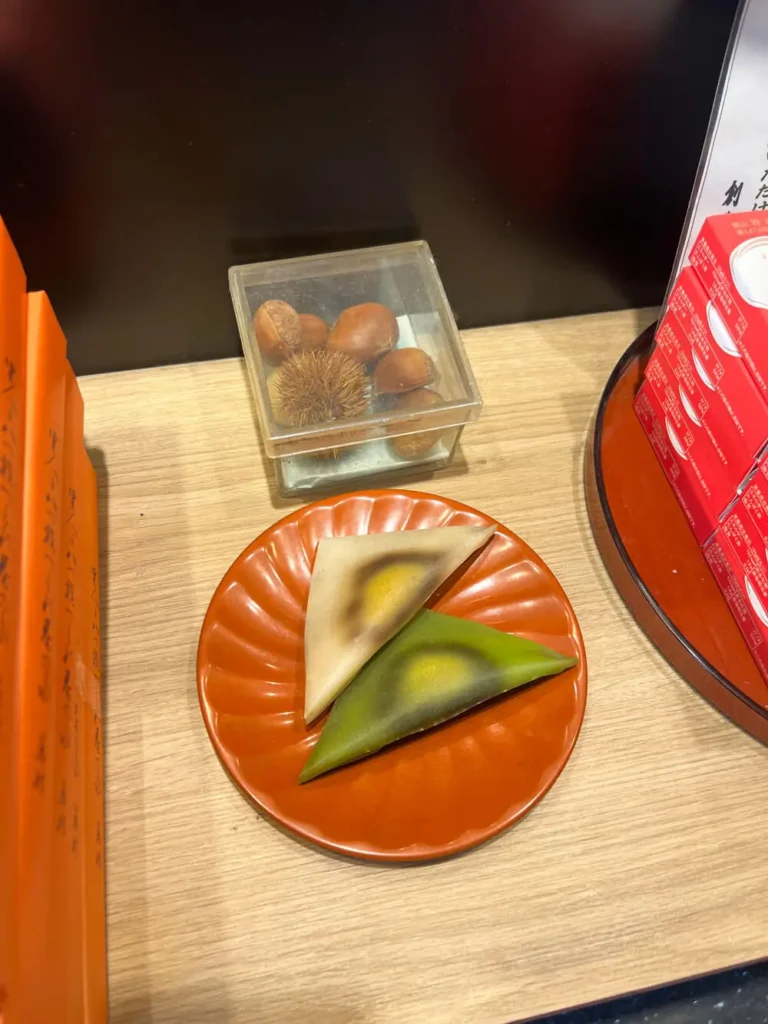
I had to create a dedicated section for yatsuhashi (八ツ橋) in this food guide, because this traditional sweet from Kyoto is one of the city’s most popular souvenirs, and it has evolved to have multiple versions.
The traditional yatsuhashi originated in the Edo period in its classic hard-baked form, shaped like a koto (Japanese harp), with a crispy texture and cinnamon flavour.
More recently, in the 20th century, a “raw” version of the sweet emerged – nama yatsuhashi.
The soft and chewy unbaked rice flour dough is cut, wrapped around red bean paste filling, and folded into a triangular shape. This modern version can be found in a myriad of flavours, such as matcha, chocolate, chestnut, and many others.
Where to eat it
Both Honke Nishio-Yatsuhashi and Shogoin Yatsuhashi Sohonten, two historical sweet shops operating for over 300 years, claim to have invented yatsuhashi in 1689. They are located next to each other, so you can take your pick!
I tasted both yatsuhashi and nama yatsuhashi at Honke Yatsuhashi, where you can find various classic and seasonal flavours. They even serve matcha-flavoured ice cream with both yatsuhashi kinds on it, so you can have the best of all worlds!
17. Kyoto Specialty Furikake

Recently, this famous seasoning has become one of Kyoto’s main souvenir products for visitors.
While travelling across Japan, I tasted many kinds of furikake (ふりかけ, rice seasoning), but I am eternally grateful to have learned about this particular one before visiting Kyoto – it really is the best furikake I’ve ever tried.
Japanese furikake is a dry condiment, often used to sprinkle on top of white rice, or inside onigiri. However, you can use it in many ways.
There are many flavours of furikake, but this red chili pepper furikake from Kyoto is very different from the usual seasonings made with dried fish. The umami in this chili pepper blend is unmatched.
Where to find it
You can both taste and buy Kyoto’s delicious furikake from the specialty condiment shop Ochanokosaisai, in Nishiki Market (or at any of their other five shops). They sell other chili products as well, and you can even make your own spice blend according to your preference.
18. Kyoto Sushi: Saba-Zushi (Mackerel Sushi)
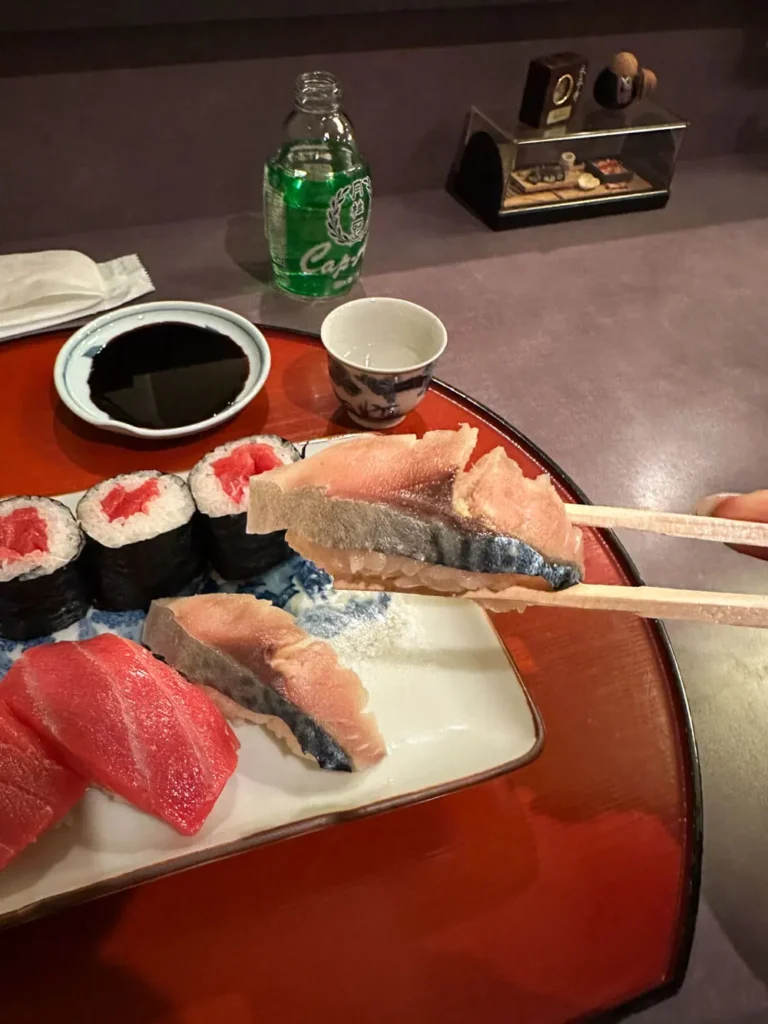
Distinct from the typical Tokyo-style nigiri sushi, saba-zushi (鯖寿司) is a variety of Japanese pressed sushi (oshizushi), also known as Kyoto-style pressed sushi.
The sushi rice base is topped with vinegared salted mackerel (shime saba), and often wrapped in kelp or bamboo skin.
Saba-zushi originated out of necessity, due to the need of preserving fish during transport before refrigeration technology.
Back then, mackerel needed to be salted to survive transport inland from Wakasa Bay via the historic Saba Kaido route (literally, “Mackerel Road”) to Kyoto. The mackerel was then vinegared and used to make sushi.
Where to eat it
A couple of well-known sushi restaurants for saba-zushi in Kyoto are Izuju, in Gion, and Hanaore, near Shimogamo Shrine.
I ended up trying saba-zushi at a small, mom-and-pop sushi restaurant called Hatsune Sushi. The place is small, with only a handful of counter seats, but the wait and language barrier was well worth it for the carefully-crafted sushi we were served.
Is food in Kyoto expensive?
To understand the average cost of food in Kyoto, you should understand a little about Japan’s current economic situation.
The Japanese yen has significantly weakened over the last years. This, combined with a long period of low inflation, stagnant wages, and intense competition among restaurants make eating out feel very cheap when compared to other developed countries.
Of course, food in Kyoto is more expensive than in smaller, less-touristic cities. While it isn’t difficult to find cheap eats in Kyoto, I did find that the city’s food scene has a bigger emphasis on high-quality, premium-ingredient meals, as well as multi-course set menus over quick bites, in general.
For reference, most restaurant meals I had in Kyoto averaged around 2,000 yen (USD 12.90), per person. Kaiseki-style meals and premium-ingredient dishes (such as conger eel) are usually more expensive, starting from 4,000 yen (USD 25.80) at the lower end.
Final thoughts
I hope this local Kyoto food guide with the best traditional foods and where to eat them is helpful for your upcoming trip. There are many more typical Japanese dishes that you can discover in the city, but this list is a good start.
If you have questions about any part of this post, feel free to reach out in the comments below!
Check out my Japan guides:
Visiting Kyoto soon and looking for local foods to try? Pin this Kyoto food guide to save it for later!