

If you’re a foodie visiting Shizuoka, I’m sure you’ll want to try as many traditional foods as possible. As a food-lover myself, I wasn’t satisfied with only trying typical Japanese foods – I wanted to create a food guide with foods that actually originated in Shizuoka.
So, I’ve compiled this food guide with 7 of the best foods from Shizuoka that you must try during your Japan trip – and where to eat them!
What food is Shizuoka famous for?
The local cuisine of Shizuoka is heavily influenced by its diverse topography and resulting microclimates – from the Japanese Alps (including Mount Fuji) to the coastal Suruga and Sagami Bays on the Pacific Ocean.
This privileged geography benefits from pristine fresh mountain waters, as well as highly-fertile volcanic soils across the region. This makes Shizuoka a very productive region and its cuisine is famous for high-quality foods.
It’s no coincidence that Shizuoka is known for wasabi, as it cultivates nearly half of all of Japan’s production – just as Shizuoka green tea is considered some of the best in the country. Shizuoka is also Japan’s premium destination for unagi (freshwater eel), as Lake Hamana’s eels are renowned all over Japan.

Visiting soon? Check out my guide for visiting Okuōikojō Station (Japan’s Most Beautiful Remote Train Station) as a day trip from Shizuoka City!
Best Food in Shizuoka: 7 Local Foods and Drinks to Try
1. Abekawa Mochi
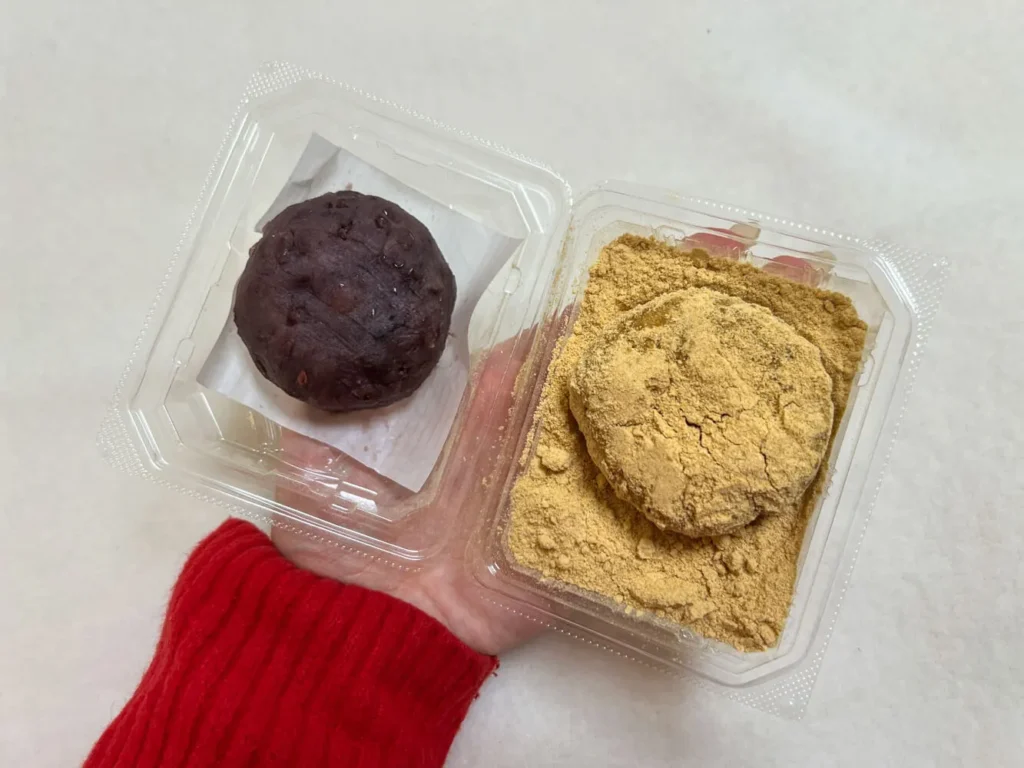
Abekawa Mochi (安倍川もち) is a typical sweet from Shizuoka, made by dusting freshly-pounded mochi (rice cakes) with a mixture of sugar and roasted soybean flour (kinako). It’s commonly sold in sets alongside a version that’s wrapped in smooth red bean paste as well, so make sure to try both!
It is believed that this type of mochi was created by teahouses along the Abe River (Abekawa) during the Edo period (1603-1869), serving it to travellers along the historic Tōkaidō route. This is where the name Abekawa Mochi comes from, and it is believed to be the precursor of the popular Japanese kinako mochi that’s now sold all over the country.

Where to eat it
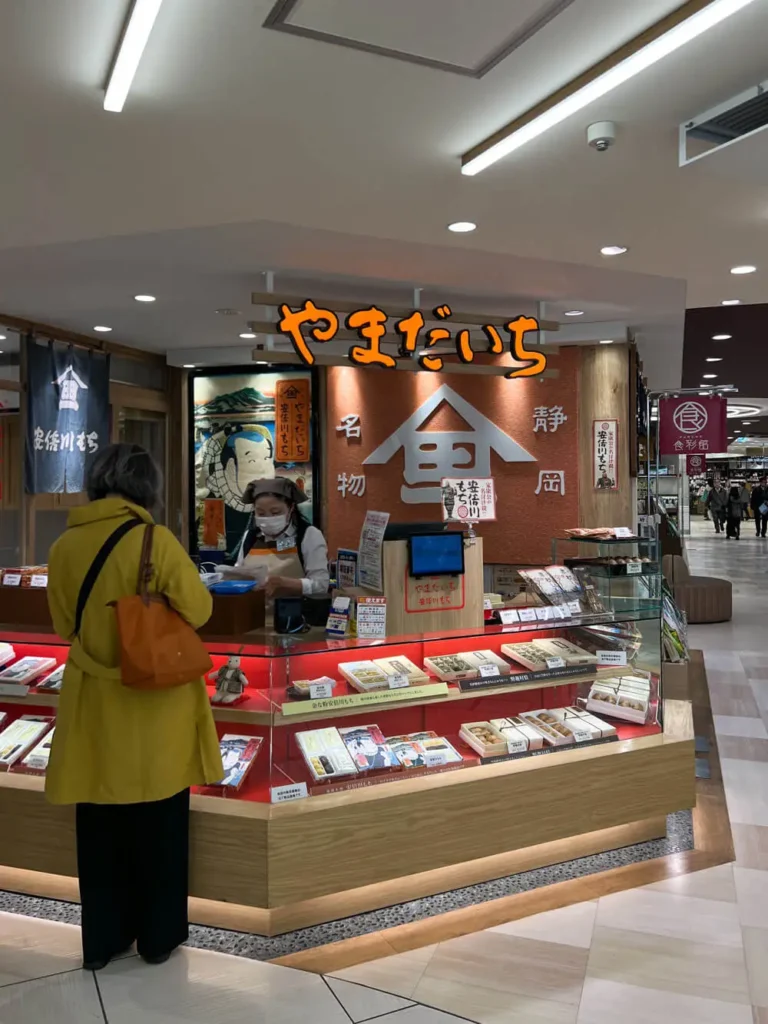
You can still find historic shops selling Abekawa Mochi near Abekawa Bridge, such as Kagoya and Sekibeya. I bought mine from the Parché food hall inside Shizuoka Station (it’s easy to get lost inside, as it’s so big, but look for the Yamadaichi shop!).
2. Shizuoka Oden
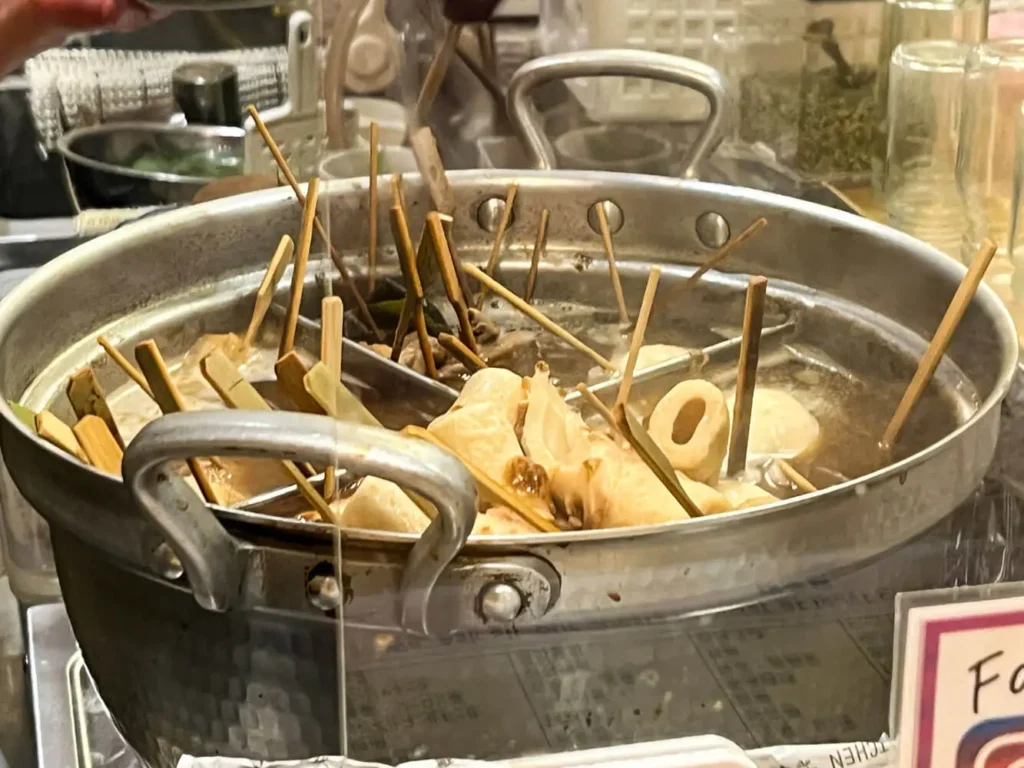
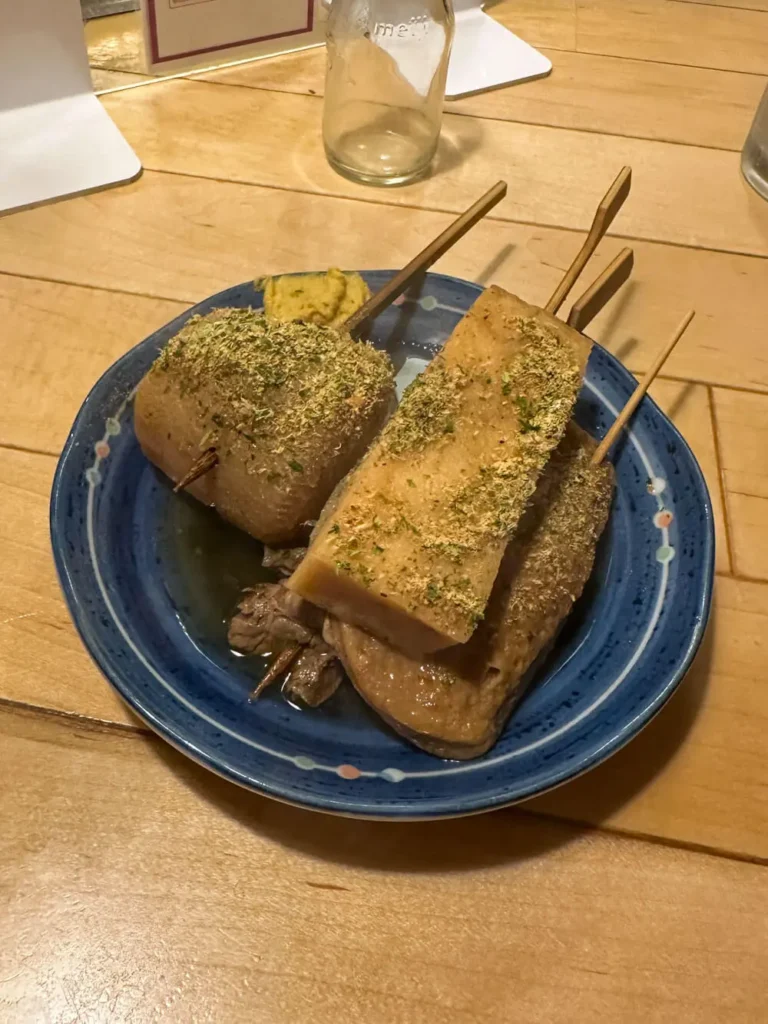
I will be very honest and say that oden is probably my least favourite Japanese dish – but I just couldn’t leave Shizuoka without having it at least once!
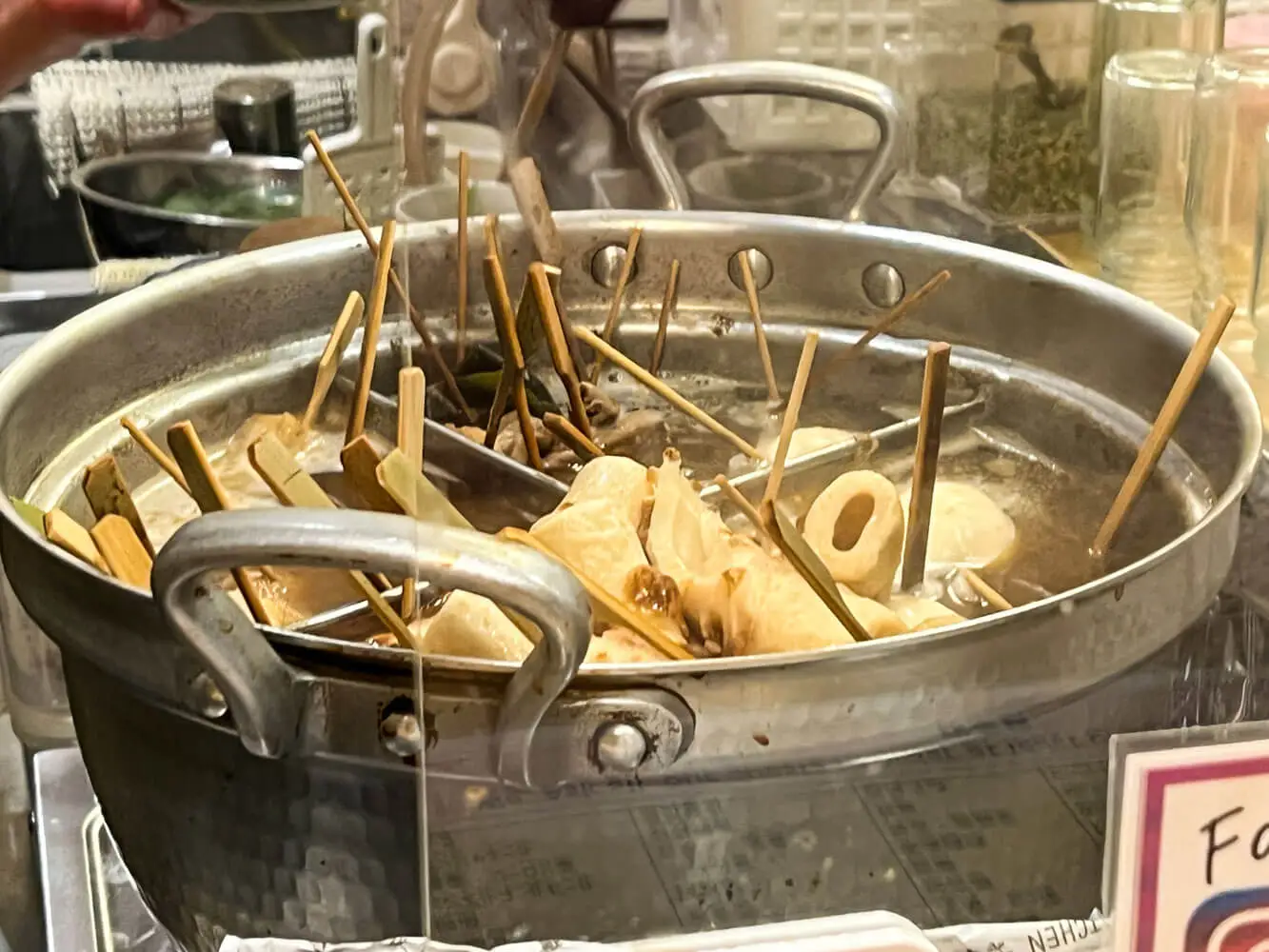
Shizuoka Oden (静岡おでん) is a variation of the popular oden eaten across Japan: a one-pot dish where various ingredients like eggs, vegetables, tofu, and fish cakes are boiled and kept simmering in a broth before being served with karashi (spicy Japanese mustard).
The Shizuoka variation differs from other types of oden first by serving each ingredient individually on a wooden skewer, and using a rich, soy sauce and beef-based broth. It’s common to sprinkle the whole dish with dashi powder and green laver (aonori), and the most distinguishing local ingredient is kuro hanpen (black fishcake), which is made with sardines and mackerel caught in Yaizu Port.
Where to eat it
You can find oden served at many restaurants and izakayas in Aoba Yokocho and Aoba Oden Street, in Shizuoka. These two parallel streets maintain a very cool retro Showa-era feel, and they’re the most popular spots for trying oden in the city.
If you want to stay closer to Shizuoka Station, head to the award-winning izakaya Umibozu Honten, which is very popular among locals!

Visiting Shizuoka from Tokyo? Check out my Tokyo Food Guide!
3. Shizuoka Green Tea
Did you know that Shizuoka Prefecture is Japan’s most renowned tea region, responsible for around 40% of the country’s total tea production? That’s much more than Kyoto and Uji, which are Japan’s most famous regions for matcha!
Monk Shoichi Kokushi is considered the founder of Shizuoka tea, as he brought tea seeds from China and planted them in Suruga Province (modern-day Shizuoka) in 1241. As a result, Shoichi Kokushi’s birthday is still celebrated every year on November 1st as Shizuoka Tea Day (静岡市お茶の日).
Shizuoka tea (静岡茶) is the umbrella term for all green tea produced in Shizuoka, with the main ones being sencha and fukamushicha (深蒸し茶, “deep-steamed tea“). Shizuoka’s high quality green tea production benefits from the region’s fresh waters and mineral-rich volcanic soil, due to its geographic position near Mount Fuji.
Where to drink it
If you’re around Shizuoka Station, Kissa Issa is a popular shop with a wide variety of local teas, from small to large growers. If you’re a fan of matcha, Matcha KIMIKURA inside the Parché food hall of Shizuoka Station also serves local matcha!
For something a little more special, I recommend visiting the Shizuoka Tea Museum for its tastings and tea ceremony experiences. You can also buy various local teas from the museum shop.
4. Unagi Pie (Eel Pie)
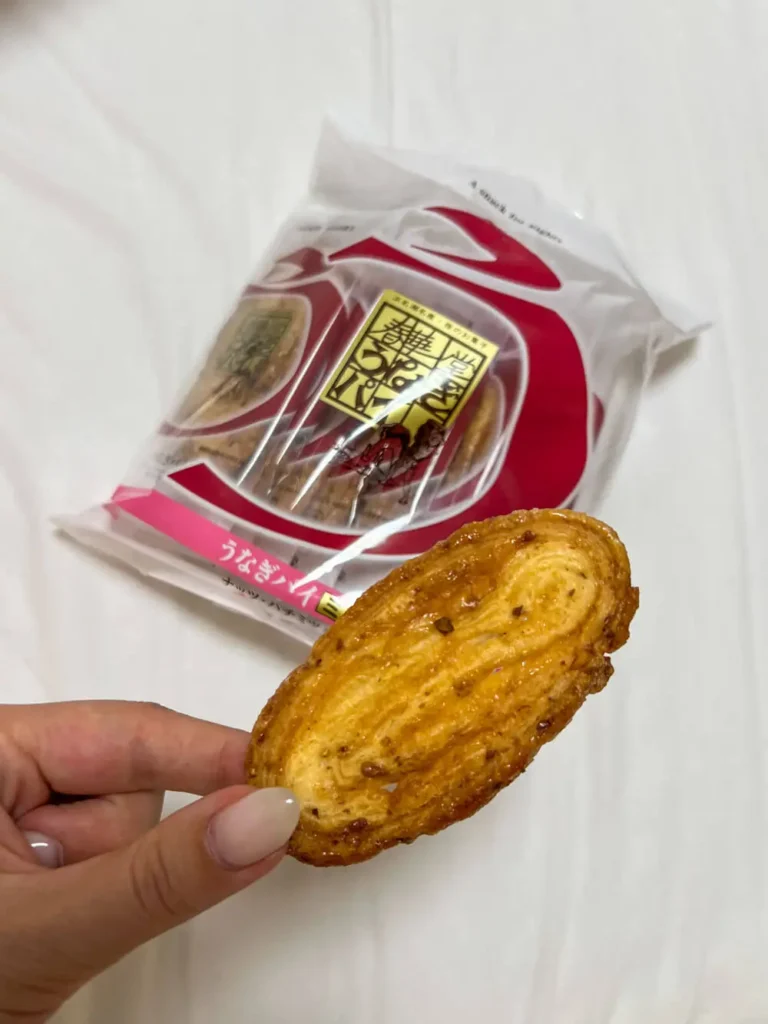
Unagi Pie (うなぎパイ) is a famous souvenir from Shizuoka. As per the name, it’s a crispy and buttery flaky pastry made with eel extract. It’s also brushed with a secret sauce that contains garlic, to mask the fishiness of the eel extract and give the pastry a deeper flavour.
Despite how fishy it sounds, these pies don’t have a strong eel taste at all, and I think their sweetness and texture is very similar to a French palmier.
Shizuoka’s Lake Hamana is very famous for its eels, and so they inspired Koichi Yamazaki (the president of the local confectionery company Shunkadō) to invent the unagi pie in 1961. While the classic recipe hasn’t changed since, they now also sell other flavour variations, including brandy, honey and nuts.
Fun fact: The pastry’s slogan is “the ideal evening snack” – apparently because in Japan eels are believed to boost male libido. While I can’t confirm nor deny this, you may want to test it out yourself!
Where to eat it
I bought my first pack of unagi pie at a souvenir shop inside Shizuoka Station, as they aren’t hard to find.
However, if you visit Hamamatsu, I highly recommend getting them from the original Shunkadō shop! For a full experience, paying a visit to the Unagi Pie factory is the ultimate plan, as you can see how the snacks are made. They also have a shop, a restaurant, and a cafe where you can eat local eel dishes and desserts made with unagi pie!
5. Sakura Ebi (Cherry Blossom Shrimp)
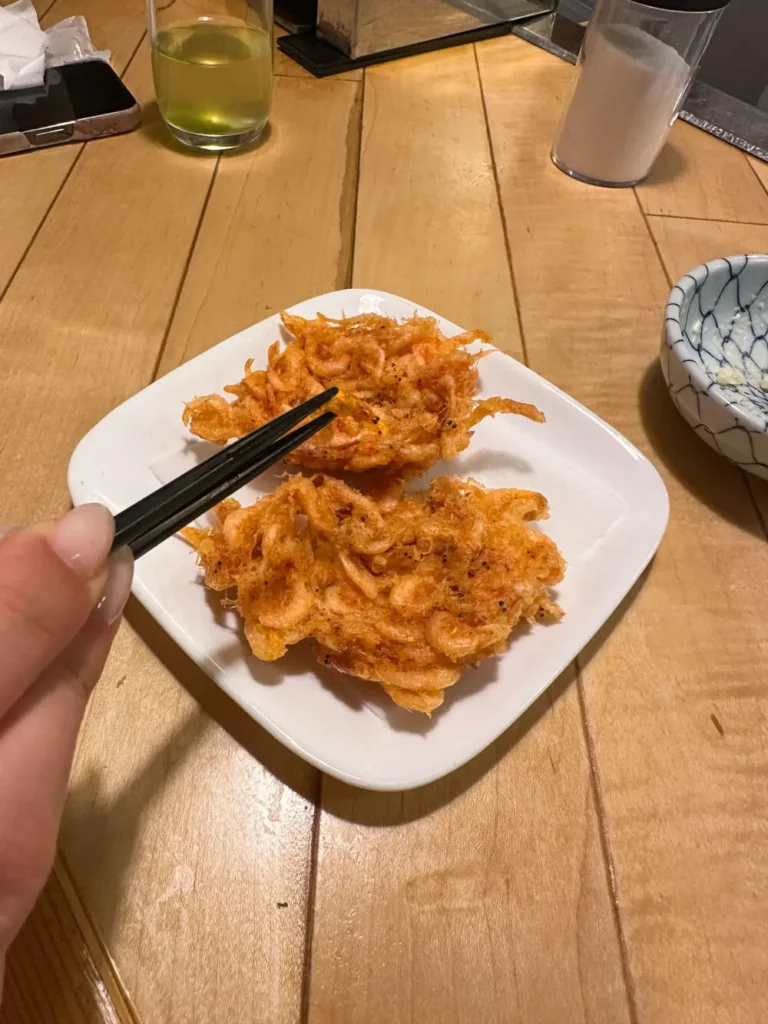
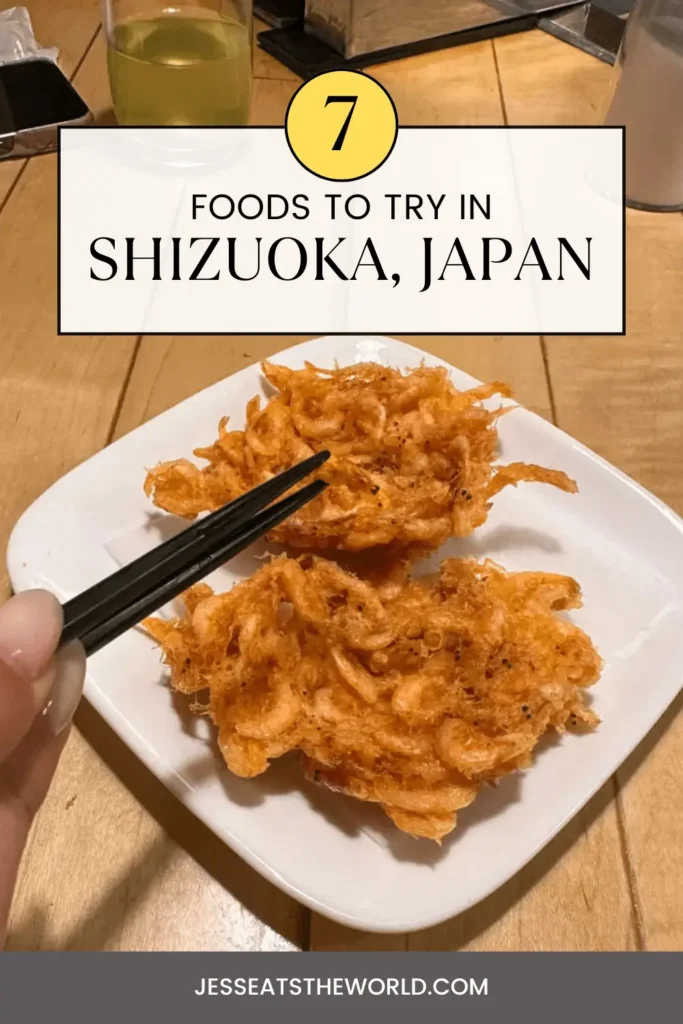
Sakura Ebi (サクラエビ, also “sakura shrimp” or “cherry blossom shrimp”) are tiny, translucent pink shrimp that are caught exclusively from Shizuoka’s Suruga Bay. These tiny shrimp are only caught twice a year – in spring and autumn – and have a delicate, sweet flavour.
They’re usually eaten whole (head, shell, tail, and all – and, honestly, it would be difficult to deshell such small creatures!) and can be served lightly boiled, dried, deep-fried, in tempura, or raw with wasabi and soy sauce.
Where to eat it
The coastal area of Yui is the most famous place for the harvest of sakura shrimp, so if you have the chance to go, make sure to visit the Yui Harbour Market, or eat at one of the many local seafood restaurants, like Kurasawaya or Aozora (right outside Yui station).
In Shizuoka City, I found sakura shrimp served as a snack in izakayas and oden restaurants.
6. Hamamatsu Gyoza
Aside from its famous eels, did you known that Hamamatsu is also known as the Gyoza Capital of Japan? The city has one of the highest consumption rates of gyoza in all of Japan year after year!
The local style of making Hamamatsu Gyoza (浜松餃子) is by frying as many as possible at the same time in a frying pan, arranged in a circular pattern. They are stuffed with cabbage, onion, and pork, and served upside-down, with boiled bean sprouts in the center, and a tangy-spicy dipping sauce.
Because they are filled mostly with cabbage, Hamamatsu gyoza are very light, so it’s easy to eat a lot of them without feeling full! The best way to enjoy them is paired with a cold beer.
Where to eat it
There are more than 300 specialty shops, izakayas, and restaurants selling gyoza in Hamamatsu, so you’ll be spoiled for choice!
However, for an authentic taste, you should absolutely visit Ishimatsu Gyoza, which was the birthplace of this style of gyoza in 1953, and the first restaurant to serve them with the famous bean sprouts in the centre. They also have a location inside Hamamatsu Station.
If you’re staying by Shizuoka City, GOMIHATTIN is a popular family restaurant chain specialising in Hamamatsu Gyoza since 1970.
7. Shizuoka Wasabi
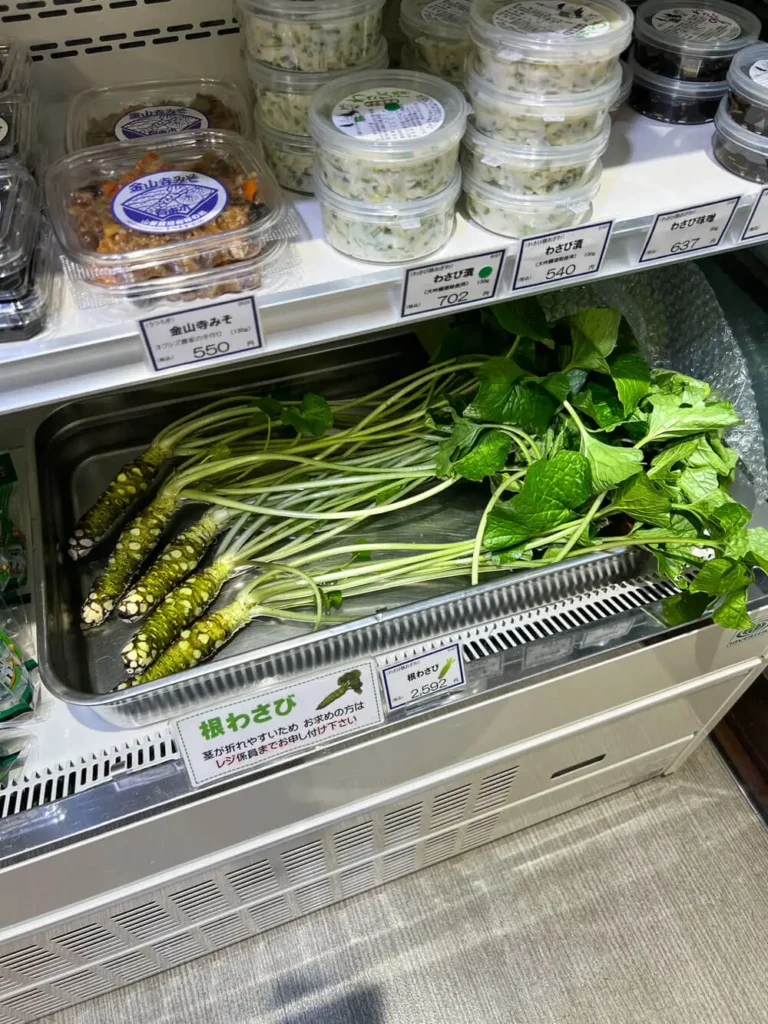
Shizuoka is very well-known for its wasabi, as this is where the commercial cultivation of wasabi started, nearly 500 years ago!
Shizuoka Prefecture produces almost half of all of Japan’s sawa wasabi (沢わさび, “water-grown wasabi”) due to its favourable geographical conditions and mineral-rich spring waters. This is considered the highest grade of wasabi quality.
As a result, you’ll be able to find many products made with wasabi in Shizuoka. Wasabi-zuke is a famous local specialty made by pickling wasabi, and you’ll also be able to spot other souvenirs like wasabi salt, wasabi miso, and even wasabi noodles.
Where to eat it
While you’re likely to taste Shizuoka wasabi at local sushi restaurants, you’ll also find many wasabi-related products in souvenir shops (I recommend the food hall at Parché inside Shizuoka Station).
You can also add a curious element to your trip by tasting wasabi-flavoured foods that you may not have tried before! For example, Tamaruya Honten serves wasabi rice bowls as well as wasabi soft serve ice cream!
Final thoughts
I hope this local Shizuoka food guide with the best traditional foods and where to eat them is helpful for your upcoming trip! There are many more typical dishes that you can discover in the city, but this list is a good start.
If you have questions about any part of this post, feel free to reach out in the comments below!
Visiting soon? Check out my Japan guides:
Visiting Japan soon and looking for the best foods to try in Shizuoka? Pin this Shizuoka food guide to save it for later!