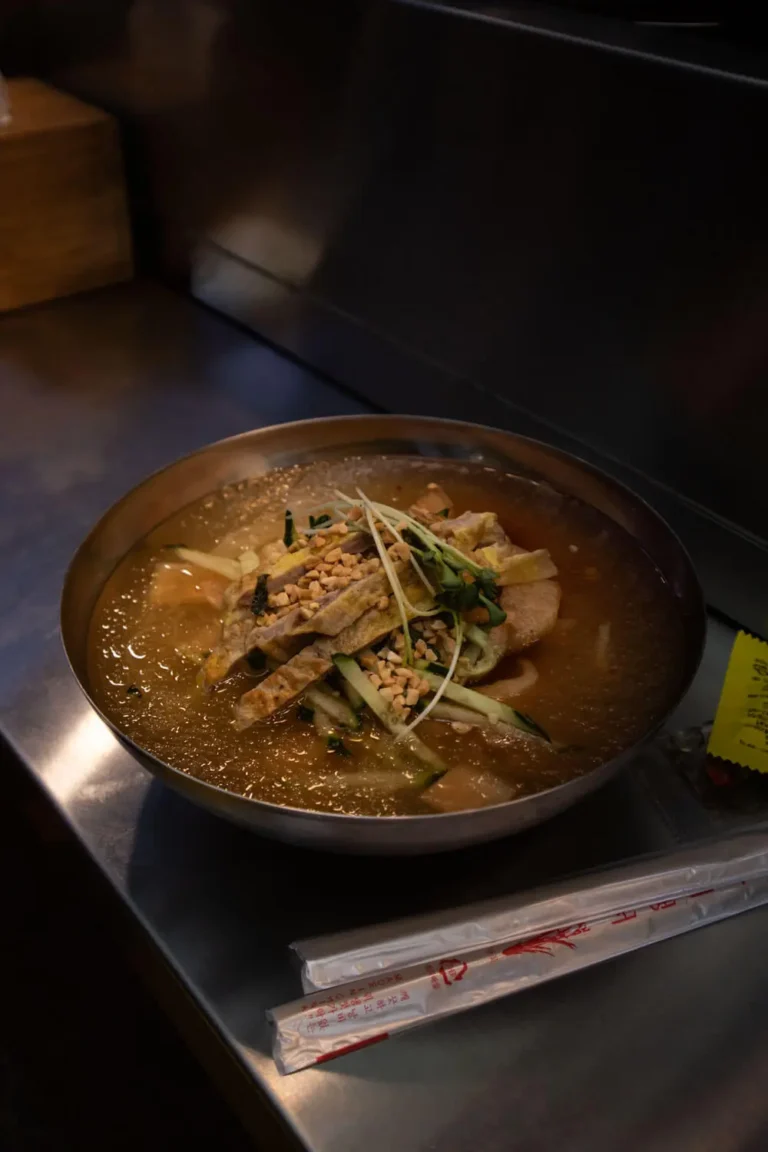


If you’re a foodie visiting Montenegro, I’m sure you’ll want to try as many traditional foods as possible. As a foodie myself, I was completely surprised by the diversity of typical foods in the country – and I’m going to help you find them too!
I’ve compiled this guide about Montenegrin foods and some of the most popular dishes that you absolutely cannot miss during your trip to Montenegro.
Disclosure: This post may contain affiliate links for products or services that I personally endorse and love. Should you make a purchase, I may make a commission at no additional cost to you. Thank you for supporting Jess Eats The World!
What is traditional Montenegrin food?
Montenegrin food is the food that’s typical in the country of Montenegro – located in the western Balkan peninsula and on the Adriatic Sea. Its geographical location and history certainly contributed to influencing its gastronomy.
Montenegro has some regional differences in its traditional foods:
- In the north of the country, the cuisine is influenced by the lakes and the mountains – lamb, lake fish, and cheese make up the core of the typical dishes here.
- The central region of Montenegro is still mountainous, with plenty of fish from Lake Skadar as well as hearty meat dishes and wine.
- The coast is still mountainous but also heavily influenced by the Mediterranean, so you’ll find an abundance of fish and seafood, pasta, kid meat, and dairy-based dishes.
Montenegrin gastronomy (and Balkan cuisine in general) historically had a strong influence from Byzantine and Ottoman cuisines, which also influenced modern Turkish cooking. You’ll also notice some Eastern European hints, as well as a strong Italian influence in the coastal cuisine in Montenegro.
Montenegrin food is usually not spicy.
Best food tours in Montenegro
12 Traditional Foods and Drinks to Try in Montenegro
1. Smočani kačamak (Fatty porridge)

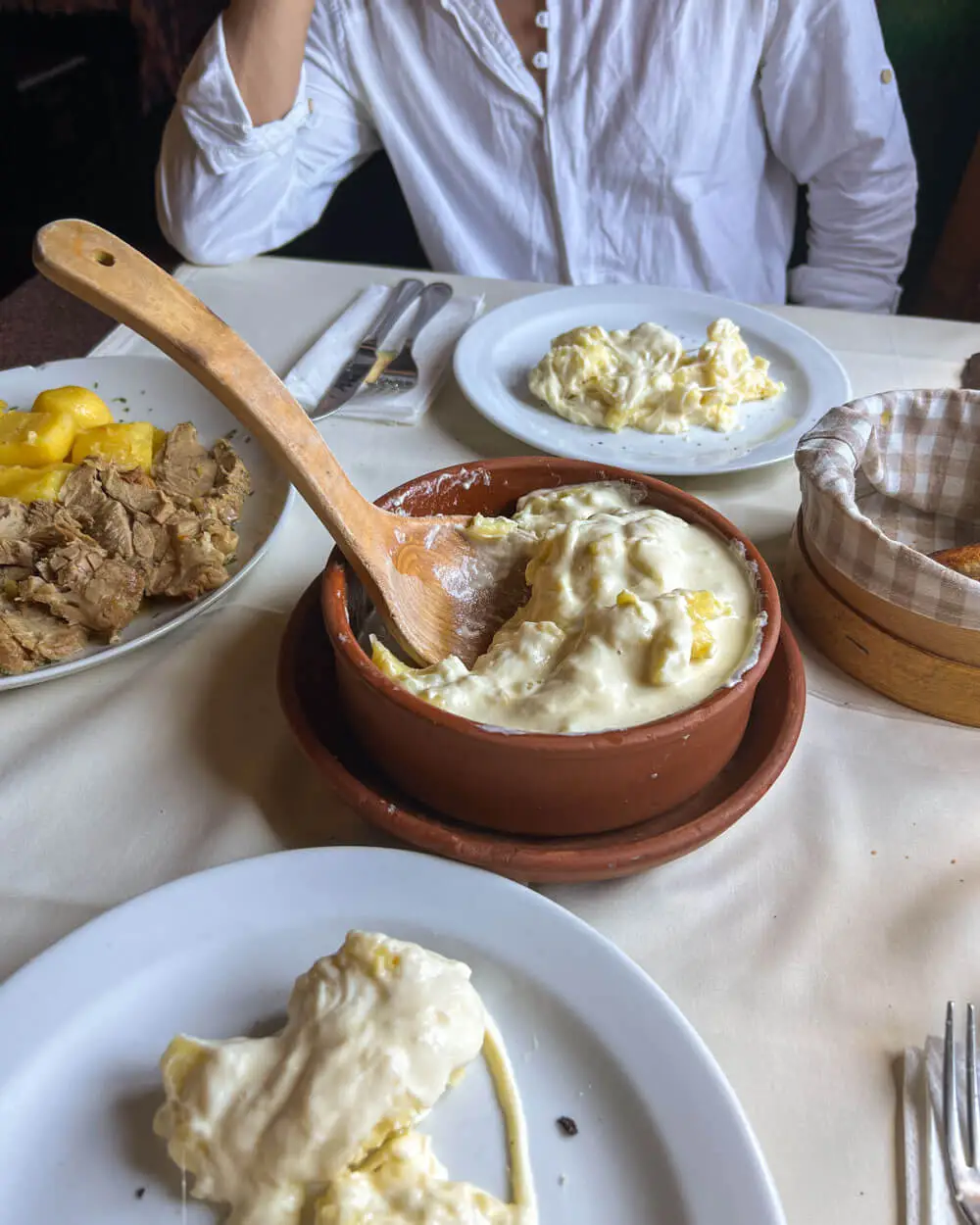
Smočani kačamak (or simply kačamak – pronounced “kah-chah-mahk“) is Montenegro’s national dish, and one of my favourites!
As a local take on the classic Balkan and Turkish dish, the comforting Montenegrin version of kačamak is made with potatoes instead of cornmeal. The potatoes are mixed with flour, local cheese, and kajmak (a dairy product similar to clotted cream), and mashed into a thick and creamy paste.
It is usually served alongside yoghurt or sour milk, as well as an accompaniment to salads and meat dishes.

Where to eat it
You can find kačamak in traditional restaurants across Montenegro, but the best ones are found in the mountainous regions, particularly in the town of Kolašin. This is where I devoured the one pictured above, at Restoran Vodenica.
2. Kolašinski lisnati sir (Montenegro leafy cheese)

If you’ve read any of my other food guides, then you already know how obsessed with cheese I am (despite my lactose intolerance, of course – it is always a worthy sacrifice!).
Montenegro’s leafy cheese is now part of my list of favourite cheeses – it’s a mild cheese made from cow’s milk, and it’s called “leafy” due to its thin, layered texture. It’s usually served as an appetiser.
This leafy cheese is produced in the towns of Kolašin and Mojkovac, and protected under a national Protected Designation of Origin (PDO) certificate. The quality of the cheese is determined by the number of layers – the more layers, the better the cheese!
Where to eat it
The best place to eat Montenegro’s leafy cheese is in its region of origin, in Kolašin! This is where I tried it, at Restoran Vodenica.
3. Nikšićko Beer

If you like beer, you need to try Montenegro’s most popular beer – Nikšićko.
Nikšićko is a pale lager-style beer produced by Trebjesa Brewery, which is the country’s largest brewery, dating back to 1896. According to the Brewery, the beer is produced using pure spring water from the town of Nikšić at the base of the Dinaric Alps.
Where to drink it
The brewery is based in Nikšić, in central Montenegro, but you can find Nikšićko beer in almost every bar, restaurant, and grocery store in the country.
4. River and Lake Fish

Montenegro’s natural landscape is dotted with beautiful lakes and rivers. Therefore, it’s not surprising that lake and river fish like carp from Lake Skadar, trout from the river Tara, bleak, and eel are popular.
These fish can be prepared and served in many ways – “u tavi” (in a frying pan), marinated, smoked, on salads, or with rice. Just like in the photo above, it’s popular to serve potatoes and spinach or collard greens (raštan) on the side.
Where to eat it
Lake and river fish are especially popular in central and north Montenegro. You should be able to find fish dishes in most traditional restaurants – I had the above eel dish at the Koliba Bogetici restaurant, near Ostrog Monastery.
5. Telece Pecenje (Roast veal)

In the north and central regions of Montenegro, meat is a cornerstone of the local diet. Veal, lamb, pork, beef, and mutton are all popular meats featured in many dishes in the country.
Montenegro’s roast veal, in particular, reminded me of my home country, Portugal, where we prepare meat in a very similar way. It’s a homely dish that, when well prepared, is so tender that it breaks away using just a fork and melts in your mouth.
Where to eat it
You can find roast veal and other local meat dishes at traditional Montenegrin restaurants in the north and central regions of the country. The above is from Restoran Vodenica, in Kolašin.
6. Njeguši Prosciutto and Cheese

If you visit the central region of Montenegro, you will often find Njeguši prosciutto and cheese served as appetisers at most restaurants (or local homes!).
Njeguši prosciutto is one of the most famous specialties in Montenegro, having been prepared in the village of Njeguši for centuries, some 900m (nearly 3,000 feet) above sea level. It was also the first local product to be officially protected in Montenegro, and therefore it can only be produced in Njeguši.
Njeguši cheese is a full-fat semi-hard cheese made from sheep’s milk. Its taste is salty and slightly milk-sour, pairing perfectly with fresh bread, Njeguši prosciutto, and local wine. While not yet officially protected, authentic Njeguši cheese is exclusively produced in the small town of Njeguši.
Where to eat it
You will be served Njeguši prosciutto and cheese at most traditional restaurants in central Montenegro. For an authentic experience, visit the town of Njeguši (near Kotor), or hop on one of the below group tours:
7. Black Risotto

When travelling around the coastline of Montenegro, you will notice Venetian and Mediterranean influences in its coastal cuisine – and black risotto might be one of the most iconic examples of this.
The secret behind black risotto is the addition of squid or cuttlefish ink, which gives the dish its distinct colour and savoury, briny sea essence. The risotto is also normally served mixed with other seafood and/or shellfish like shrimp, crab, cuttlefish, squid, or mussels.
Where to eat it
You can find black risotto in seaside restaurants along Montenegro’s coastline, especially in Kotor, Budva, and Herceg-Novi.
If you’re planning to visit Montenegro but not yet sure of where to stay, check out my Ultimate Guide to Where to Stay on the Montenegro Coast.
8. Grilled Fish and Seafood


It is no surprise that fish and seafood are a crucial part of the diet along the coastal region of Montenegro. Sea bream, sea bass, dentex, and mackerel are some of the most popular fish served in restaurants – as well as seafood, such as shrimp, prawns, mussels, squid, and octopus.
One of the most common ways to serve fish and seafood in Montenegro is grilled, which preserves its natural taste and is very healthy. Usually, fish and seafood are seasoned with sprinkled herbs and can be served with a garlic and olive oil dressing, alongside vegetables.
Where to eat it
You can find grilled fish and seafood in seaside restaurants along Montenegro’s coastline, especially during the summer.
9. Rakija

Rakija is Montenegro’s national drink. It’s a strong fruit brandy that is also a popular drink in several other Balkan countries. The most popular types of rakija produced and consumed in Montenegro are made from wine, plum, pear, apricot, and quince.
It’s very common for Montenegrins to make their own rakija at home, and house guests will often be offered a glass as a welcome gesture. Rakija is typically served neat and is normally 40% alcohol by volume, though homemade ones can be much stronger!
Where to drink it
You can try rakija at most restaurants and bars across Montenegro. You can also buy rakija by the bottle from grocery stores, supermarkets, and farmers’ markets.
10. Burek

One of Montenegro’s favourite breakfast foods is Burek, a crispy phyllo pastry pie that can be prepared with various fillings. The most popular fillings are minced meat, cheese, or spinach (or, sometimes, cheese and spinach).
Similar versions of this snack are popular in other Balkan countries, and in Türkiye – called Burek, Byurek, Byrek, Böregi, or Börek, depending on the country.
Where to eat it
You can easily find burek at every bakery in Montenegro, as well as in the bakery section of grocery stores.
11. Palačinke (Montenegro-style Crêpes)

Perhaps crêpes aren’t what first comes to mind when thinking about traditional foods from Montenegro, but these ones are certainly a staple in Montenegrin households.
Similar to French crêpes, palačinke can be eaten sweet or savoury, though I learned locals especially love them with a generous amount of Nutella spread.
Where to eat it
You can find palačinke served as a dessert in many traditional Montenegrin restaurants, or in cafés and street food stalls. I had the above at Konoba Vila Marija, near Kotor.
12. Baklava

Baklava is another example of Ottoman influence in Montenegro’s local gastronomy.
While the classic baklava hails from Turkish origins, the Montenegrin version adds a special twist: raisins and finely-chopped walnuts soaked in honey as a filling. If you’re a fan of dried fruits and nuts, don’t miss trying this version of the popular dessert in Montenegro!
Where to eat it
You can find baklava in the dessert menus of many traditional Montenegrin restaurants, or in local cafés and pastry shops.
What are the prices for food and drink in Montenegro?
To understand the cost of food in Montenegro, you should understand that the minimum wage (in 2025) is 670 Euros per month, or just over 8,000 Euros per year. Montenegro has one of the lowest minimum wages in Europe.
As such, food and drink in Montenegro is generally affordable, when compared to other European countries. This will be more noticeable if you travel in the north of the country, or in the inland towns away from the coast.
If you head to Kotor or Budva, along the Montenegro coast, some bars and restaurants may practice prices similar to those in other popular European summer destinations.
For reference, it is not uncommon to find main dishes in restaurants for 13 Euros, though fish courses are usually more expensive. Beer costs, on average, between 2-4 Euros. When I travelled with my partner, our restaurant meals often ranged from 25-40 Euros for both of us, including starters, mains, drinks, and desserts.
Where to try traditional foods in Montenegro?
If you’d like to go on a foodie adventure in Montenegro and sample all the popular foods, you can do so on your own by going to local traditional restaurants (of which there are plenty!). Or, you can also try out a traditional food tour or cooking class.
Traditional Food Cooking Classes in Montenegro
In my opinion, cooking a country’s traditional food is one of the best ways to familiarise yourself with its history and culture. Cooking classes often also introduce you to local people who love to share their norms, customs, and sometimes even their homes – while teaching you all about their typical dishes.
Choose from these best-rated traditional cooking classes and tours in Montenegro:
Traditional Restaurants in Montenegro
Restoran Vodenica Kolašin
4.3 ★ | Montenegrin cuisine | Kolašin | €€
Concept: Typical rustic Montenegrin restaurant in an old house. Located at the entrance of Kolašin, you can find plenty of traditional dishes in the menu, made exclusively with local products and ingredients.
What to order: This is the perfect place to try the traditional leafy cheese from Kolašin, the kačamak, and the roast veal!
Address: RGGF+85R, Kolasin, Montenegro
Contact: +382 69 241 507

Konoba Vila Marija Prcanj
4.4 ★ | Montenegrin cuisine | Kotor/Prcanj | €€
Concept: Local seaside restaurant in an idyllic setting on the Bay of Kotor. Try to get a table by the water for a romantic experience.
What to order: The fish and seafood dishes, and the local wine.
Address: Prcanj 148, Kotor/Prcanj 85335, Montenegro
Contact: +382 69 322 830

Koliba Bogetici – Ostrog
4.5 ★ | Montenegrin cuisine | Ostrog | €€
Concept: A restaurant conveniently located near Ostrog Monastery, serving traditional foods from central Montenegro.
What to order: Regional specialties like Njeguši prosciutto and cheese, as well as Nikšićko beer. Make sure to also order the trout.
Address: MXQQ+8H Bogetici, Montenegro
Contact: +382 69 480 635

Final thoughts
I hope this post about traditional foods in Montenegro and where to eat them is helpful for your travels. There are many more typical Montenegrin dishes that you can discover in the country, but this list is a good start.
If you have questions about any part of this post, feel free to reach out in the comments below!
Check out my Montenegro guides:
Visiting Montenegro soon and looking for typical foods to try? Pin this post to save it for later!