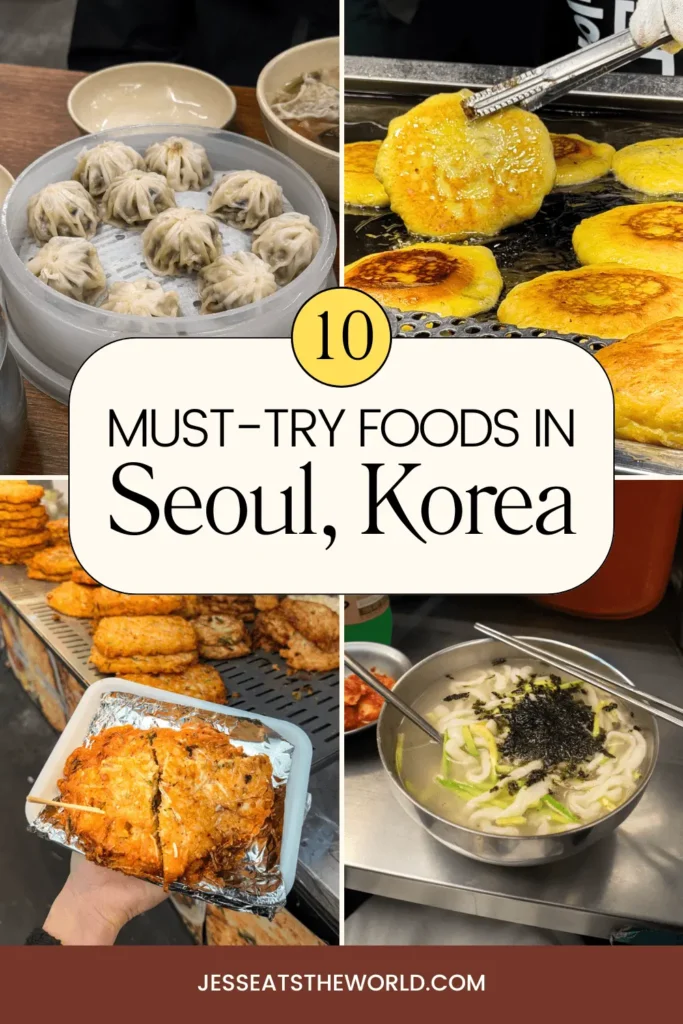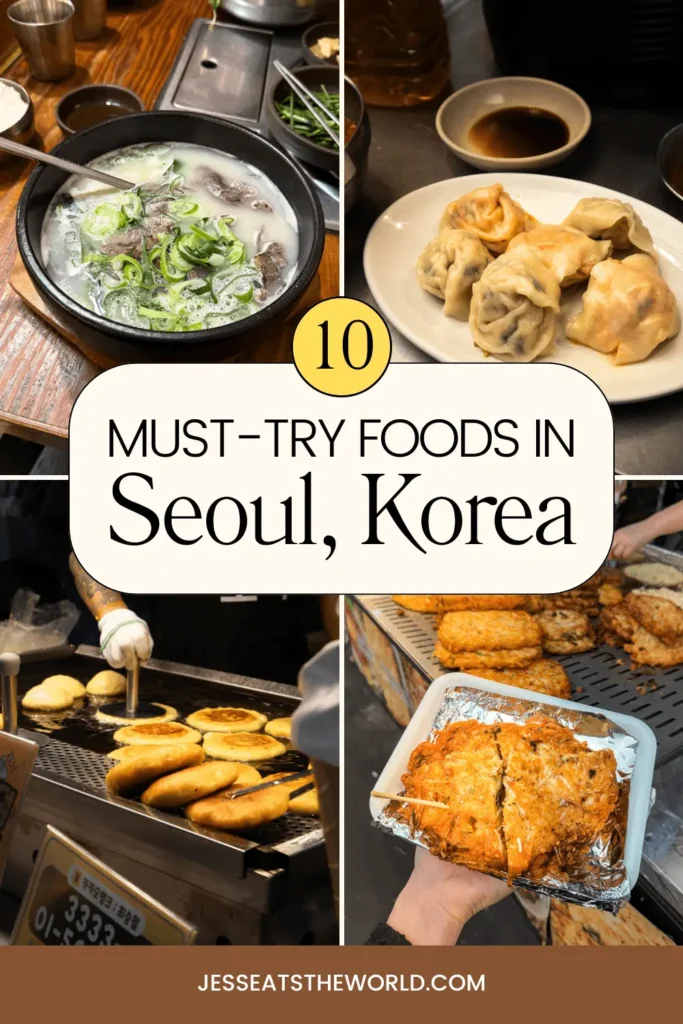


If you’re a foodie visiting Seoul, I’m sure you’ll want to try as many traditional foods as possible. As a food-lover myself, I wasn’t satisfied with only trying any typical Korean foods – I wanted to create a food guide with foods that originated in Seoul.
So, I’ve compiled this food guide with 10 of the best foods from Seoul that you must try during your South Korea trip – including Naver map links for where to eat them!
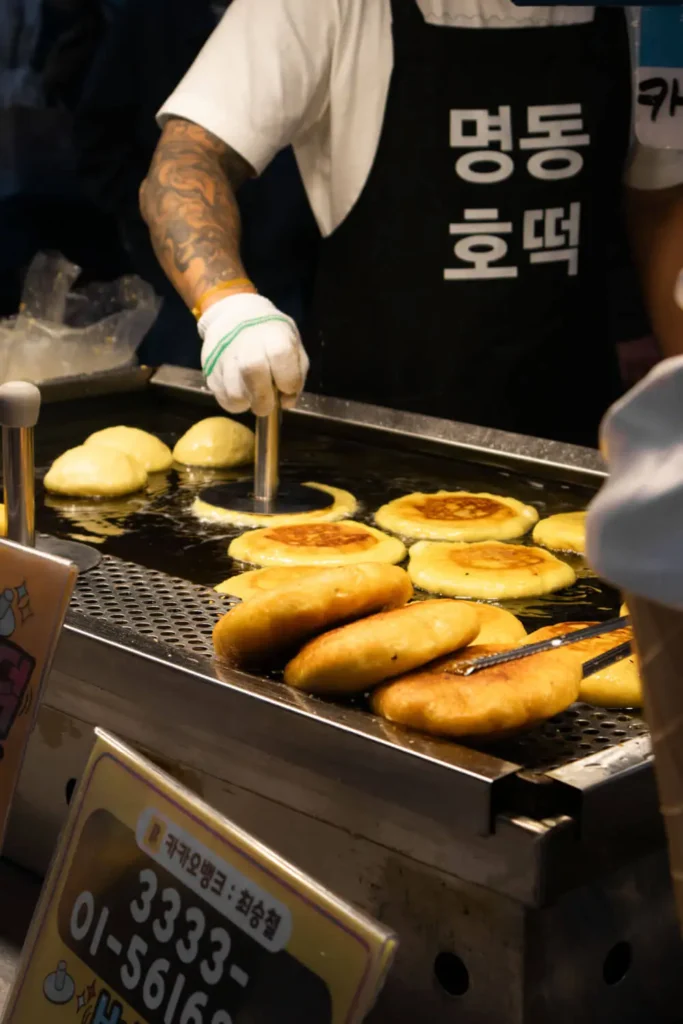
What food is Seoul famous for?
As the capital of Korea for over 600 years, Seoul was the home of the royal court throughout the Joseon Dynasty. Many Korean foods and dishes originated from the rich and diverse royal court cuisine, which involved lavish multi-course banquets featuring sophisticated cooking techniques and healthy, seasonal ingredients.
More recently, the events of the 20th century (such as the annexation by Japan, the Korean War, and the post-war foreign influences) propelled the emergence of new dishes, a vibrant street food culture, and an accelerated modernisation of traditional Korean dishes that Seoul is famous for today.
Best Food Tours in Seoul
*Use my code “JESSVKLOOK” for 10% off your first purchase, or 3% off for existing customers
Klook.comBest Food in Seoul: 10 Traditional Foods to Try
1. Jeukseok Tteokbokki (On-The-Spot Rice Cakes)
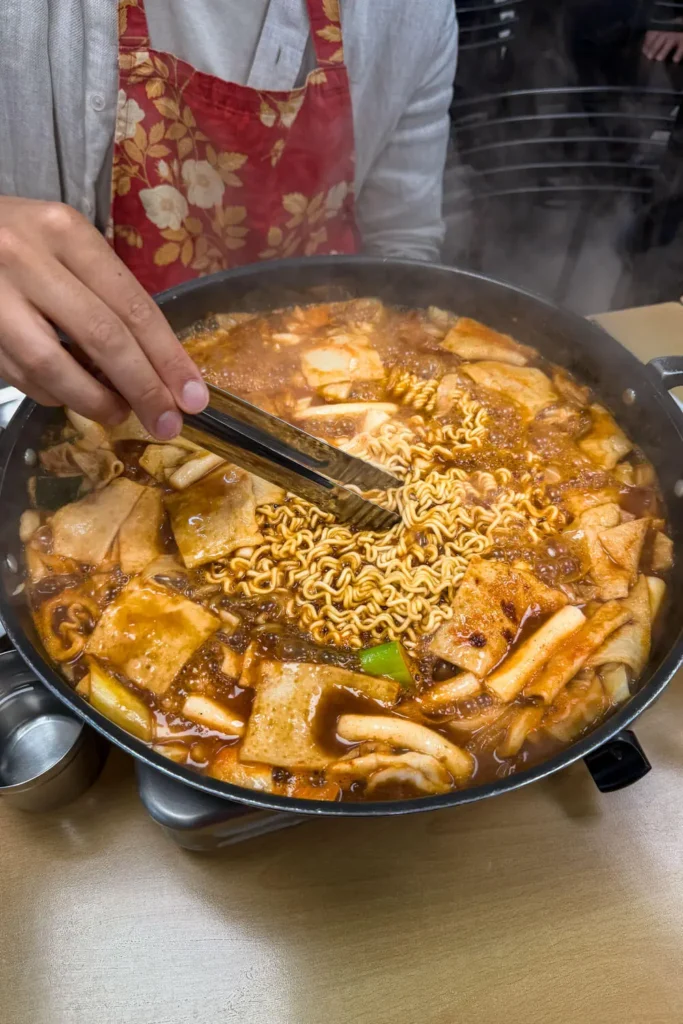
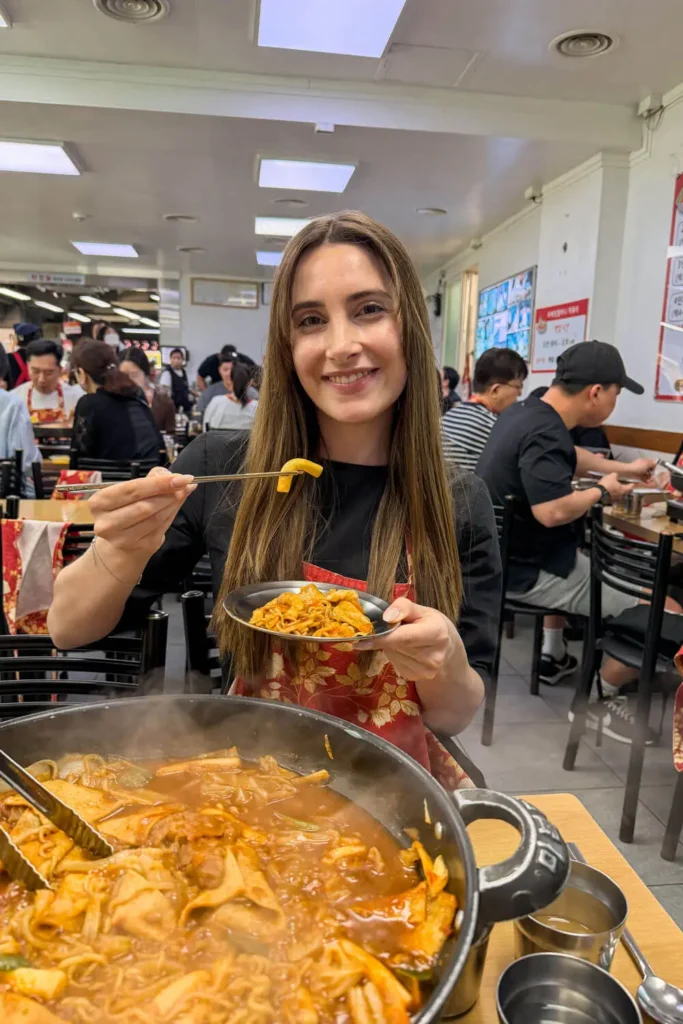
Tteokbokki (떡볶이, “Korean rice cakes”) are the most popular street food in South Korea – but did you know that there is an even more authentic way to taste them in Seoul?
Rice cakes have been eaten in Korea since the 19th century at least, but they weren’t spicy back then. The modern and most popular street-food version of tteokbokki that’s served with gochujang sauce is credited to Ma Bok-rim, in 1953. One day, she accidentally dropped a rice cake in spicy sauce, and when she realised that it tasted delicious, she started selling them at her street food stall in Sindang-dong.
Shortly after, in the 60s and 70s, tteokbokki evolved into a hot-pot-style dish called jeukseok tteokbokki (즉석떡볶이, “on-the-spot rice cakes”). This communal hot pot is cooked at the table, and normally includes ramyeon noodles, rice cakes, fish cakes, and vegetables, in a bubbly, spicy broth. Once the main pot is finished, you can order rice to stir-fry in the leftover broth and make bokkeumbap (볶음밥, “fried rice”).

Where to eat it
As the modern tteokbokki origins took place in Seoul’s Sindang district, the best place to eat them is, of course, at the famous Tteokbokki Alley (신당동떡볶이골목).
You will find numerous restaurants here serving jeukseok tteokbokki, and one of them is Mabokrim Tteokbokki – the original restaurant now run by Ma Bok-rim’s family descendants! This is where I tried this dish, and it was one my trip’s most authentic food experiences.

Visiting Seoul soon? Check out my guide for staying in a Korean Buddhist Temple!
2. Chimaek (Korean Fried Chicken and Beer)
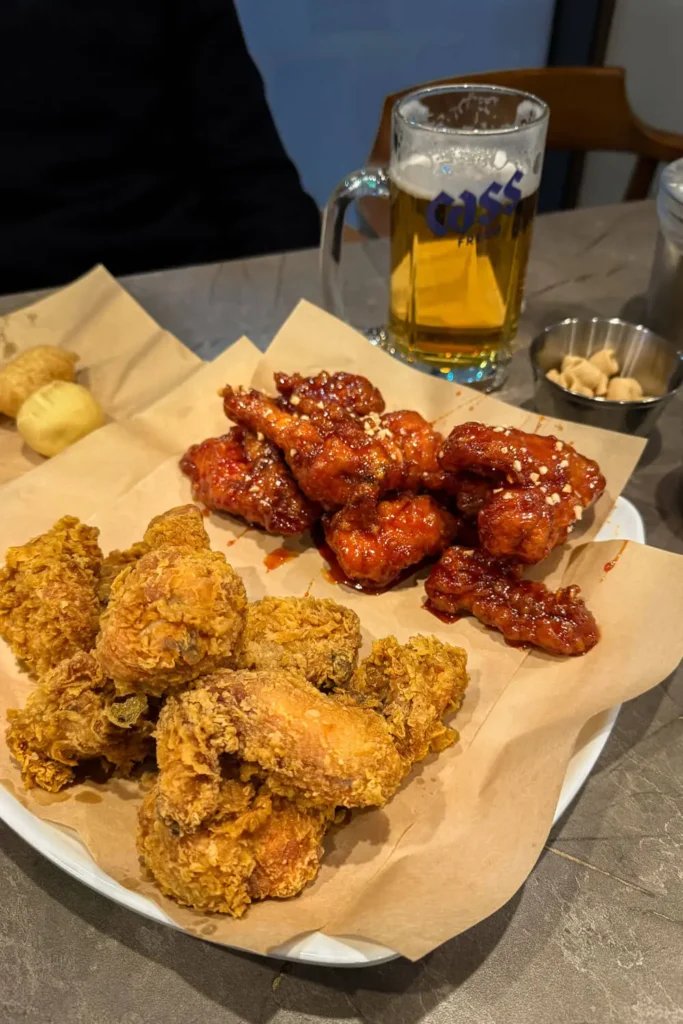
Chimaek (치맥) is the super popular pairing of Korean fried chicken and beer. The word is effectively a slang that joins “chikin” (치킨, Korean fried chicken) and “maekju” (맥주, beer).
The influence of the United States military after the Korean War boosted Korea’s poultry industry and the production of cooking oil. In the 70s and 80s, fried chicken started becoming popular in Korea, and the first Korean fried chicken franchise, Lim’s Chicken, opened in 1977 in Seoul.
After KFC arrived in Korea in 1984, Korean fried chicken continued to boom in popularity, but it was at the 2002 Korea–Japan FIFA World Cup that the chimaek phenomenon was cemented as a cornerstone of Korean culture. Millions of Koreans gathered in Seoul’s public parks and plazas to watch the matches, eat fried chicken and drink beer. After the World Cup, the number of chicken restaurants grew from 10,000 to 25,000!
Where to eat it
There are many popular Korean fried chicken franchises to try in Korea, each with their own signature menu flavours and sauces. Some of my favourites are BBQ Chicken‘s famous Golden Olive Chicken, and Kyochon‘s Soy Garlic and Honey Series chicken options.
A few other popular franchises include BHC, Two-Two Fried Chicken, and Ddobagi Chicken.
3. Seoul-Style Napa Cabbage Kimchi
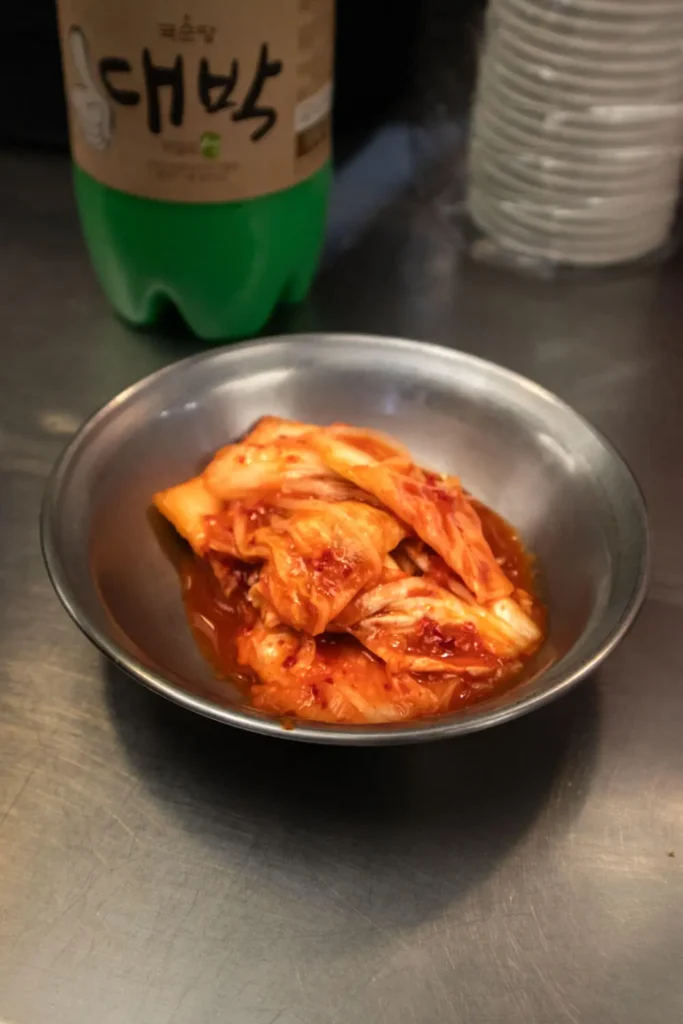
Kimchi is Korea’s national dish, and you will find it at almost every meal across the country. The origins of kimchi in Korea date back some 3,000 years, but Seoul is famous for its own style of baechu-kimchi (배추김치, “napa cabbage kimchi”).
During the Joseon Dynasty (1392–1910), Seoul-style napa cabbage kimchi developed as the royal and popular standard in the country’s capital. Seoul-style baechu-kimchi has a balanced flavour – it’s not as heavy, salty, or fishy as the kimchi styles in Korea’s southern provinces, but it’s more seasoned than the kimchi from the northern provinces.
Traditional Seoul-style kimchi is often made with napa cabbage, radish, green onions, gochugaru (Korean red pepper flakes), a mix of seafood sauces, salt, garlic, and ginger.
Where to eat it
Fortunately, you won’t have a hard time finding kimchi in Seoul. It’s served as a standard starter or accompaniment in every Korean restaurant – so you’ll have plenty of chances to try it!
If you’re really keen to find really good kimchi, look for soelleongtang or suyuk restaurants with good reviews specifically mentioning the kimchi. These two Korean dishes go hand-in-hand with high-quality kimchi, so you’ll have good chances of finding a new favourite!
Learn to make kimchi with these experiences in Seoul:
*Use my code “JESSVKLOOK” for 10% off your first purchase, or 3% off for existing customers
Klook.com4. Sinseollo (Korean Royal Hot Pot)
Sinseollo (신선로) or royal hot pot is a ceremionial Korean-style hot pot served over hot charcoal in a special pot with a chimney-like hole in the middle.
The dish combines an elaborate mix of meatballs, Korean fritters (jeon, 전), mushrooms, vegetables, meat, fish and seafood, arranged elegantly in a clear beef broth.
This lavish meal originated as part of Seoul’s royal court cuisine during the Joseon Dynasty. It was mainly enjoyed by the Kings and the nobility, as it requires a wide variety of ingredients and ample preparation time. Even today, sinseollo is still considered a luxurious dish, eaten only on special occasions.
Where to eat it
Due to the elaborate nature of the dish, you must make a reservation at restaurants specialising in Korean royal court cuisine in Seoul. Some of the best regarded ones are Jihwaja and Korea House.
5. Seolleongtang (Ox Bone Soup)
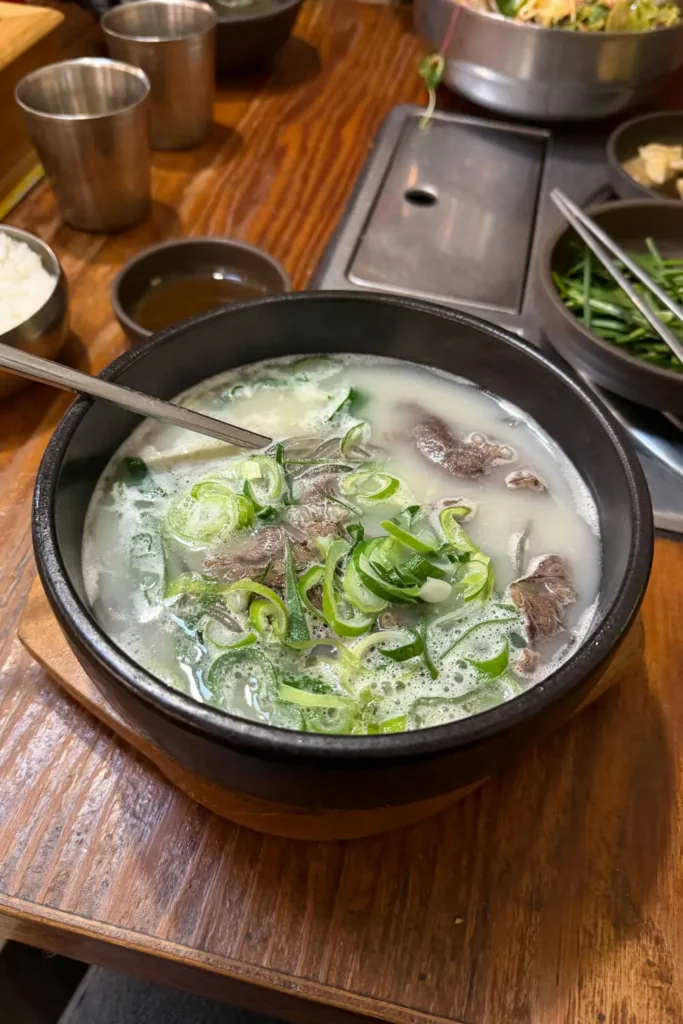
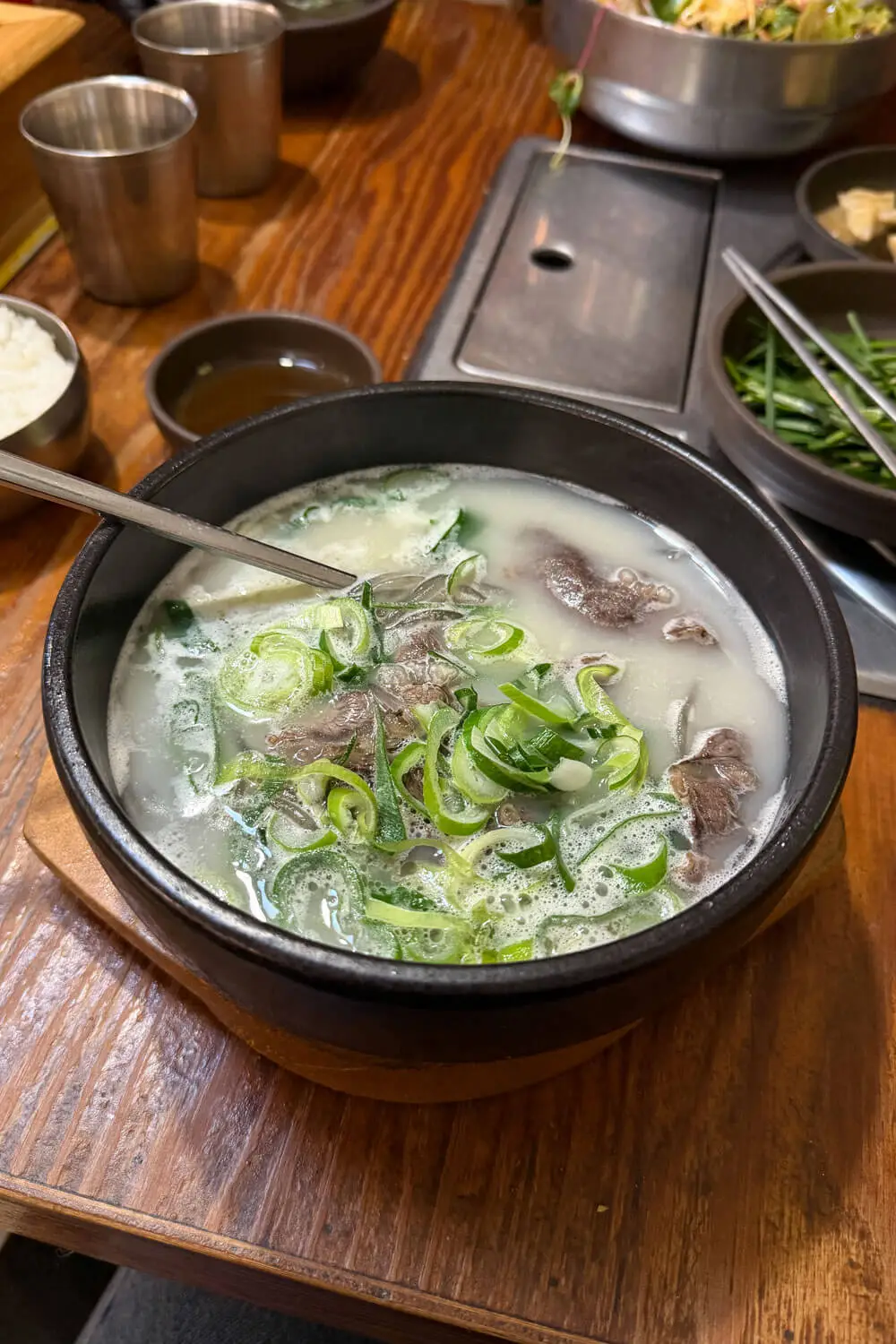
Seolleongtang (설렁탕, “ox bone soup”) is a very popular type of Korean slow-simmered soup (tang, 탕) made with ox bones, brisket, and offal, resulting in a milky-white bone broth.
It comes with rice, which is meant to be mixed into the soup and eaten together, and served alongside kkakdugi (radish kimchi). Seasonings like pepper, salt, garlic, red pepper, and spring onions are also usually served separately, for you to season at the table according to your own personal taste.
Some say that this soup originated at the King’s annual spring farming rituals at Seonnongdan shrine, but most food historians agree that the broth was likely introduced by the Mongols. Either way, seolleongtang became a local specialty in Seoul during the Joseon Dynasty, and it has remained an important part of Korean cuisine for centuries.
Where to eat it
I had the above bowl at a very local restaurant called 곰바우나주곰탕, not far from Myeongdong. It’s the kind of place where local Koreans go, and while the lady didn’t speak any English, she very kindly taught us how to enjoy the dishes properly! Portions are super generous and affordable, too.
Miseongok is another option with a local feel – a renowned historic restaurant serving seolleongtang since 1966, located in Myeongdong. Alternatively, Imun Seolleongtang is one of Seoul’s top seolleongtang restaurants, and it was also listed in the 2026 Seoul Michelin Guide.
6. Saengchi-Mandu (Korean Pheasant Dumplings)
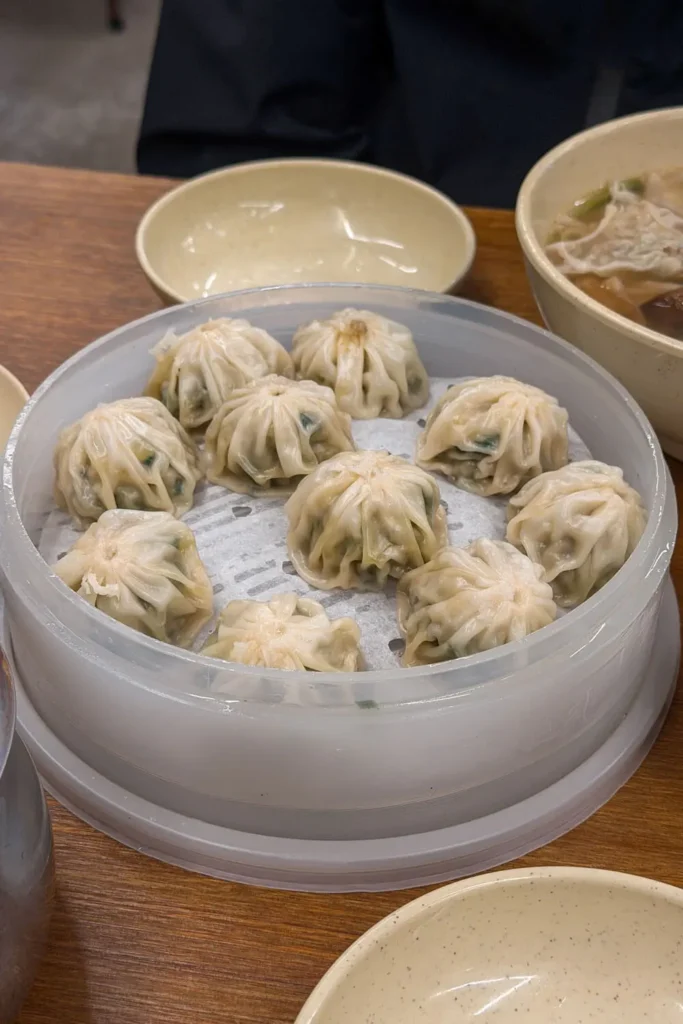
While dumplings were introduced in Korea by the Mongol-led Yuan dynasty in the 14th century, they have remained a crucial part of Korean cuisine since.
Saengchi-mandu (생치만두, “pheasant meat dumplings”) are a luxurious type of traditional dumpling made with a wheat flour or buckwheat wrapper, and stuffed with a mix of pheasant meat, beef, and tofu. They were historically popular during the winter months in the Korean royal court and with the upper classes in Seoul.
Where to eat it
Saengchi-mandu are much more difficult to find than other types of dumplings in Seoul, as pheasant meat is still a premium ingredient.
For this, you’ll have to seek restaurants that specialise in pheasant meat dishes, like Kkwong Kalguksu in Seongdong-gu, or look for the dish as part of winter menus at restaurants specialising in traditional Joseon Royal Court cuisine.
7. Ganjang-Gejang (Soy-Marinated Raw Crabs)
Ganjang-gejang (간장게장) is a Korean dish made by curing fresh raw crabs in soy sauce and allowing them to ferment. Koreans call them “rice thieves” because the salty flavour of the marinade pairs very well with rice.
Marinated crabs have been prepared in Korea since the 17th century at least, as a method to preserve the fresh raw crabs before refrigeration methods existed.
Even though the technique originated in Korea’s southern coastal provinces of Jeolla and Gyeongsang, ganjang-gejang grew in popularity in Seoul in the 1980s, and eventually became a culinary sensation among Korean celebrities and top chefs who turned the dish into a sought-after delicacy at specialised restaurants.
Where to eat it
The most famous place to try soy-marinated raw crabs in Seoul is at Ganjang Gejang Alley in Sinsa-dong.
This alley emerged after the restaurant Pro Ganjang Gejang opened in 1980, serving ganjang-gejang as a standalone menu item. It became so popular with Korean celebrities and professional baseball players that more and more restaurants clustered in the area. Make sure to walk around and pick your favourite!
8. Gwangjang Market-Style Bindaetteok (Mung Bean Pancakes)
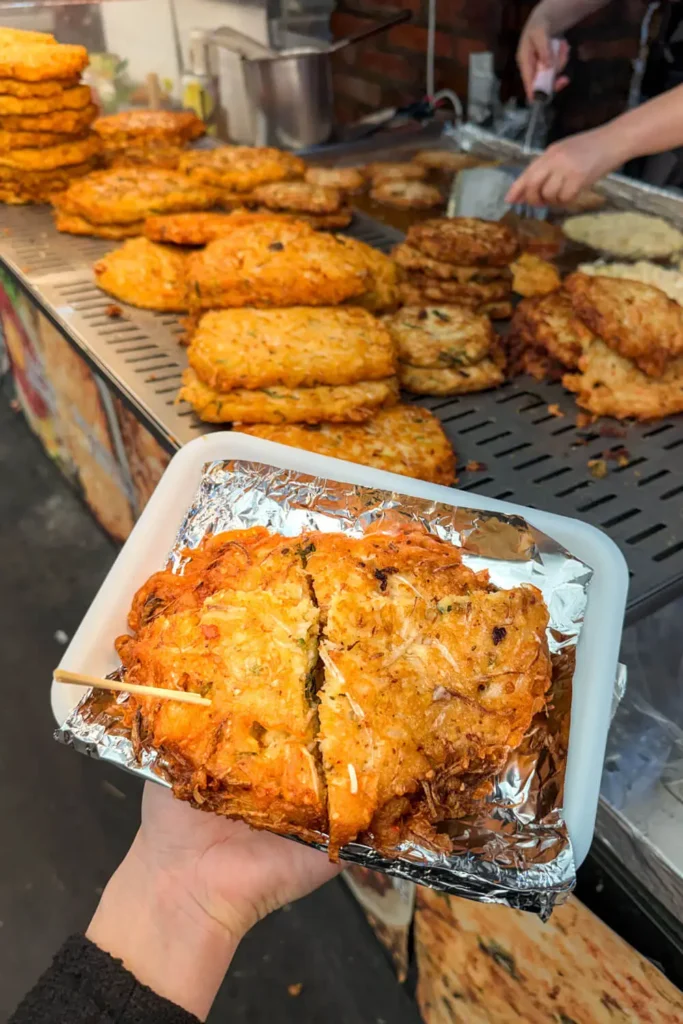
Korean mung bean pancakes (bindaetteok, 빈대떡) originated in Pyongan Province (part of today’s North Korea), but they’ve since earned their title as one of Seoul’s most beloved street foods.
Gwangjang Market, one of Seoul’s oldest markets, was established in 1905 as one of the first permanent markets. It soon became famous for its comfort street food stalls, among which many sell bindaetteok made from raw mung beans ground right in front of you and mixed with ingredients like kimchi, pork, and bean sprouts.
The pancakes are usually served with a dipping sauce that helps cut through the frying oil, and it’s best enjoyed paired with cold makgeolli (Korean rice wine).
Where to eat it
At Gwangjang Market, of course! I recommend wandering around the market and scouring through the various stalls for something you like. The market appears often on Korean television shows, so some stalls like Soonheenae Bindaetteok have become very famous for their mung bean pancakes!
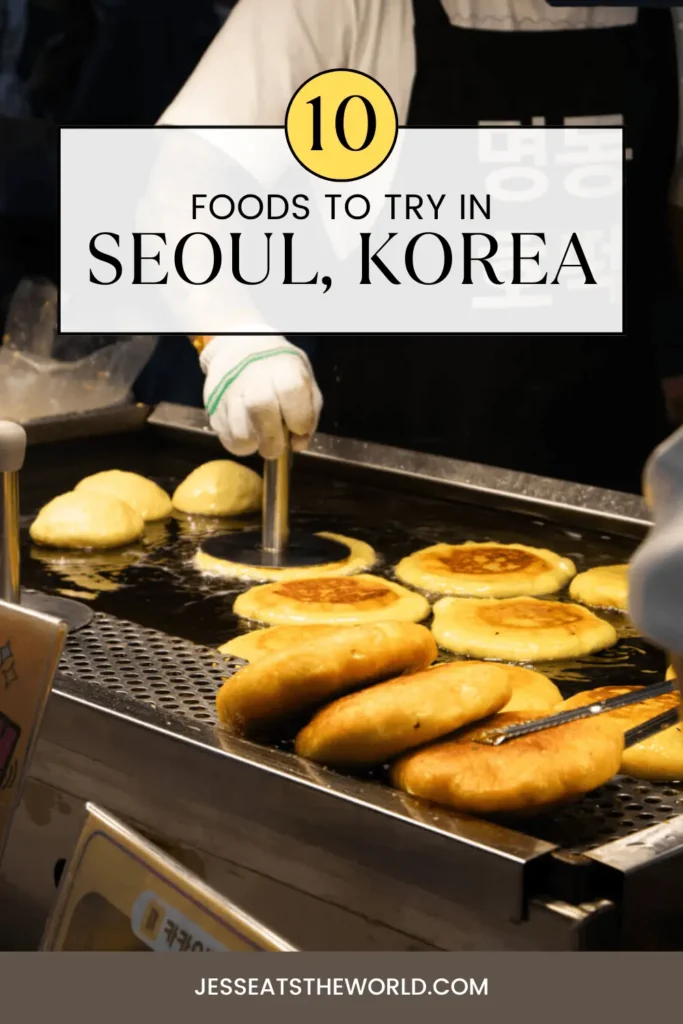
9. Hotteok (Korean Sweet Pancakes)
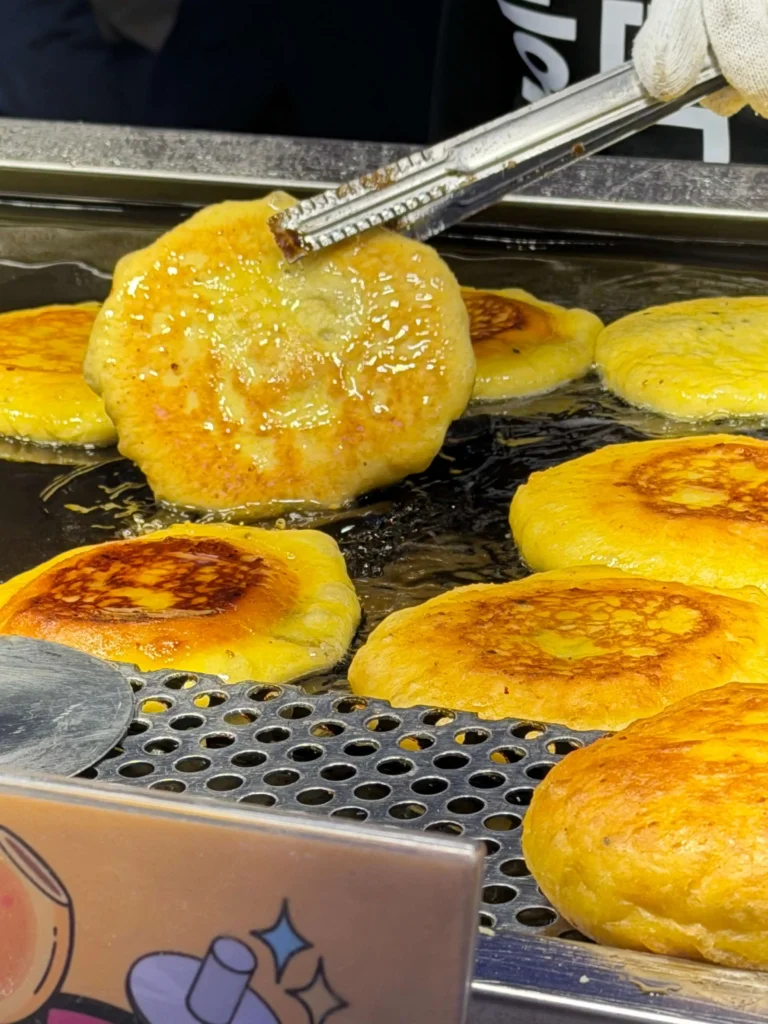
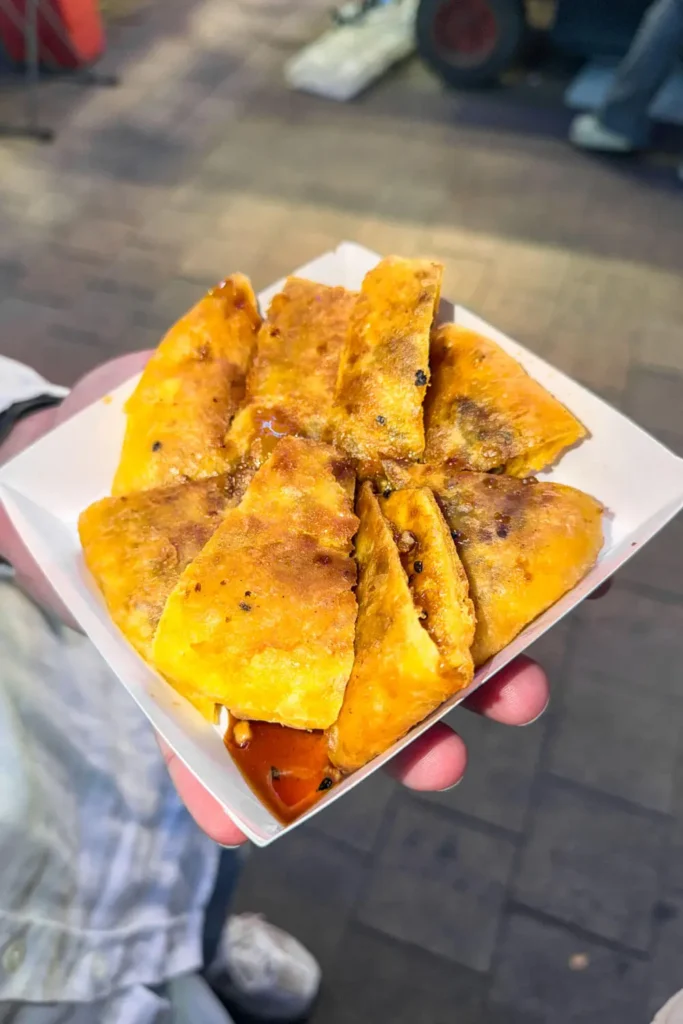
Another very popular street food to try in Seoul is hotteok (호떡): pancakes filled with a sweet mixture of brown sugar, honey, cinnamon, and chopped nuts or seeds. They’re a delicious sugary treat after a late-night meal!
It’s believed that these pancakes were introduced in the Seoul and Incheon port areas by Chinese merchants in the late 1800s, and they were originally filled with meat or vegetables. Over time, the pancake filling changed to the modern sweet version to fit the Korean palates and the availability of ingredients at the time.
Now, savoury versions are also back in popularity, and you could stumble across market stalls selling seafood hotteok or japchae hotteok (filled with vegetables and glass noodles). The pancake batter itself can also have variations, like in the popular green tea hotteok.
Where to eat it
As hotteok is a very popular street food in Seoul, you can find it at most night food markets. I had my first hotteok at the Myeongdong Night Market, but I also saw them at Insadong‘s main strip.
10. Kalguksu (Korean Knife-Cut Noodle Soup)
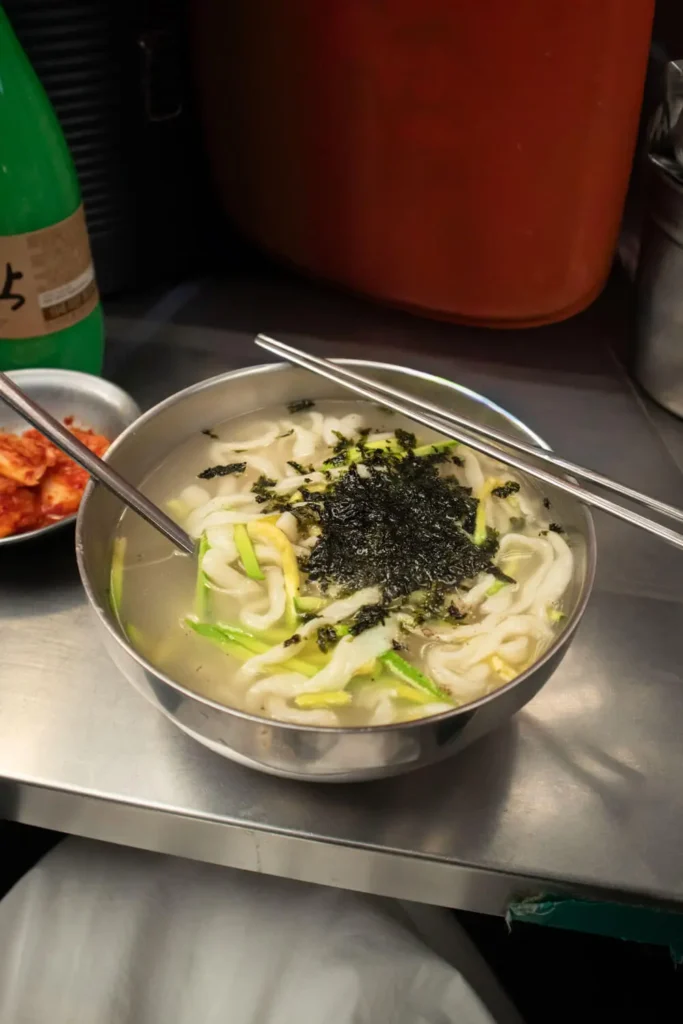
Kalguksu (칼국수, “knife-cut noodles”) is a Korean noodle soup made with handmade knife-cut wheat flour noodles and chopped vegetables in a warm seafood-based broth. It’s usually topped with roasted seaweed and served alongside kimchi or pickled perilla leaves.
Noodles have been eaten in Korea at least since the Goryeo period (918–1392) and throughout the Joseon Dynasty, but they were considered a luxury food for the elites, as wheat was rare and expensive. In 1953, after the Korean War, the U.S. started supplying wheat, and noodles became a common food for Koreans!
While the seafood-based kalguksu is the traditional version in Seoul, there are many variations using other ingredients mixed into the noodle dough or added into the soup. The broth itself can also sometimes be made with chicken or pheasant meat.
Where to eat it
Kalguksu is extremely popular in Seoul, so you won’t have trouble finding restaurants serving it. I had the above pictured noodle bowl at the stall run by the famous “Noodle Lady” at Gwangjang Market.
Funnily enough, I wasn’t aware of her Netflix fame before visiting – I happened to be roaming through the market when her stall caught my eye, as the food looked very good. Clearly, it all worked out very well for me!
Final thoughts
I hope this local Seoul food guide with the best traditional foods and where to eat them is helpful for your upcoming trip! There are many more typical Korean foods that you can discover in the city, but this list is a good start.
If you have questions about any part of this post, feel free to reach out in the comments below!
Visiting Seoul soon (or beyond)? Check out my South Korea guides:
Visiting Seoul soon and looking for the best foods to try? Pin this Seoul food guide to save it for later!