

Busan is South Korea’s second-largest city and a popular destination for its vibrant culture, neighbourhoods, and street food markets. However, Busan is also quite spread-out, and it can be difficult to figure out where to stay during your first trip.
To help you, I created this quick guide for the the best areas to stay in Busan (complete with pros and cons!) – including hotel recommendations for all budgets.
Disclosure: This post may contain affiliate links for products or services that I personally endorse and love. Should you make a purchase, I may make a commission at no additional cost to you. Thank you for supporting Jess Eats The World!
Things to consider when choosing where to stay in Busan
In the next sections, I will dive into each main area of Busan where I recommend staying for first-time visitors.
However, depending on your traveling style and the goal of your trip, there are a few things to consider which may affect the area you choose to stay in:

The best areas to stay in Busan, South Korea:
Haeundae Beach
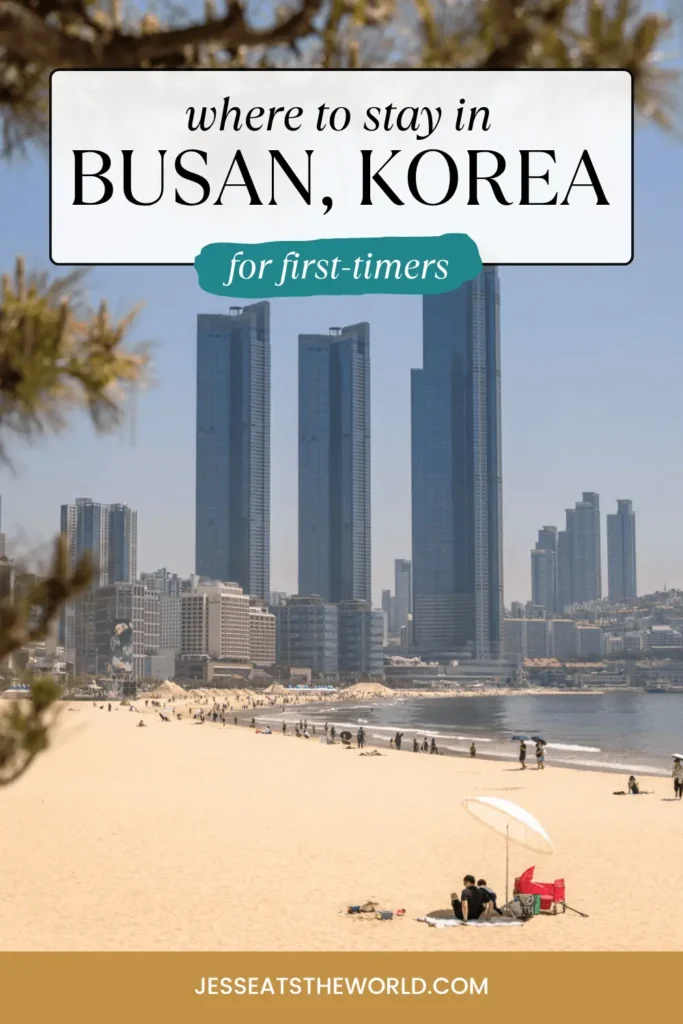
Haeundae Beach is one of South Korea’s most famous beaches and the most popular seaside district that people associate with Busan.
It’s a vibrant coastal area known for its modern skyscrapers and luxury hotels that coexist alongside street food markets and traditional restaurants. Haeundae is also notably the departure point for riding the popular Sky Capsules and Beach Train along the coast.

Pros:
- If you like modern luxurious hotels, Haeundae Beach is the perfect place to stay and get the classic experience of waking up to Busan’s iconic blue sky and ocean views.
- Haeundae is ideal if you want a mix of relaxation and active travel, as there are plenty of attractions nearby, such as Haedong Yonggungsa Temple, Dongbaek Park, the Haeundae Blueline Park, and SpaLand.
- Because it’s a popular touristic area, Haeundae is very English-friendly, with most street signs and digital kiosks in both English and Korean. Many workers in cafes, restaurants, shops, medical centres and pharmacies speak English and are used to dealing with tourists.
- The Haeundae Intercity Bus Terminal is not very modern, but it’s super convenient to travel directly from Haeundae to other Korean cities – and even directly to Incheon Airport, in Seoul! I arrived here on a direct bus from Gyeongju, avoiding the hassle of commuting through Busan Station.
Cons:
- Haeundae is located on the eastern edge of Busan, far from many of the city’s central attractions. It can take around one hour to reach Busan Station or Gimhae Airport from Haeundae. I wouldn’t recommend staying in Haeundae on a short stay, but if time allows, consider splitting your stay between two districts to minimise time commuting to central Busan.
- As one of the most modern and popular areas of the city, Haeundae is one of the most expensive areas to stay and eat in Busan. Especially during summer, Haeundae Beach can get very crowded and noisy.
- Admittedly, the modernity and luxury of Haeundae doesn’t really reflect the traditional authentic culture and feel of Busan (or of any particular Korean city). Rather, Haeundae Beach is a more commercialised beach resort area.
Where to Stay in Haeundae:
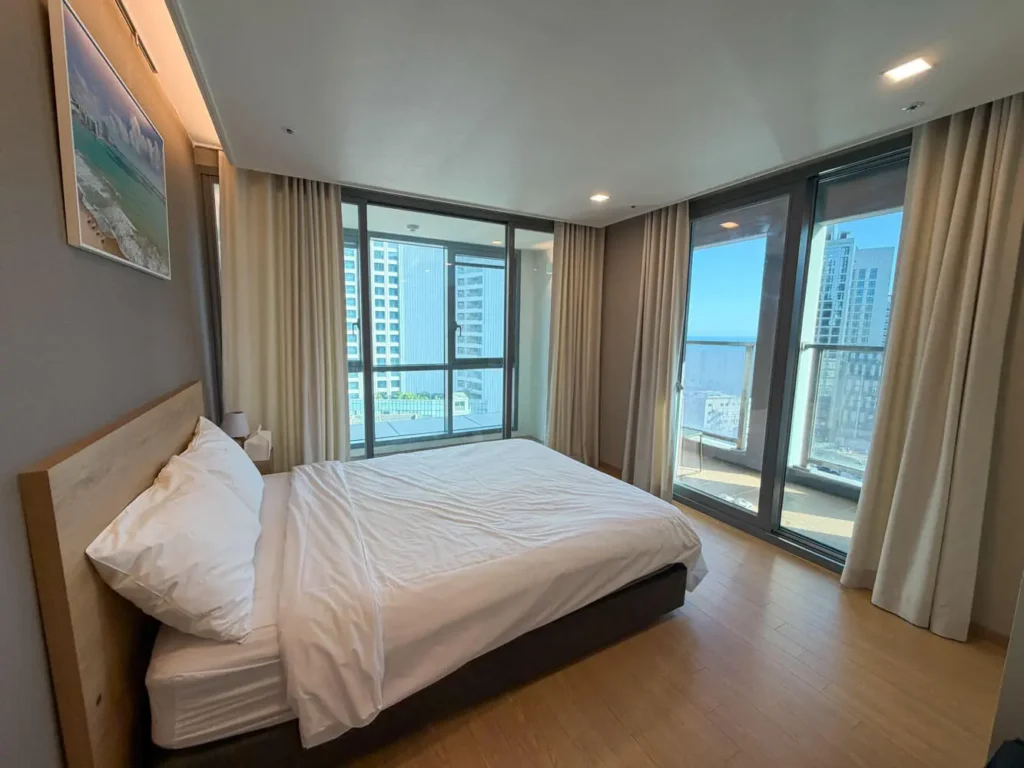
I stayed in Haeundae for the first half of my visit, as my fiancé wanted to experience the iconic Busan beach atmosphere. Yes, many of the more luxurious beachfront hotels are pricier here, but it’s not hard to find reasonably-priced apartments with a great location.
We stayed at Elmomento Haeundae Residence, close to Haeundae Station, and I could spot the beach and ocean in between skyscrapers from our window. The apartment was very clean, modern, and equipped with a washing machine and kitchen. Conveniently, there were also luggage lockers and a grocery store just outside.
Here are more recommendations for hotels in Haeundae:
Budget ($)
Canvas Hostel Black
If you’re a solo traveller, this modern hostel is excellent value for money, with gender-separated dorms and only 300m (0.2 miles) from the beach!
Mid-Range ($$$)
Suncloud Hotel
If you’re looking for a hotel that’s accessible and with iconic Haeundae Beach views and a pool, then the Suncloud Hotel ticks all the boxes! It’s right by the beachfront, so you’ll be close to all the action.
Luxury ($$$$)
Grand Josun Busan
This is one of the most luxurious hotels in Haeundae, with rooms directly overlooking the beachfront. The interiors are modern and elegant, as there are indoor, outdoor, heated, and infinity pools for a truly relaxing stay!
Luxury ($$$$)
Signiel Busan
The Signiel is a luxurious hotel on Haeundae Beach that locals love. The hotel has several saunas, spas, gym, and swimming pools, and the rooms and common areas feature stunning sprawling beach views.
Gwangalli Beach
Gwangalli Beach is next to Haeundae and it’s a more relaxed, affordable, and authentic coastal alternative to the more popular touristic area. The beachfront is still very lively, with plenty of cafes and shops, as well as beautiful nighttime views and a free drone show every Saturday night.

Pros:
- If you want to experience Busan’s seaside atmosphere with a more local and authentic feel, Gwangalli Beach is a great alternative to the more commercialised Haeundae Beach.
- Gwangalli Beach is usually more affordable if you’re looking for a modern hotel room with a view. The view of Gwangan Bridge is particularly beautiful both day and night, and it’s also exactly where the weekly drone show takes place.
- While Gwangalli Beach is known for being a more relaxed area, it’s far from dead. There are plenty of cafes, shops, restaurants, and markets that draw in people and keep up a very lively atmosphere.
Cons:
- While Gwangalli Beach is similar in length to Haeundae and the area is generally less busy, Gwangalli Beach is narrower and therefore can feel more crowded in peak summer even if there are less people here overall.
- While Gwangalli Beach is closer to central Busan than Haeundae, it’s still relatively far from many of the city’s central attractions. It can take 45-60+ minutes to reach Busan Station or Gimhae Airport from Gwangalli. Because of this, I wouldn’t recommend staying in Gwangalli Beach on a short stay, but if time allows, consider splitting your stay between two areas to minimise time commuting to Busan’s central attractions.
- While Gwangalli Beach is great if you want to stay in a more relaxed area, there are less attractions immediately nearby, so you’ll have to commute to visit even the closest ones like Haedong Yonggungsa Temple, Haeundae Blueline Park, or SpaLand.
Where to Stay in Gwangalli Beach:
These are my recommendations for local hotels in Gwangalli:
Mid-Range ($$)
Hotel Central Bay
This beachfront hotel is a great affordable option to get a great view and modern, comfortable rooms.
Mid-Range ($$)
Gwangalli Oceanstay Hotel
This hotel is located on the eastern side of Gwangalli Beach, and the ocean-front rooms offer sweeping views over the beach for a very reasonable price.
Luxury ($$$)
Bamu Hotel
This luxurious hotel has premium rooms with beach and ocean views and in-room private spa tubs for ultimate relaxation!
Luxury ($$$)
ONUJI STAY
If you want a little bit of luxury, the top rooms at this stay can accommodate up to 4 adults and offer unbeatable ocean views.
Seomyeon
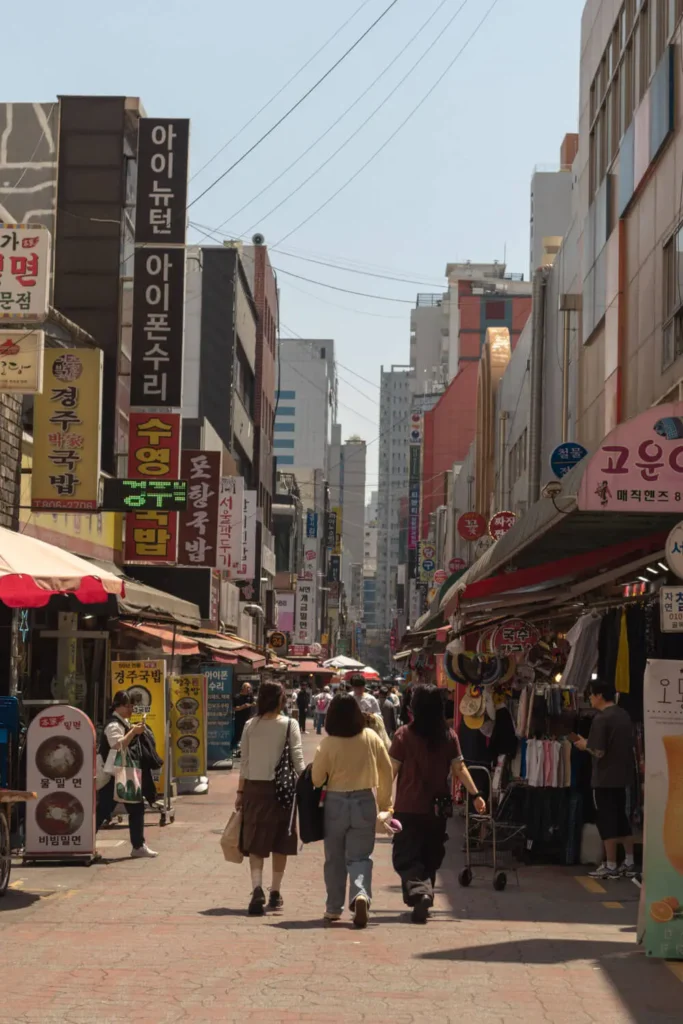
Seomyeon is recommended as a good place to stay particularly because it’s one of Busan’s most central districts, with great transport connections to access any part of the city via the Subway Lines 1 and 2.
Being an urban district, Seomyeon is great for street food, independent cafes, shopping, and nightlife. It’s also a more affordable area to stay in when compared to Busan’s seaside districts.
Pros:
- Seomyeon is the perfect central base in Busan, as both Subway Lines 1 and 2 cross here and give fast and easy transport access to other parts of the city. It’s ideal for short trips where convenience is the priority, as both Busan Station and Gimhae Airport are easily accessible from Seomyeon.
- If budget is a concern, Seomyeon is generally a more affordable district to stay in than other areas of Busan. This isn’t only true for accommodation, but for dining and shopping as well.
- Seomyeon is a vibrant district full of boutique shops, big shopping centres, independent cafes, restaurants, street food stalls, markets, and clubs/bars. It’s an ideal base if you like energetic neighbourhoods and you’re into shopping, local food, and nightlife.
Cons:
- Compared to other areas of the city, I’d say that Seomyeon feels less unique to Busan. It’s a classic Korean urban neighbourhood with shops, restaurants, and neon-filled streets, but not particularly characteristic. If you want to stay somewhere with more unique feel in Busan, I’d recommend considering any of the other areas in this guide.
- Seomyeon is an inland urban district with no beach access. If the iconic Busan seaside atmosphere is important for your trip, I’d recommend considering a stay in Haeundae or Gwangalli, instead.
- While Seomyeon is ideal for those who love vibrant urban environments and nightlife, it can be busy and loud even late at night, which may not be suited for you if you prefer to stay in more quiet and relaxed areas.
Where to Stay in Seomyeon:
These are my recommendations for local hotels in Seomyeon:
Budget ($)
Seri Inn Guesthouse
This is one of the best-value hostels in the Seomyeon area if you’re on a budget. There are gender-separated dorms, as well as private rooms, and the hostel is less than a 10-minute walk from Seomyeon station!
Mid-Range ($)
Toyoko Inn Busan Seomyeon
For a little more comfort paired with great prices, Toyoko Inn is a hotel chain that operates in several cities in Korea and abroad. The rooms are clean and include free breakfast! Also, Seomyeon station is only a 6-minute walk away.
Premium ($$)
Arban Hotel
The Arban Hotel is a good option for a little extra comfort, and less than a 10-minute walk from the Seomyeon metro station. The rooms are spacious and some even have a private cinema projector!
Luxury ($$$)
Lotte Hotel Busan
The Lotte Hotel Busan stands out as the most luxurious stay option in Seomyeon, with direct access to underground shopping and the metro station.
Nampo / Jagalchi
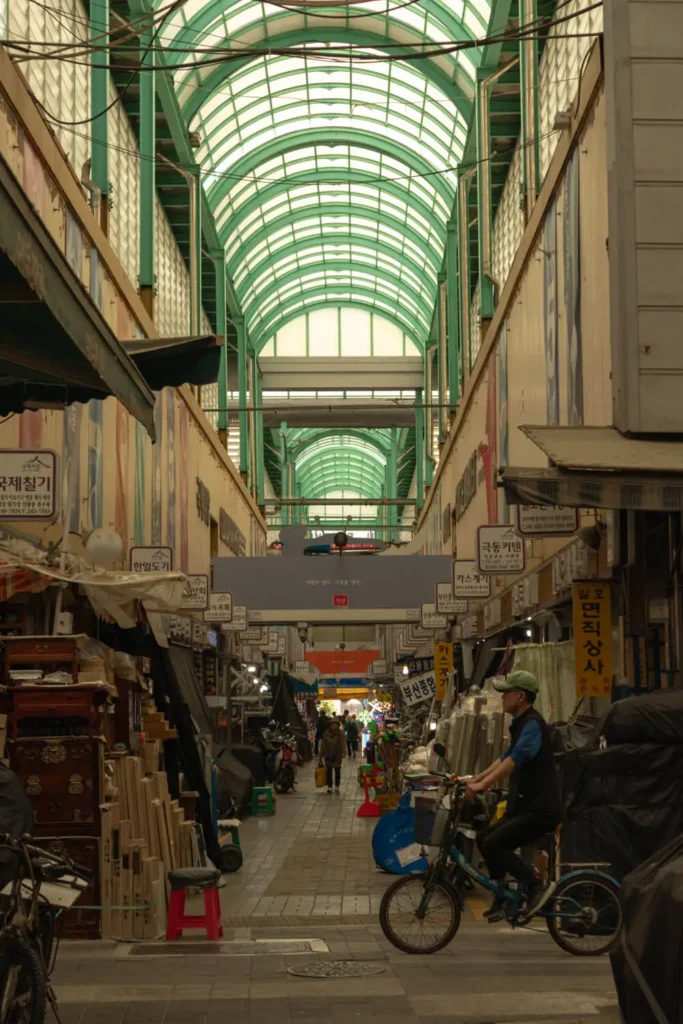
Nampo-dong and the area around Jagalchi Fish Market are the closest thing you can get to the authentic old-school downtown Busan atmosphere. This area is generally quite affordable and filled with local attractions, street food markets and traditional restaurants, so it’s perfect for foodies and culture-lovers.
Nampo and Jagalchi are also very convenient and well-connected, with easy transport links to Busan Station and to other areas in west and central Busan, like Gamcheon Culture Village, Songdo, and Seomyeon.

Pros:
- All attractions in the Nampo and Jagalchi areas are accessible within walking distance. Nampo is also very conveniently located for visiting other nearby places like Gamcheon Culture Village, Songdo Beach, Seomyeon, and even Huinnyeoul Culture Village.
- Nampo and Jagalchi are generally very affordable areas to stay in Busan, with plenty of budget-friendly accommodations available. The local street food stalls and markets here are also great for cheap eats and local souvenir shopping.
- The areas around BIFF Square and Jagalchi Fish Market in particular are famous culinary hotspots, and the birthplace of several local Busan dishes. Staying here gives you easy access to try some of Busan’s delicacies and popular dishes throughout your visit.

Are you a foodie visiting Busan? Check out my Busan Food Guide for the best local dishes and where to eat them!
Cons:
- While the area around Nampo and Jagalchi offer the most authentic and old-school atmosphere of Busan, this does mean that the area is a bit grittier (in a great way) than other more modern districts. If you prefer more polished areas with luxury hotels, you should consider staying in Haeundae.
- As a historic commercial area with tourist appeal, Nampo and Jagalchi are generally busy and bustling until late at night. This may not be ideal if you prefer to stay in more quiet and relaxed areas.
- While Nampo and Jagalchi are port districts, there is no beach here. The closest beach is Songdo Beach (25 minutes away by bus), but for the iconic Busan seaside atmosphere, you should consider staying in Haeundae or Gwangalli, instead.
Where to Stay in Nampo / Jagalchi:
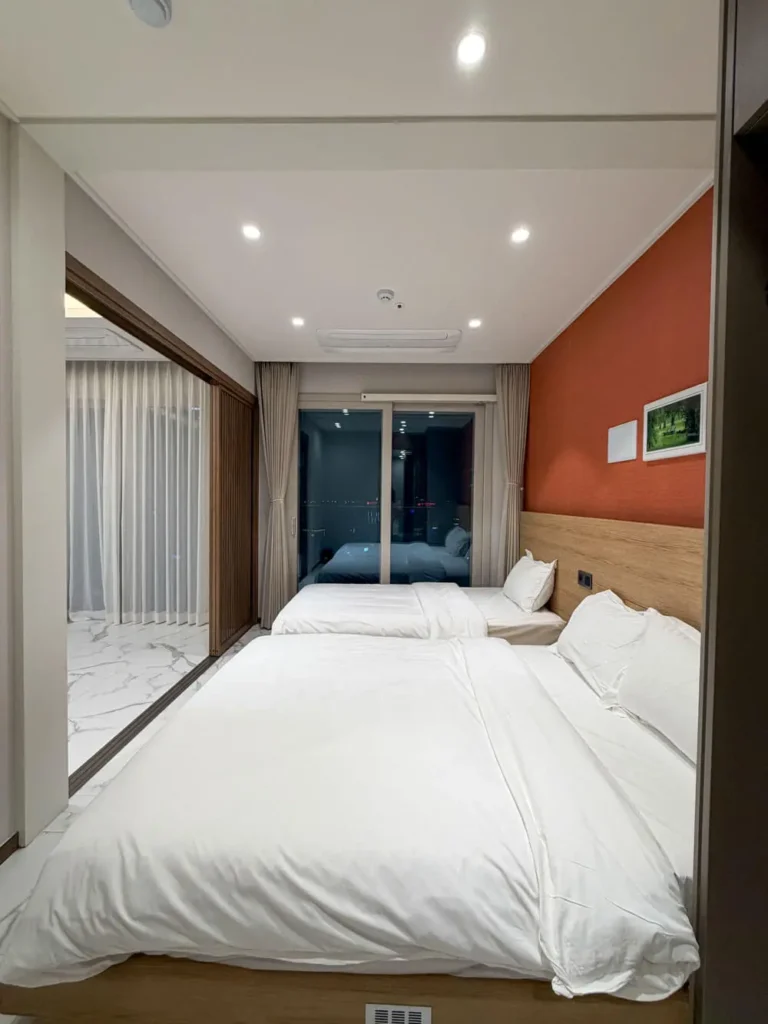
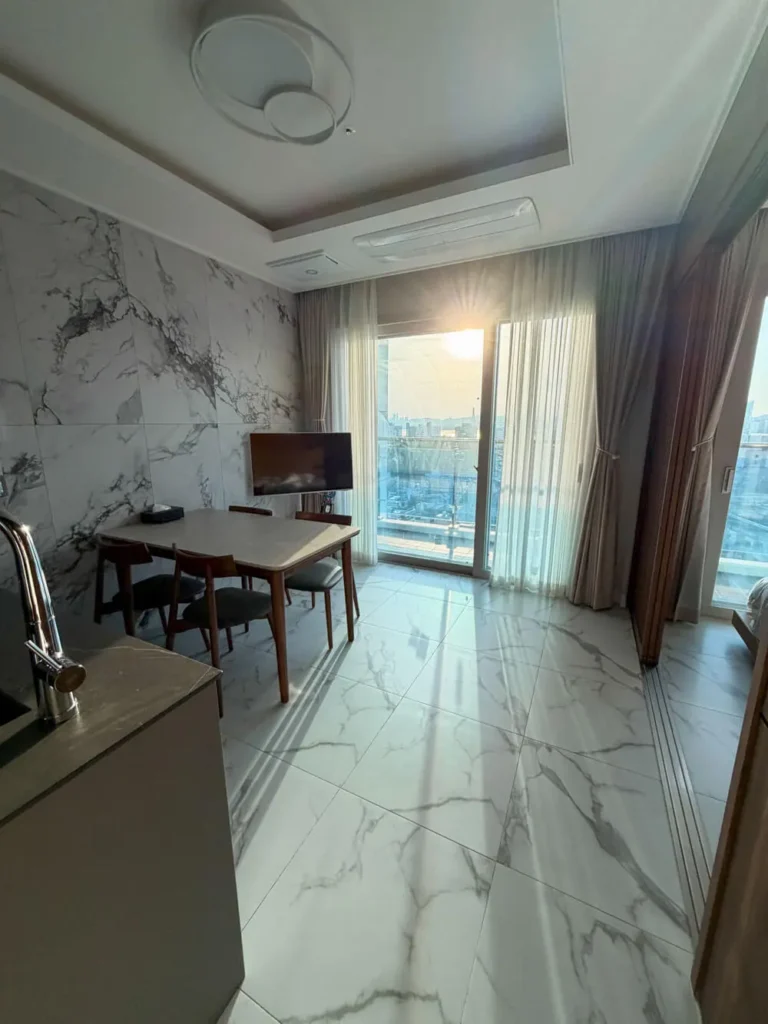
I stayed in Nampo-dong for the second half of my Busan trip, as being close to attractions in western Busan like the Songdo Cable Car and both Gamcheon and Huinnyeoul Culture Villages was important for us. We also needed easy access to Gimhae Airport, from where we departed to Jeju island afterward.
We stayed at the Paramion Hotel, within quick walking distance to all the main local markets, shops, subway stations and bus stops. The hotel is located in a shared building, and it felt like it was either new or just recently renovated. Our apartment was super spacious, clean, and modern, with plenty of storage space and a view to Busan Tower, which lights up at night in changing colours.

These are other hotels I recommend in Nampo / Jagalchi:
Budget ($)
Elephant Hostel
This hostel is a great budget option only a few minutes’ walk from Nampo Station. It has female-only and mixed dorms and private rooms as well as a kitchen.
Budget ($)
Busan Brosis Hotel
This hostel is great value for money, with a slightly more polished feel. It’s perfectly located between both Nampo and Jagalchi Stations, and only a short walk to Jagalchi Fish Market.
Premium ($$)
Griffin Bay Hotel
This is one of the most upscale hotel options in the area, just around the corner from Jagalchi Fish Market. The rooms have modern decor and views over the sea and Busan Tower.
Gamcheon Cultural Village
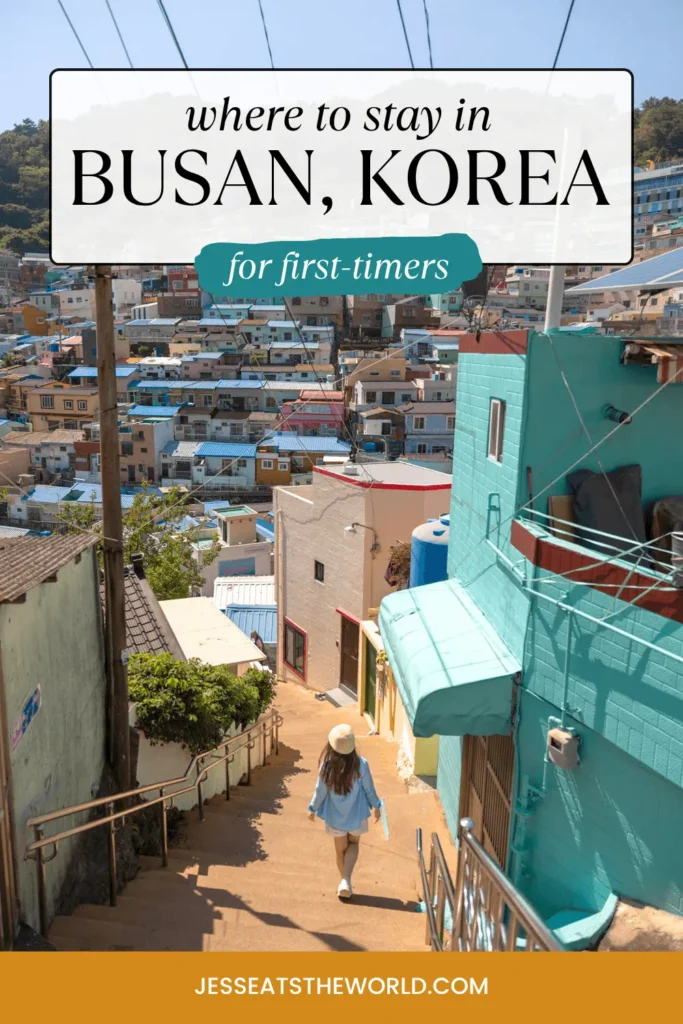
Finally, I had to include Gamcheon Cultural Village in this guide because, if you know me, you know I love a good unique immersive stay! Gamcheon Cultural Village is one of Busan’s most-visited neighbourhood for its colourful hillside houses – a revitalisation project by local artists that turned this otherwise impoverished neighbourhood into the colourful open-air art gallery it is today.
Most people visit Gamcheon Cultural Village from other parts of Busan, but did you know that some of the houses here are open to overnight guests? This is an experience very few people get to have, so you could consider adding it to your Busan plans!

Pros:
- Gamcheon Cultural Village is one of Busan’s most popular and iconic neighbourhoods. Staying here is something almost no other tourists do, so once people leave for the day (and before they arrive in the morning), you’ll have the Village all to yourself without the crowds.
Cons:
- The houses available for overnight stays at Gamcheon Cultural Village are still generally limited or inaccessible to foreign tourists. Check out my section below for a few options that you can actually book.
- While staying at Gamcheon Cultural Village is the experience itself, the neighbourhood is not well-connected to other parts of Busan. For this reason, I only recommend staying here for one night to fully experience and explore the Village, as opposed to basing yourself here for the whole trip.
- Although you’ll have the whole Village to yourself once tourists leave for the day, it’s worth noting that restaurants, cafes, and business close early, and that the neighbourhood is super quiet at night, with no evening entertainment. Make sure to plan for food and drink after the local businesses’ closing times.
Where to Stay in Gamcheon Cultural Village:
Homes you can stay in at Gamcheon Cultural Village:
Budget ($)
외국인도시민박
This is a tiny and modest residential home owned by a local Korean host. The balcony has a great view of the Village’s colourful houses in the background.
Boutique ($$)
Gamcheon Alley House
This is a more modern and comfortable home, with a classic colourful terrace overlooking Gamcheon’s vibrant hillside houses. It has a kitchen, which is convenient for having an evening meal.
Premium ($$$)
Cheonghae Gwangstay
This home is ideal if you need an accommodation for a larger group of up to 7 adults. Many of the rooms have a view to the Village’s colourful hillside houses, as well as a balcony.

My experience staying in Busan, South Korea
I decided to split my stay into two locations during my visit to Busan, so that I could maximise my time on the opposite sides of the city without sacrificing time commuting between neighbourhoods (as Busan is quite spread-out).
I stayed for half of my trip in Haeundae Beach and the remaining half in Nampo-dong.
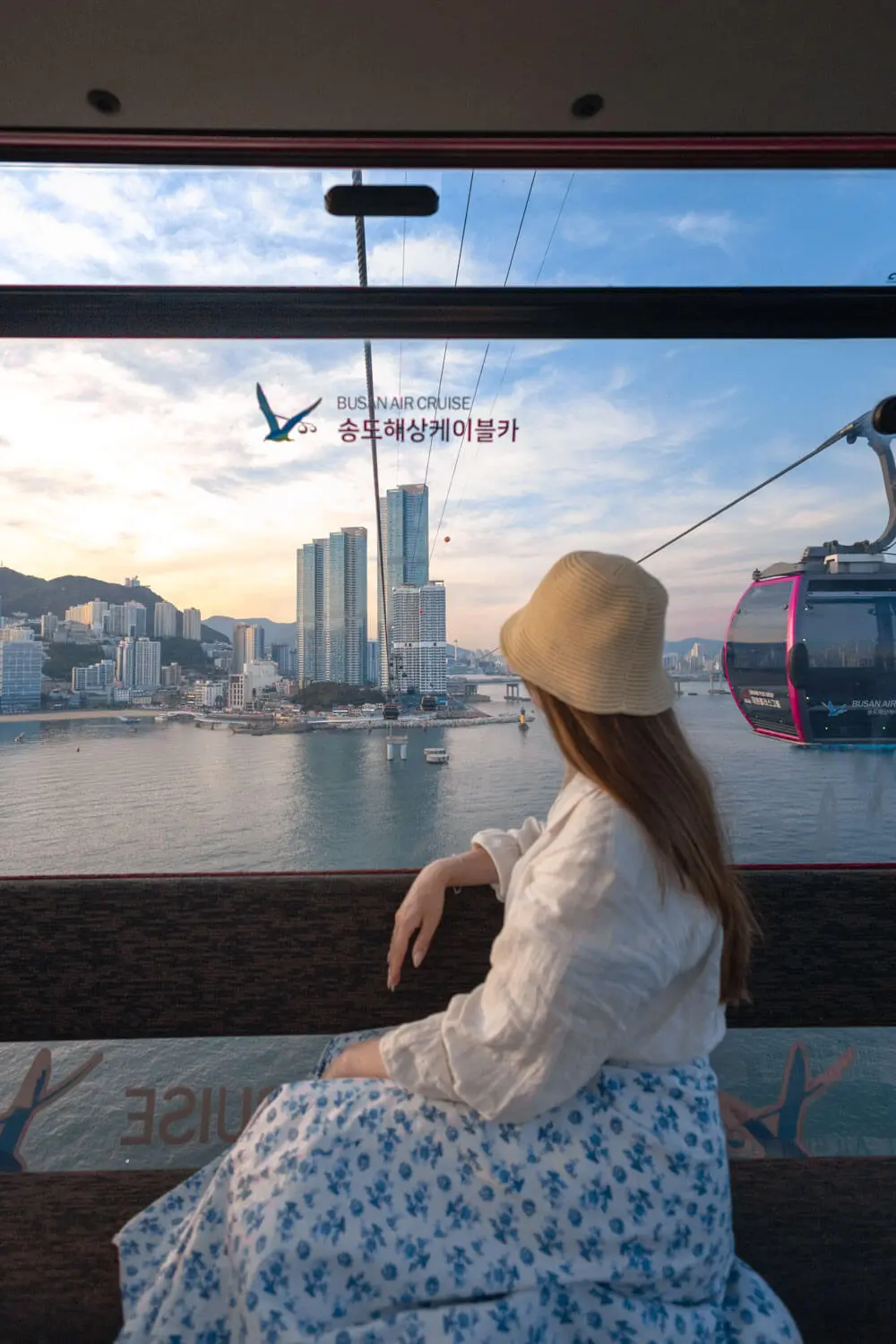
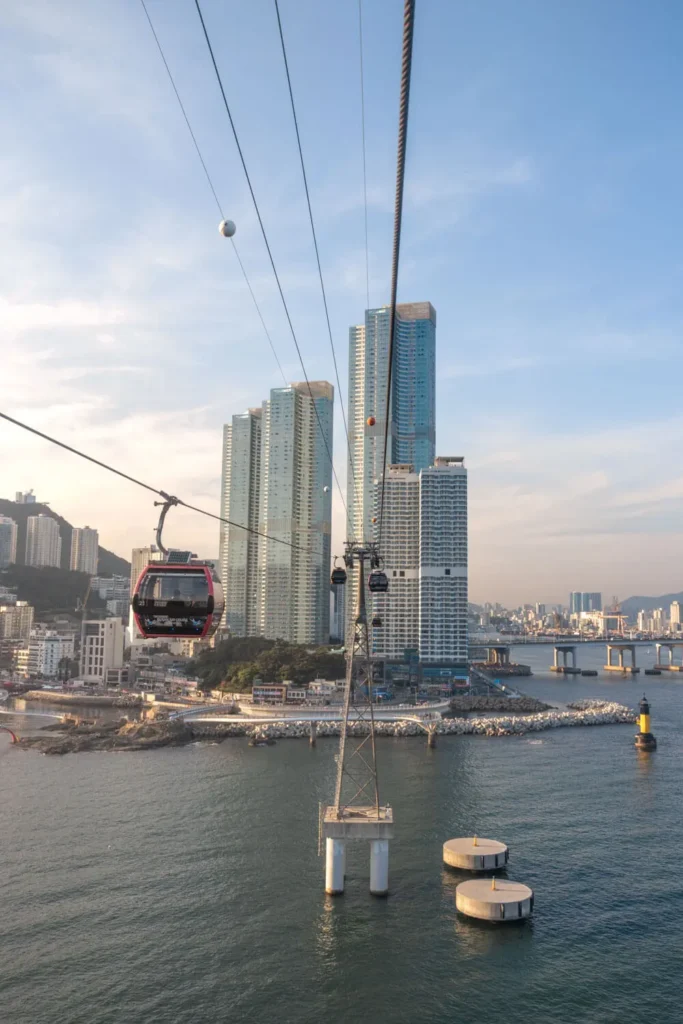
During my stay in Haeundae, I rode the Sky Capsule, relaxed at SpaLand, wandered through the restaurants and cafes in Seomyeon, and watched the weekly drone show at Gwangalli Beach. When I moved to Nampo, I ate my way through the local markets and street stalls, explored the Gamcheon and Huinnyeoul Culture Villages, and rode the Songdo cable car at sunset.
While I loved my itinerary, Busan is a really multifaceted city with plenty to do and see (and eat!), so I would’ve loved to stay longer. 4 days is great for getting a taste of the different sides of Busan, but 5-7 days allows for a more relaxed experience, and to get to know the city better.
Where to stay in Busan FAQ
Last thoughts
I hope this post helps you plan your next trip to Busan and choosing where to stay. Each area has its charm, but no matter which one you pick, I’m sure you’re going to have a great time!
Feel free to let me know in the comments if you have any questions regarding any part of this post – I’ll do my best to help.
Wondering where to stay in Busan for the first time ahead of your South Korea trip? Pin this post to save it for later!