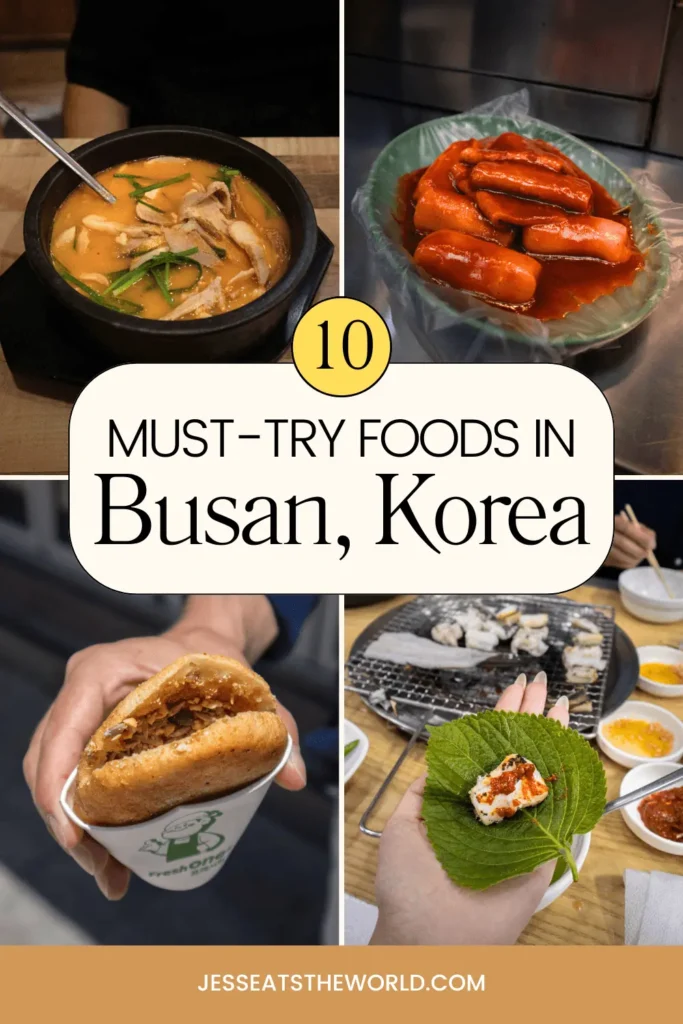


If you’re a foodie visiting Busan, I’m sure you’ll want to try as many traditional foods as possible. As a food-lover myself, I wasn’t satisfied with only trying typical Korean foods – I wanted to create a food guide with foods that actually originated in Busan.
So, I’ve compiled this food guide with 10 of the best foods from Busan that you must try during your South Korea trip – including Naver map links for where to eat them!
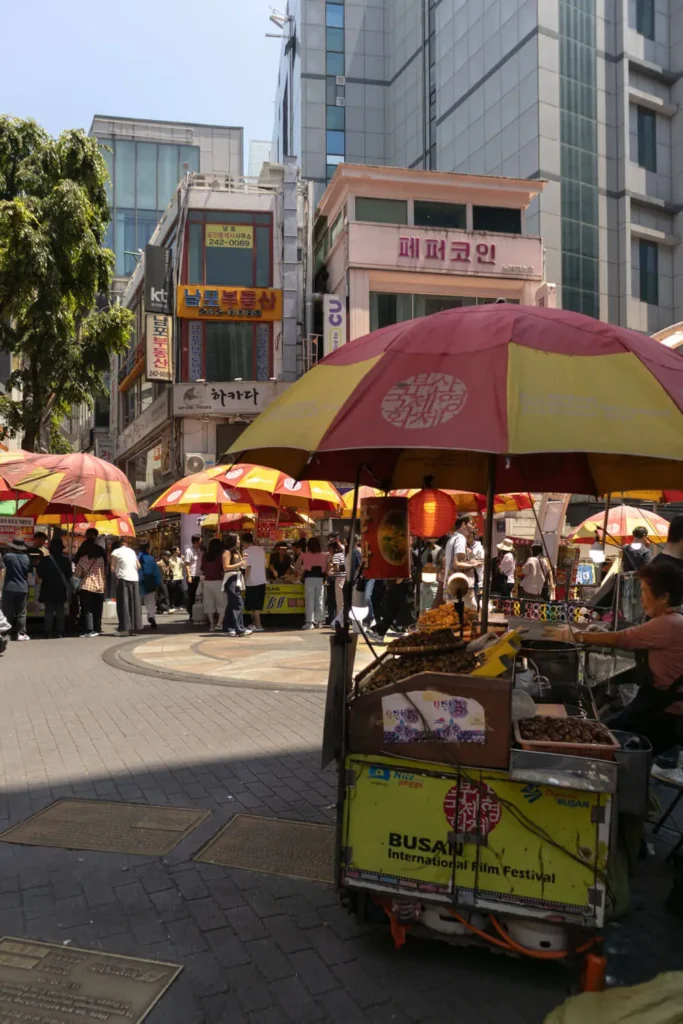
What food is Busan famous for?
Busan is South Korea’s second-largest city and a vibrant modern hotspot for beaches, mountains, and colourful neighbourhoods. As a city with a rich history and culture, the food scene in Busan is a true reflection of its past.
As a historic port city, the local cuisine of Busan naturally features fresh seafood and fish, but during the Japanese occupation and the Korean War, people had to turn to less-nutritious poverty foods out of necessity.
Busan’s role as the temporary capital during the Korean War saw hundreds of thousands of northern Koreans flee to the southern city to escape the war. This led to a significant influence of North Korean dishes and an emerging street food culture to permeate into Busan’s food markets and daily diets.
Keep reading to learn all about these foods!
Best Food Tours in Busan
Best Food in Busan: 10 Local Foods and Drinks to Try
1. Busan-Style Tteokbokki (Rice Cakes)
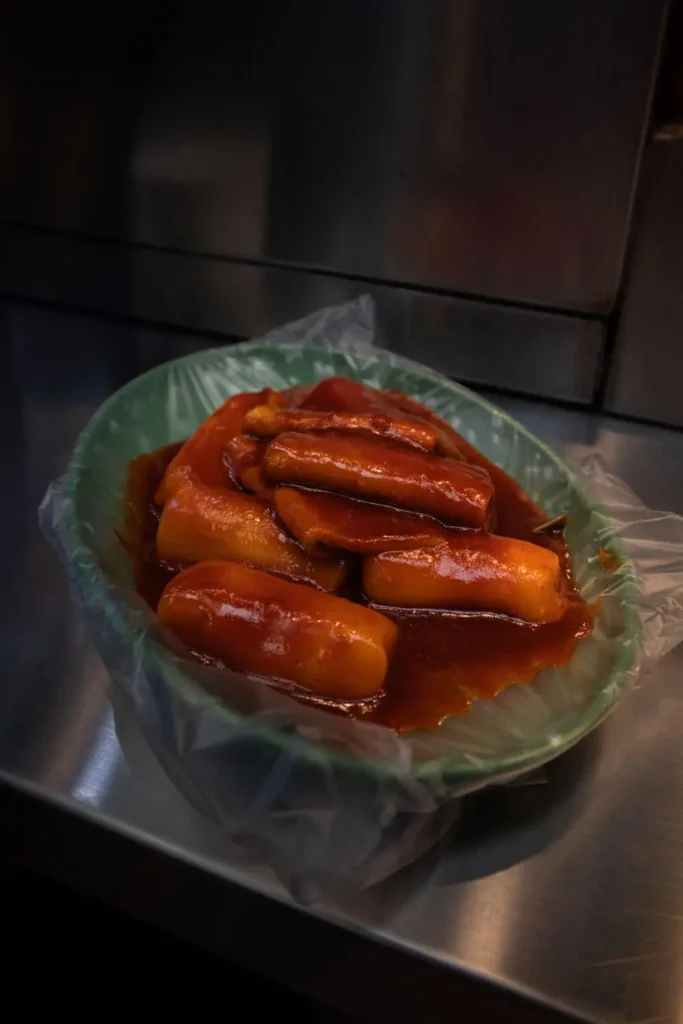
While tteokbokki (떡볶이, “simmered rice cakes”) as a street food originated in Seoul in the 1950s, this was also around the same time that Busan’s post-war street food culture was developing. Naturally, the city’s markets adopted this popular snack and added their own twist to it.
Busan’s own version of tteokbokki is recognised by its thick red sauce and generously-sized rice cakes and eomuk (fish cake) pieces. Despite its bright-red appearance, Busan-Style tteokbokki is not very spicy – rather, the seafood-based sauce tastes rich and sweet.

Where to eat it
I personally love Busan-style tteokbokki, and it’s the perfect snack to try while visiting the city’s must-visit markets and street food stalls like Bupyeong Kkangtong Market and BIFF Square.

Visiting Seoul during your South Korea trip? Check out my Seoul food guide!
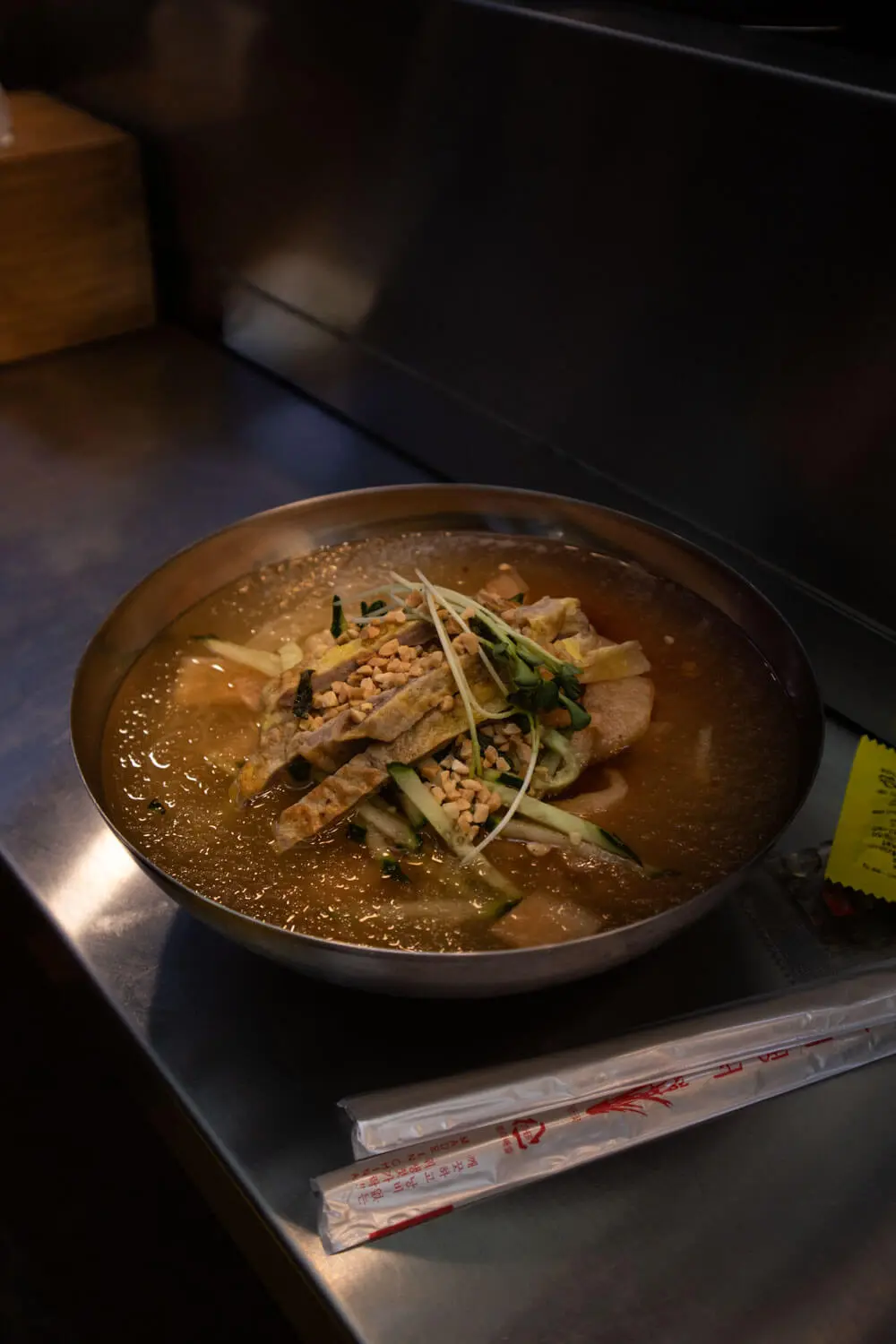
2. Milmyeon (Busan Wheat Cold Noodles)
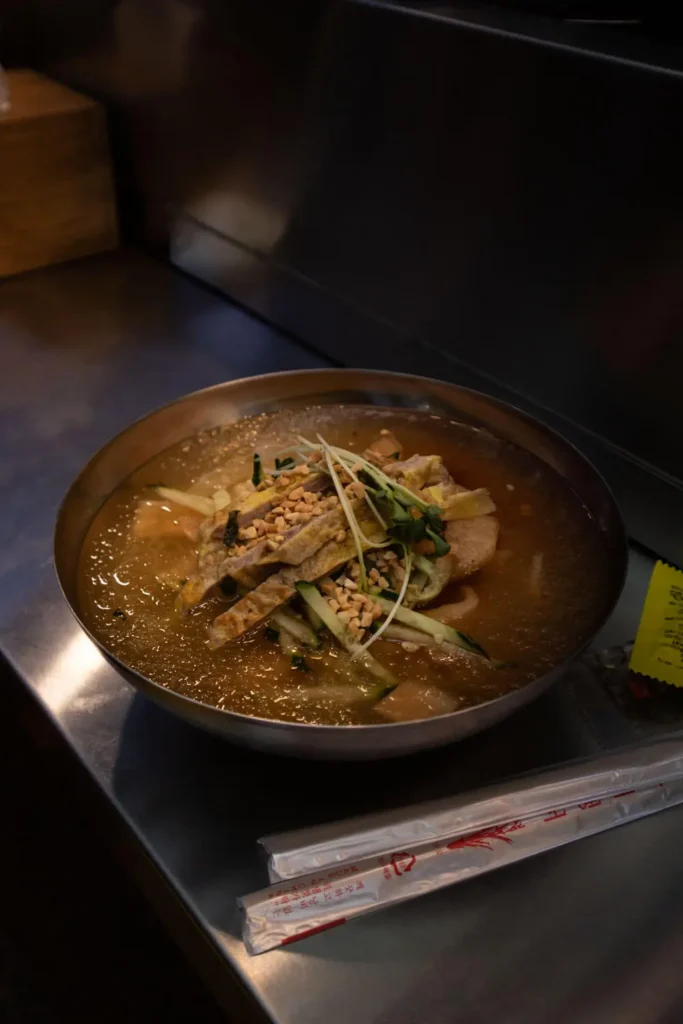
Milmyeon (밀면, “wheat noodles”) is a Busan variation of the North-Korean dish naengmyeon.
During the Korean War (1950–1953), many refugees from northern Korea fled to Busan. As buckwheat (the main ingredient for naengmyeon noodles) was rare in Busan, the refugees started making noodles with wheat flour, which was provided as rations by the United States military.
Now a beloved summer noodle dish in Busan, milmyeon consists of chewy wheat noodles in a chilled meat broth (물밀면, mul milmyeon), topped with vegetables, boiled egg, and/or beef. It can also be made brothless with a spicy gochujang-based red sauce instead – in which case it’s called bibim milmyeon (비빔밀면).
Where to eat it
I had my first taste of milmyeon at a stall inside Bupyeong Kkangtong Market, but you can also visit specialised noodle restaurants across Busan.
Naeho Naengmyeon is a multi-generation restaurant run by a family of northern refugees who fled to Busan during the Korean War, and who claim to have invented milmyeon. A few other restaurants known for Busan wheat noodles are Seomyeon Milmyeon and Choryang Milmyeon.
3. Busan Soju
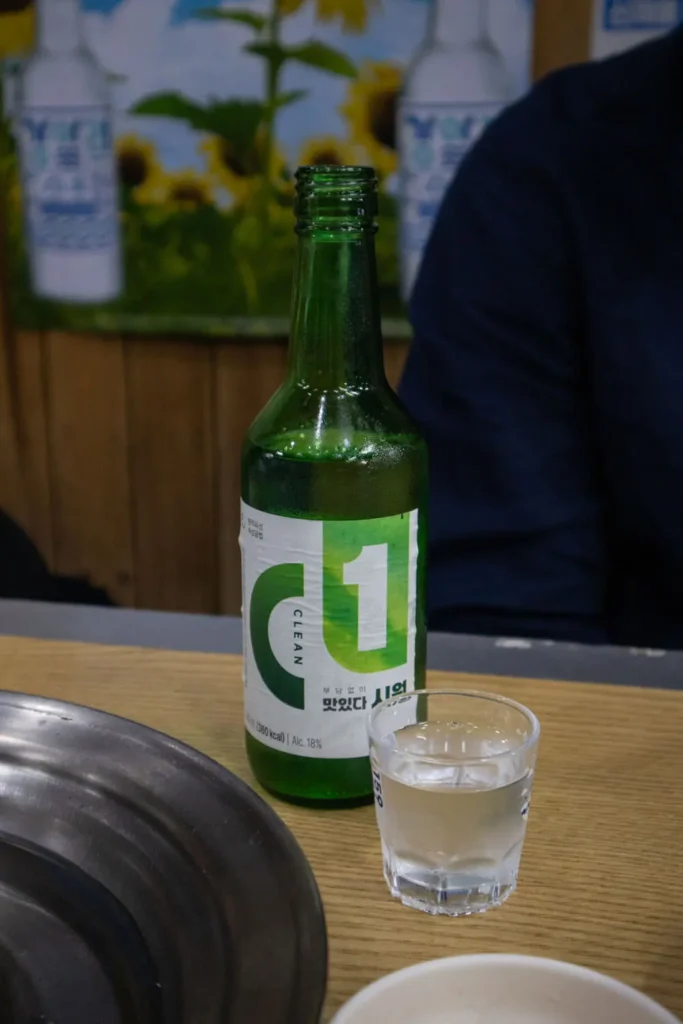
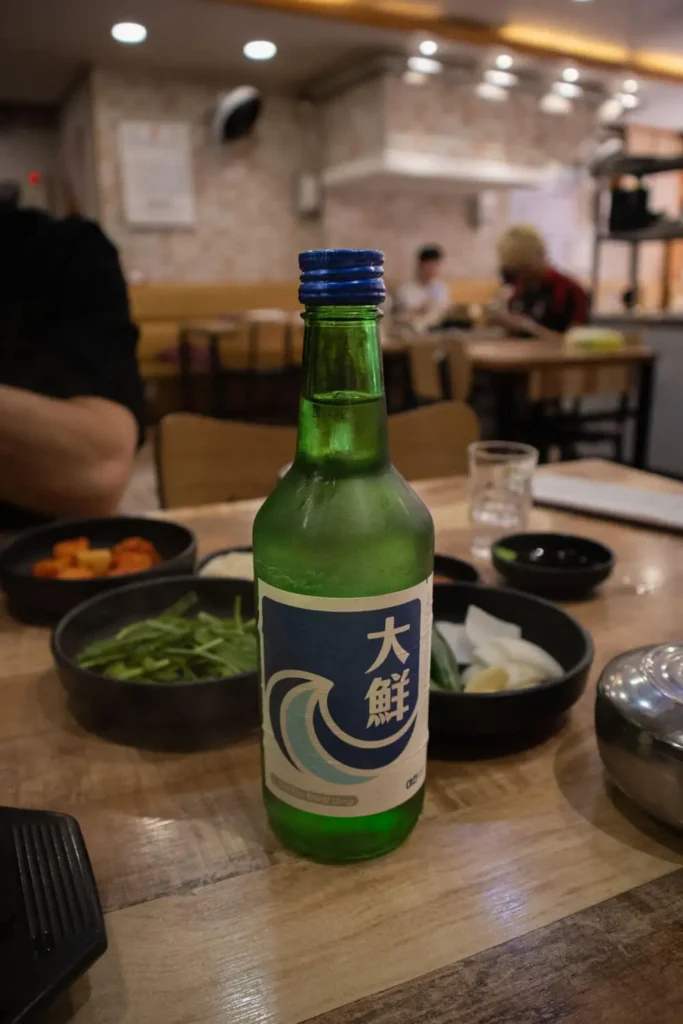
Soju (소주) is often dubbed “Korean vodka”, and it is very much the national drink of Korea. While soju has a much lower alcohol content than vodka (between 12-25%), both drinks share a similar taste and clear appearance.
Busan is known for its signature local soju brand C1 (시원, “Si-won”), produced by the Daesun Distilling Co. The distillery was founded in Busan in 1930 and is one of Korea’s oldest producers of soju. The company also produces the namesake Daesun (대선) soju, which has a slightly lower alcohol content (16.5% versus 18%).
Where to drink it
As soju is such a popular drink in Korea, I had no trouble finding the local brand at restaurants or bars across Busan. Just make sure to ask for the C1 (시원) or Daesun (대선) brands!
4. Naengchae Jokbal (Busan-Style Pigs’ Feet Salad)
If you’re feeling adventurous in trying some foods that are probably a little beyond your comfort zone, then you should try Busan-style pig’s trotters (naengchae jokbal, 냉채족발).
This summer dish is a lot less intimidating that the name might suggest – the pig’s feet are braised and thinly sliced, and served topped with salted jellyfish, vegetables, and spicy mustard sauce. The pork meat inside the trotters is still soft, and jellyfish isn’t as strange as it seems – it doesn’t taste fishy, and I’d say it has a similar bite to a chewy glass noodle.
Naengchae jokbal is the Busan-style variation of the popular Korean braised pig’s trotters dish jokbal (족발), which is served warm. Busan’s version originated in the 1980s when several restaurants around Bupyeong and Nampo wanted to serve a lighter and less-greasy alternative to the traditional dish during the summer months.
Where to eat it
As the dish originated in the area that is today known as Jokbal Alley, this is where you can find many restaurants specialising in Busan-style pigs’ feet salad. Some popular ones are
Hongso Jokbal and Busan Jokbal.
5. Ssiat Hotteok (Korean Sweet Pancakes with Seeds)
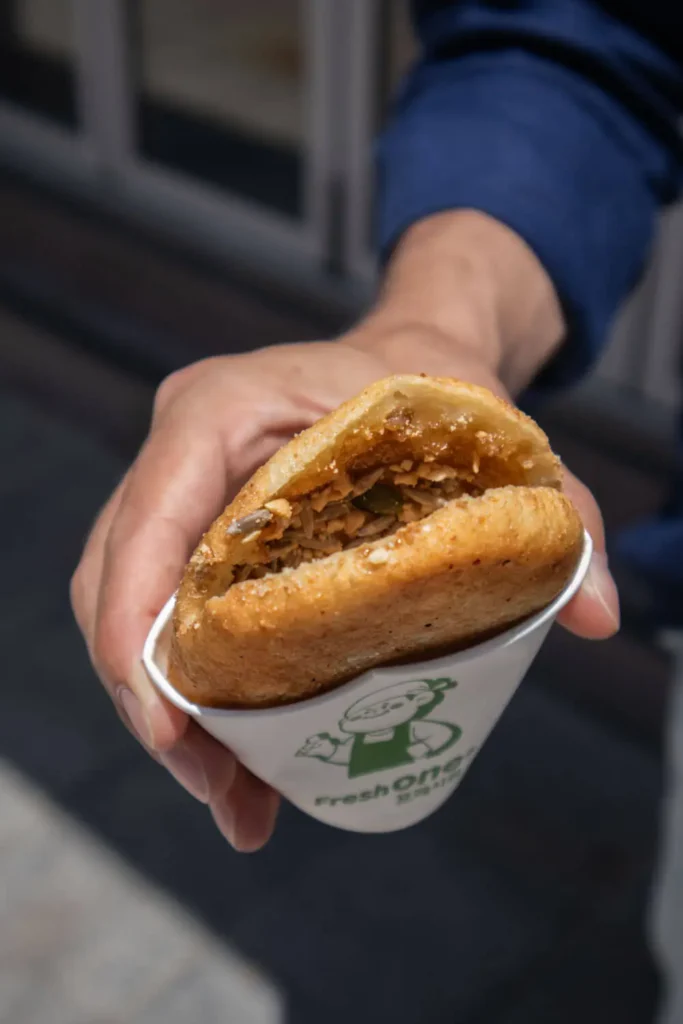
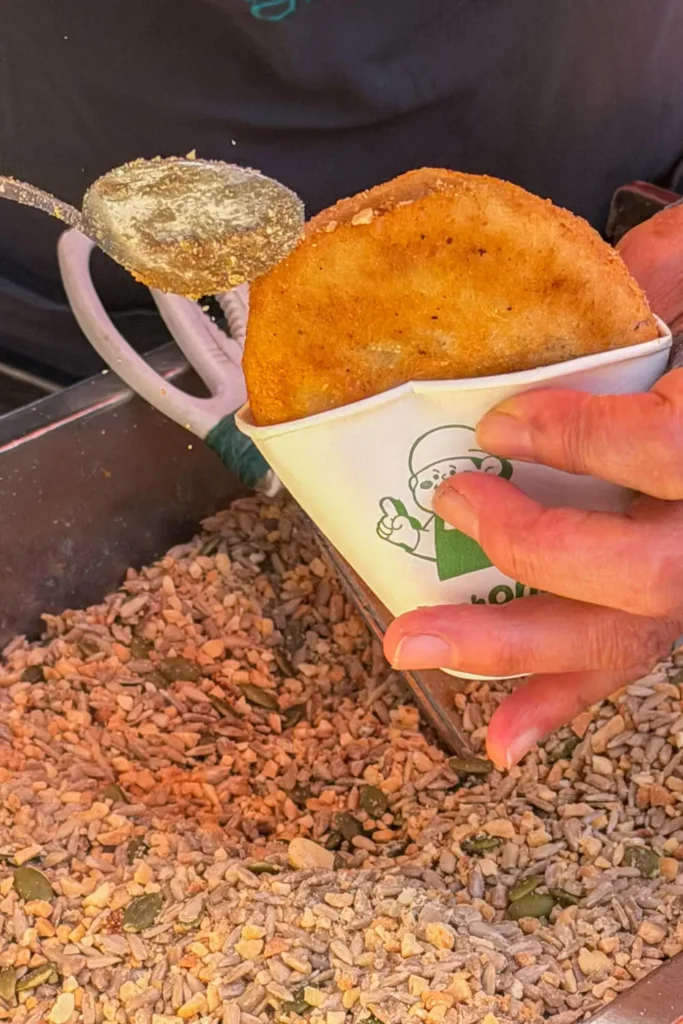
Ssiat hotteok (씨앗호떡) is Busan’s regional variation of the popular Korean sweet pancakes (hotteok) that were introduced in Korea by Chinese merchants in the late 1800s.
Busan’s version of hotteok is special because the fried pancake is served sliced open and filled with lots of seeds (like sunflower seeds, pumpkin seeds, and sesame seeds), which gives it a nutty, crunchy texture.
These pancakes became extremely popular after the Korean celebrity Lee Seung-gi ate them on the popular variety TV show called “1 Night 2 Days” in 2010.
Where to eat it
Since BIFF Square was the place that became famous for these pancakes, make sure to go there for a taste! This is where I had mine and it was a great snack to munch on while wandering around. The pancakes are fried right in front of you and served piping hot in a paper cup.
6. Dwaeji Gukbap (Busan Pork Rice Soup)
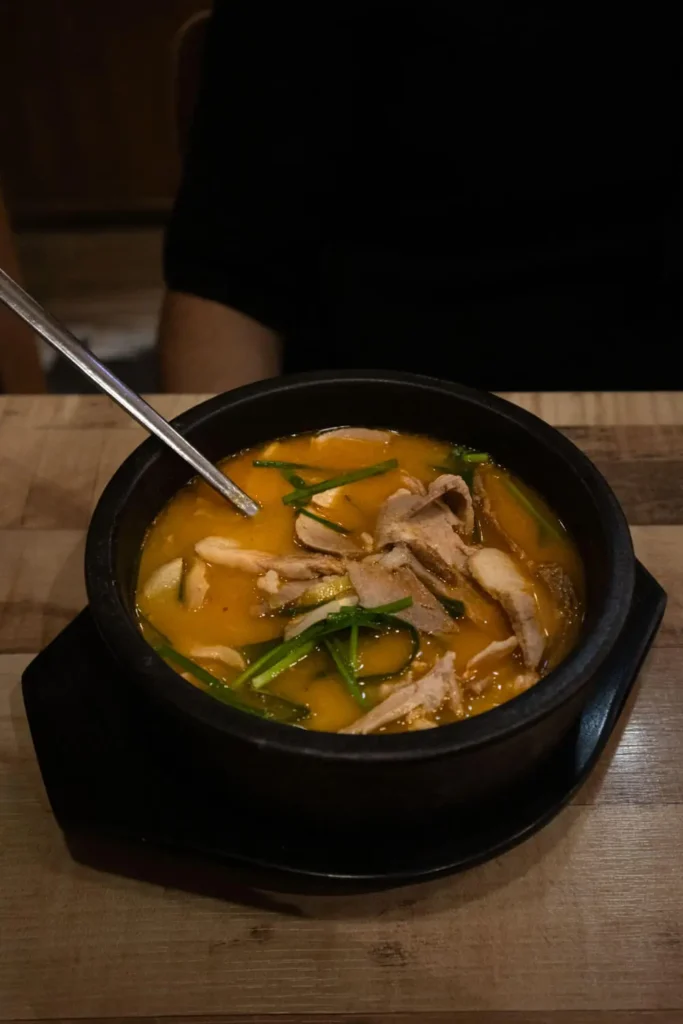
Dwaeji gukbap (돼지국밥, “pork rice soup”) is undoubtedly one of Busan’s most famous dishes, and it carries an important story as one of the “poverty foods” that originated during the Korean War.
In the 1950s, during the Korean War, many refugees fled south to the regions of Gyeongsang and Busan. As they couldn’t afford to make beef soups like seolleongtang, refugees used pork bones provided by the U.S. military to create a very simple bone broth that they would eat with rice.
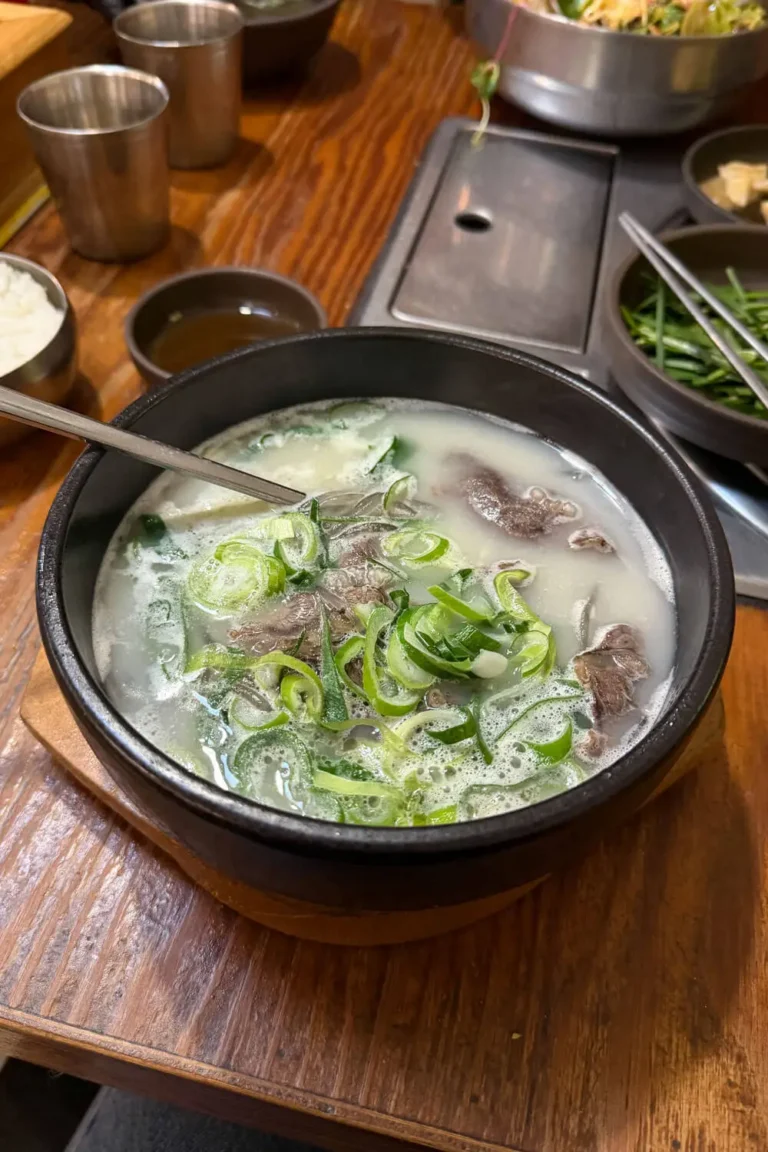
Pork rice soup is now one of the most beloved comfort foods in Busan. The soup is made with pork slices simmered in a piping-hot pork bone broth, and served with rice, either already mixed in the soup or on the side. Sometimes, the soup is also made with noodles.
The soup is usually brought to the table as a clear broth, with various seasonings served on the side for you to mix in according to your own preference. These can include kimchi, fermented shrimp, green peppers, onions, red pepper paste, and garlic. You should enjoy the soup paired with a bottle of soju!
Where to eat it
The most famous place to eat Busan’s pork rice soup is at the Dwaeji Gukbap Alley, in Seomyeon. Along this street, you’ll find many restaurants specialising in dwaeji gukbap – some of which have been open for decades!
I had my first taste of this cosy dish at 수영본가돼지국밥, one of the restaurants along the Alley.
7. Nakgopsae (Spicy Octopus, Shrimp & Intestine Stew)
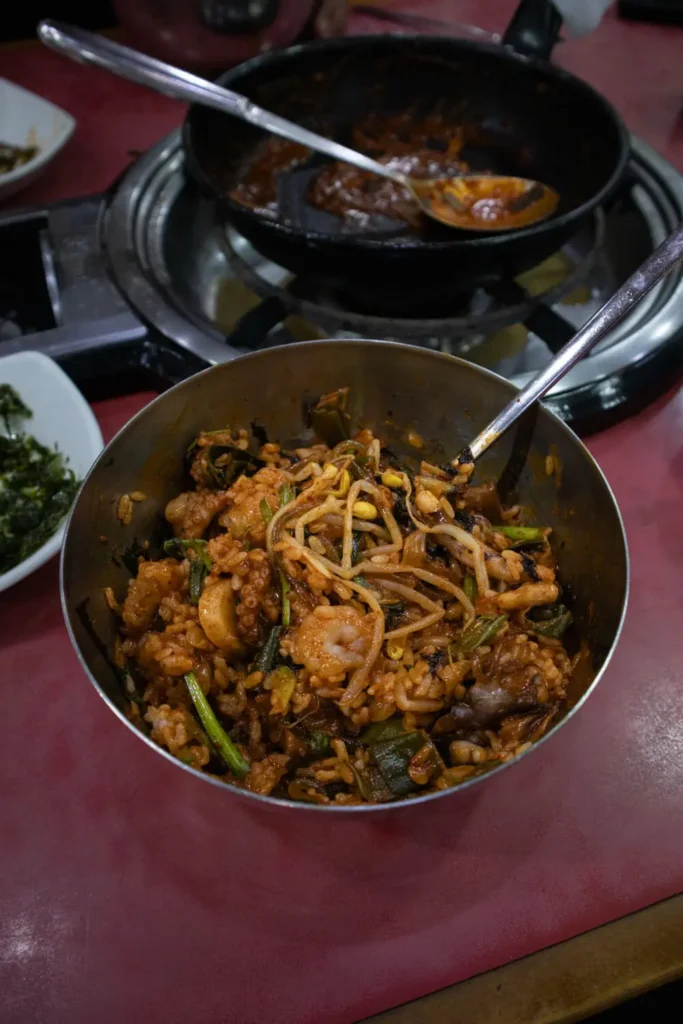
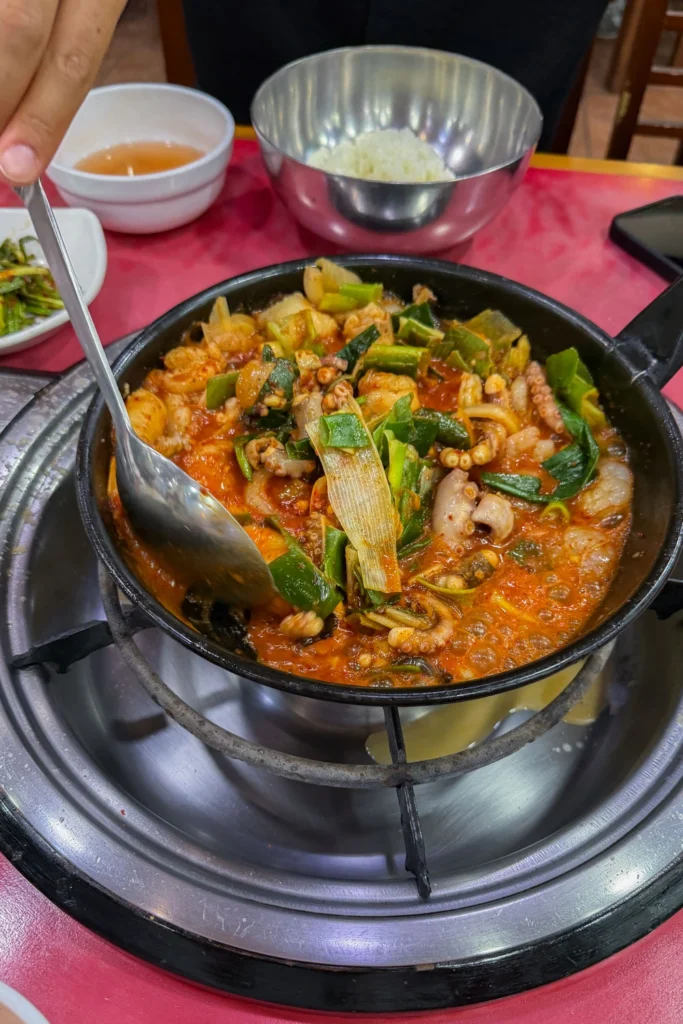
Nakgopsae (낙곱새) was one of my favourite food discoveries during my trip to Korea, and I hope you get to taste it during your visit to Busan! It reminded me a lot of the seafood and meat rices that are popular back home along the Mediterranean.
This spicy stew originated in the 1960s around the Joseon Textile Factory in Dong-gu, Busan, as an affordable snack for the workers. Originally, the snack was simply boiled octopus dipped in spicy gochujang sauce, but it evolved over time to include more ingredients and become the modern version of the dish.
Today, the dish is a stir-fry that combines octopus, beef intestines, shrimp, and vegetables cooked in a spicy red chili paste (gochujang) and garlic-based sauce. At nakgopsae restaurants, the stew is cooked at the table as a communal dish. Once ready, you should scoop it over your own bowl of white rice and mix it together with seasoned seaweed flakes and beansprouts. Once again, this is a dish that pairs very well with soju.
Where to eat it
Nakgopsae has become so popular with both locals and tourists that the chain Gaemijip currently has over 30 franchise restaurants across South Korea! The original shop was founded in the 1970s in Busan’s Gukje Market, and I think it’s a great place to experience this dish for the first time.
Alternatively, for a more authentic feel, the historic restaurant Wonjo Jobang Nakji in Dong-gu has been around for 40 years and it recreates the taste of the original neighbourhood restaurant that led to the creation of the dish.
8. Busan Eomuk (Fish Cakes)
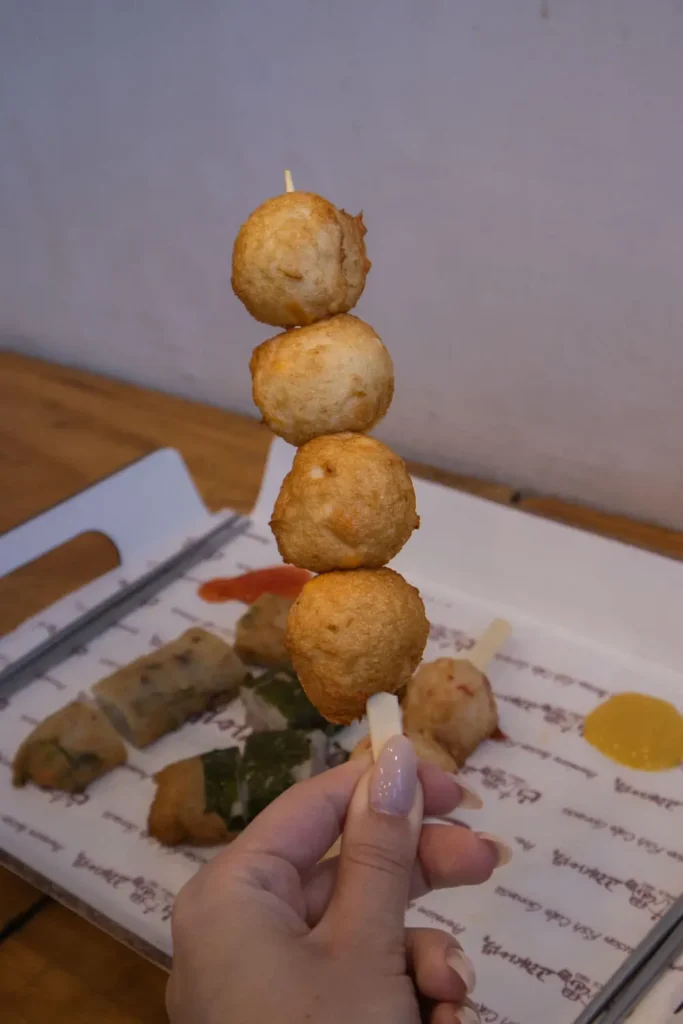
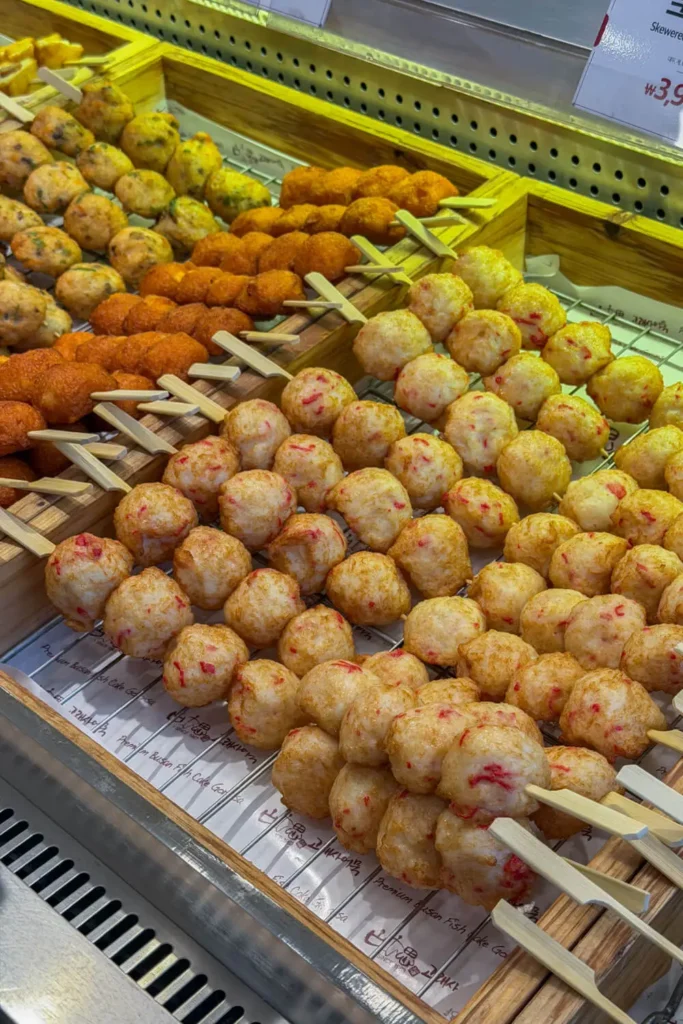
Eomuk (어묵, “fishcakes”) are one of Busan’s most famous foods, and you’ll likely find them in many forms – served as street food snacks, skewered (as odeng , 오뎅), in soups or sauces, or as a side dish.
Busan fishcakes are especially chewy and have a strong seafood flavour, as they are made with 70% fish or more. Fishcakes are made with pureed white fish meat blended with starch, egg whites, and seasonings. The smooth paste is shaped into cakes, tubes, balls, etc. and then fried, steamed, or boiled.
Fishcakes originated in Japan where they had been eaten for centuries as a way to preserve whitefish (called kamaboko). The Japanese introduced fishcakes to Korea during the 1910–1945 occupation, and because Busan is a coastal city, it became the centre for the production of eomuk after the Korean War.
Where to eat it
Samjin Fish Cake was established in Busan in 1953 and it is the oldest fishcake manufacturer in Korea. Another famous fishcake brand is Goraesa. The fun part is that these companies have shops that work in “bakery-style” and you can pick any kind of fishcake you like and eat inside.
I visited the Goraesa shop in Haeundae and got to try many fishcake types, as well as their Busan-style tteokbokki.
9. Gomjangeo-gui (Grilled Hagfish / Eel)
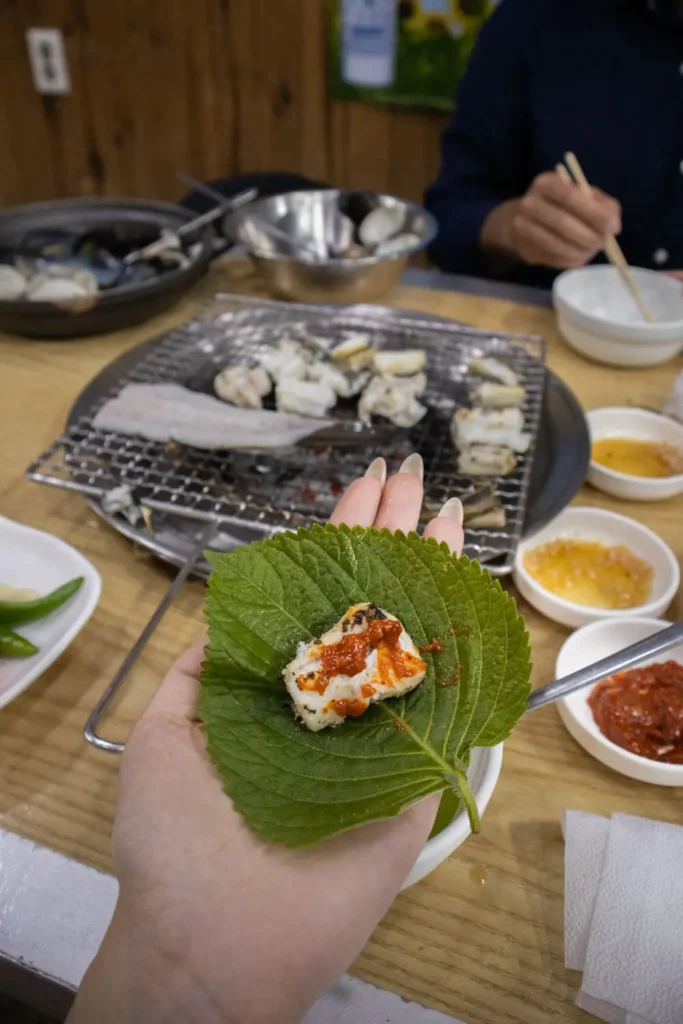
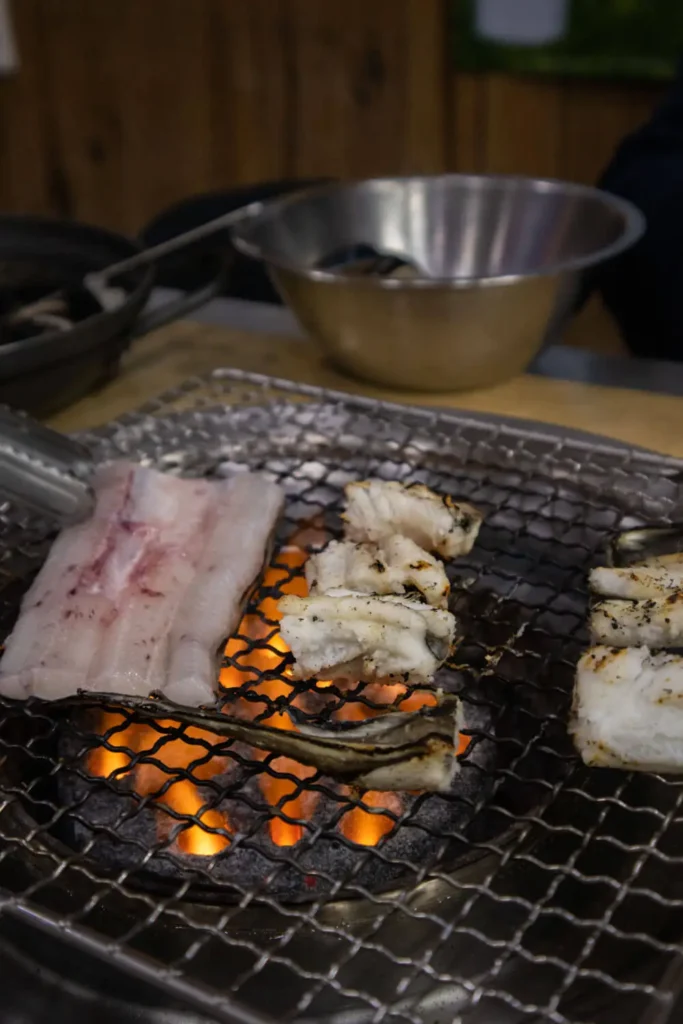
Gomjangeo-gui (곰장어구이, grilled hagfish or sea eel) is a local delicacy of Busan.
Often, the eels are simply salted and grilled over an open flame (sogeum-gui, 소금구이), and eaten ssam-style – seasoned with sliced garlic and spicy bean paste, and wrapped in perilla or lettuce leaves. The eels can also be marinated in a garlic and gochujang-based sauce before grilling (yangnyeom-gui, 양념구이).
Korea is almost the only country in the world where hagfish is eaten. During the Japanese occupation, the eels were mainly caught for their skin (which was used for making leather), and the meat was discarded or sold for cheap. People in Busan started eating eels to to stave off hunger, which started the hagfish dish culture around Jagalchi Market.
If I’m completely honest, I think hagfish is a love-it-or-hate it dish, or at least an acquired taste. The flavour itself is not too dissimilar from other fish, but it’s the texture that may throw you off – instead of a smooth meaty feel, hagfish has a cartilage-like bite, which may not be to your liking (it’s not my favourite, either).
Where to eat it
There are many restaurants and eateries around Jagalchi Market where you can try this delicacy. I tried it at this small eatery, where the ladies catch the live eel from the tanks right before serving it to your table.
10. Gopchang (Grilled Intestines)
Koreans are some of the world’s biggest lovers of tripes, and Busan saw the origin of grilled intestine dishes that continue to be loved today. If you haven’t eaten tripes before, you should give it a try during your visit to Busan!
Munhyeon gopchang (문현곱창) uses pork intestines as the main ingredient, and it originated in the 1940s near the livestock market and slaughterhouse located in Munhyeon-dong. Pig offal was discarded or sold cheaply, and so people started eating grilled pork tripe throughout the Korean War and beyond.
On the other hand, yang gopchang (양곱창) uses cow intestines, which became popular around Jagalchi Market. In the 1980s, when the fishing industry started declining, many brothels in the area converted into yang gopchang restaurants, serving a cheap and delicious source of animal protein for sailors. In the 90s, the number of restaurants continued to grow and the area became extremely popular with Japanese tourists.
Where to eat it
For grilled pork intestines, the main historical hub is Munhyeon-dong Gopchang Alley, where a number of restaurants still serve the dish, despite many having disappeared over the years. Chilseong Sikdang is still one of the most popular ones.
If you prefer cow intestines instead, then the Yang-gopchang Alley near Jagalchi Market is the go-to area! There are many gopchang restaurants there, but several of the oldest ones are clustered inside Baekhwa Yanggopchang. Enjoy wandering by each shop and picking your favourite!
Final thoughts
I hope this local Busan food guide with the best typical foods and where to eat them is helpful for your upcoming trip! There are many more Korean dishes that you can discover in the city, but this list is a good start.
If you have questions about any part of this post, feel free to reach out in the comments below!
Visiting soon? Check out my South Korea guides:
Visiting Korea soon and looking for the best foods to try in Busan? Pin this Busan food guide to save it for later!