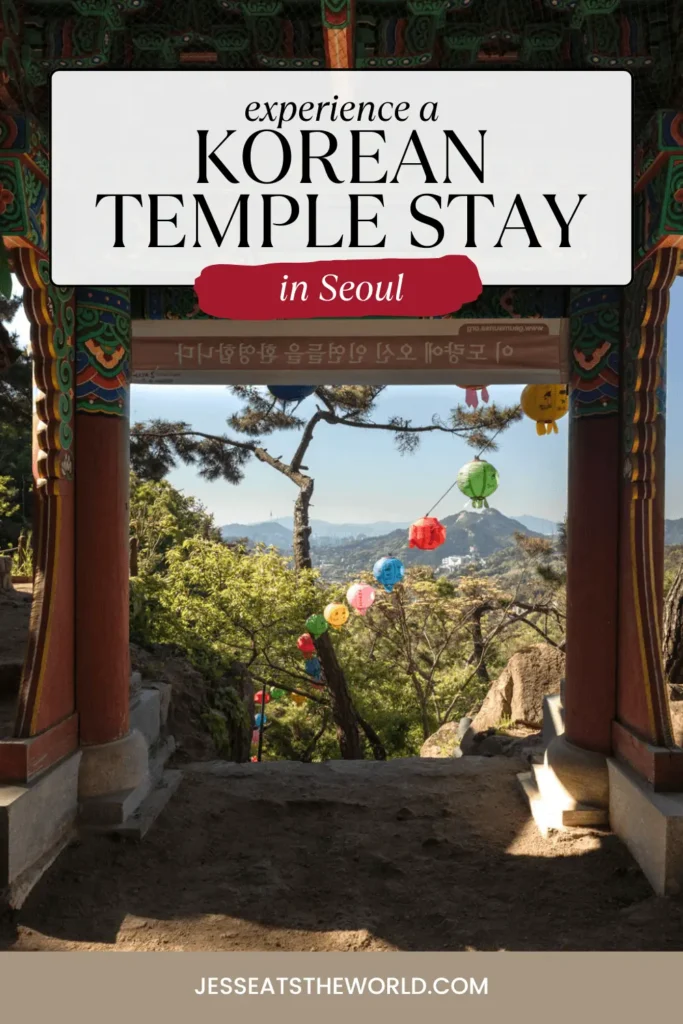


One of the must-do experiences on my Seoul itinerary was to stay in a Buddhist temple. This is something I had previously done in Japan, and as one of the most unique stays you can experience in Korea, I just had to include it in my trip!
In this guide, I’ll explain all the steps for finding and booking temple stays in Korea, how much it costs, what it includes, and I’ll also share my own experience of staying in a Buddhist temple in Seoul!
Disclosure: This post may contain affiliate links for products or services that I personally endorse and love. Should you make a purchase, I may make a commission at no additional cost to you. Thank you for supporting Jess Eats The World!
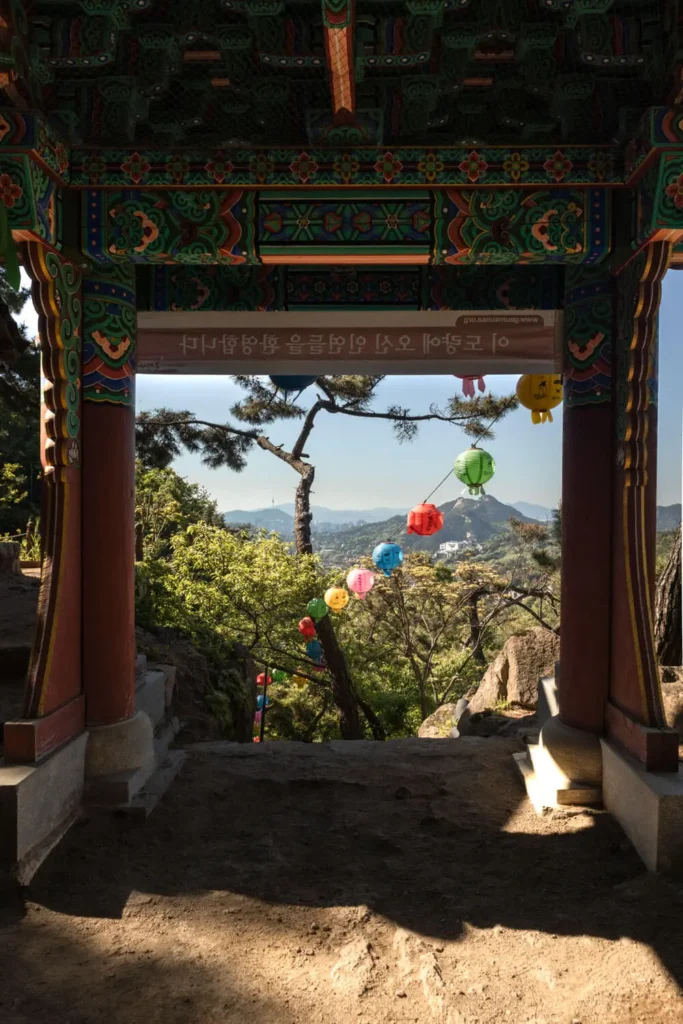
What is a temple stay in Korea?
As the name suggests, you can stay at Buddhist temples in Korea to experience and learn more about Korean Buddhism and the monks’ lifestyle, rituals, and cultural activities.
There are various types of temple stay programs, depending on the specific temple. Some experiences focus more on relaxation, while others involve artistic or cultural activities.
Most temple stays work as a retreat and have a duration of two days/one night. They’ll often include a Buddhist service, meditation and prostration sessions, and traditional Korean-style Buddhist vegetarian meals.
How to book a temple stay in Korea?
Since 2002, the official Templestay program has made it easy for foreign tourists to book temple stays all over Korea.
The website works both in English and Korean, and it lists a directory of all temples that run temple stay programs in the country. Nonetheless, the English version of the website only lists temples that offer foreign-friendly programs (with English-speaking staff).
You can browse and book temple stays across Korea from the official Templestay website. Alternatively, if you are in Seoul, you can also physically visit the Templestay Information Center, where you can book temple stays in person.
Visiting Seoul? Check out my favourite activities:
*Use my code “JESSVKLOOK” for 10% off your first purchase, or 3% off for existing customers!
Klook.comMy Temple Stay Experience in Seoul, South Korea
I knew well-ahead of my South Korea trip that I wanted to book a temple stay somewhere in the country.
Funnily enough, I had actually planned on avoiding Seoul for this, as I thought temples in smaller areas might offer a more authentic experience. However, after considering multiple programs, I ended up gravitating towards the more intimate temple stay experience at Geumsunsa Temple, in Seoul.
Why I chose Geumsunsa Temple for a temple stay in Seoul
My main goals with a temple stay experience in Korea were to have a relaxing time and to learn more about the Korean Buddhist lifestyle and culture. I considered the very popular Golgulsa Temple, in Gyeongju (as it’s the only temple in Korea that offers Sunmudo martial art training sessions), as well as Beomeosa Temple, in Busan.
During my research, I found that some temple stays only include shared-room accommodation, with many being gender-separated. As I was travelling with my fiancé (and we are approaching our 30s…), this was not something that sounded very appealing!
Additionally, popular temple stay programs often accommodate large groups per session (some upwards of 100 people!), which wasn’t really the kind of intimate and authentic experience we were looking to have.
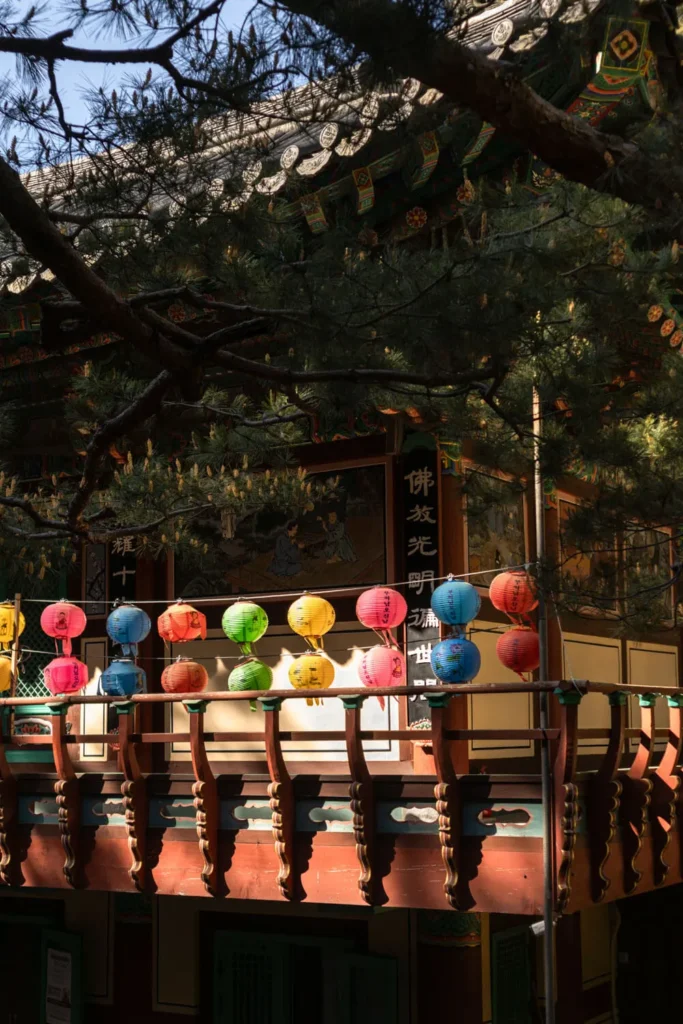
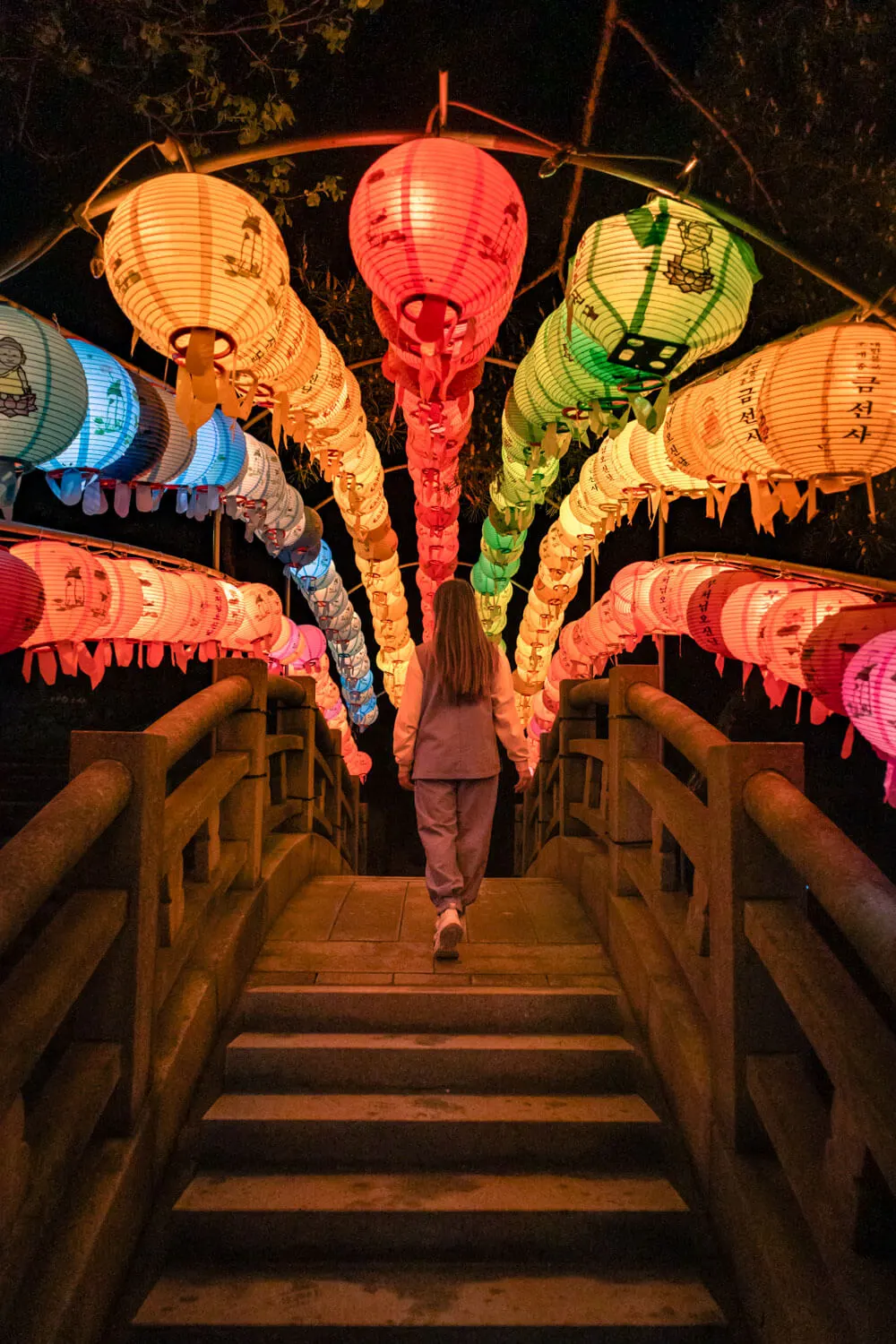
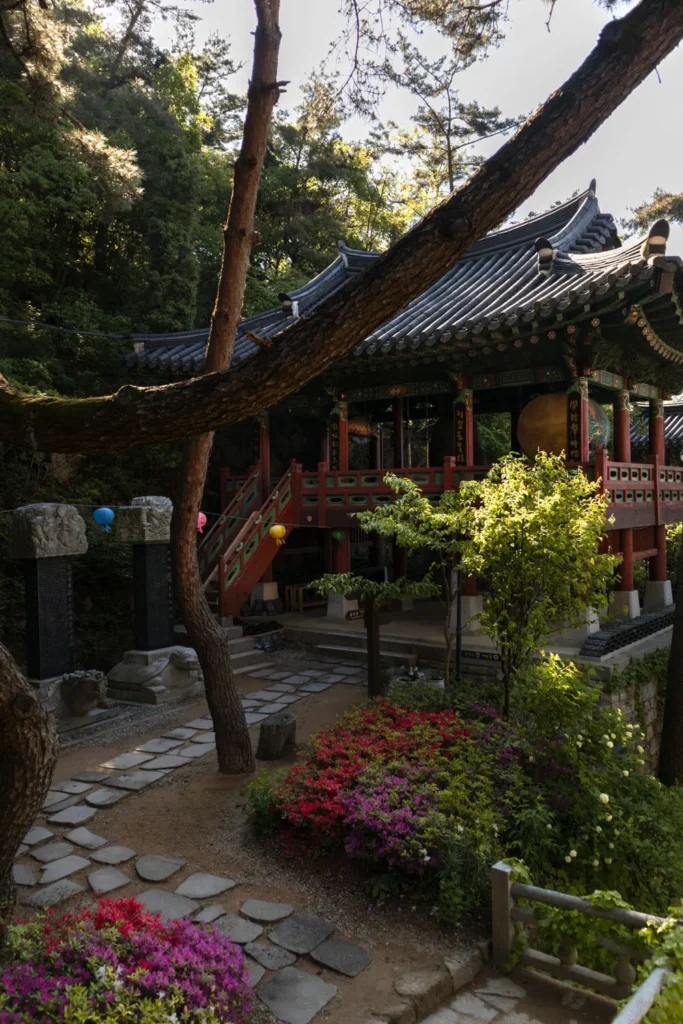
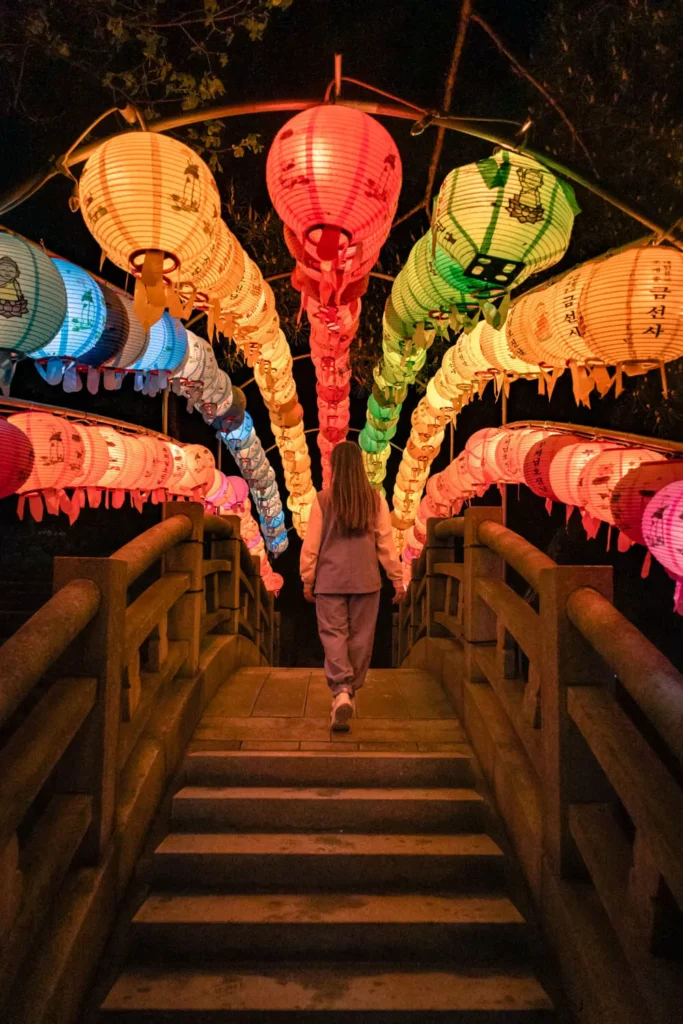
So, when I found Geumsunsa Temple, it seemed like the no-brainer option for us. The temple relaxation program is run for small groups of just 12 people, and the 600-year-old temple location is pretty unique – perched on the secluded Bukhansan National Park mountains, yet right in the middle of Seoul.
The temple accommodation is gender-mixed, and whoever books together stays in the same room. On top of that, the Geumsunsa Temple program was actually cheaper than other more popular ones. At the time of writing, the temple stay costs just 80,000 won (GBP £40 / USD $55 / EUR 48) per person.
All of this, combined with the very convenient commute from central Seoul, made it an ideal choice for us!

The easiest way to stay connected in South Korea is by installing an eSIM ahead of your trip! I used a Holafly eSIM which worked well everywhere, and you can can get 5% off with my code “JESSICAVIANA“!
How to get to Geumsunsa Temple
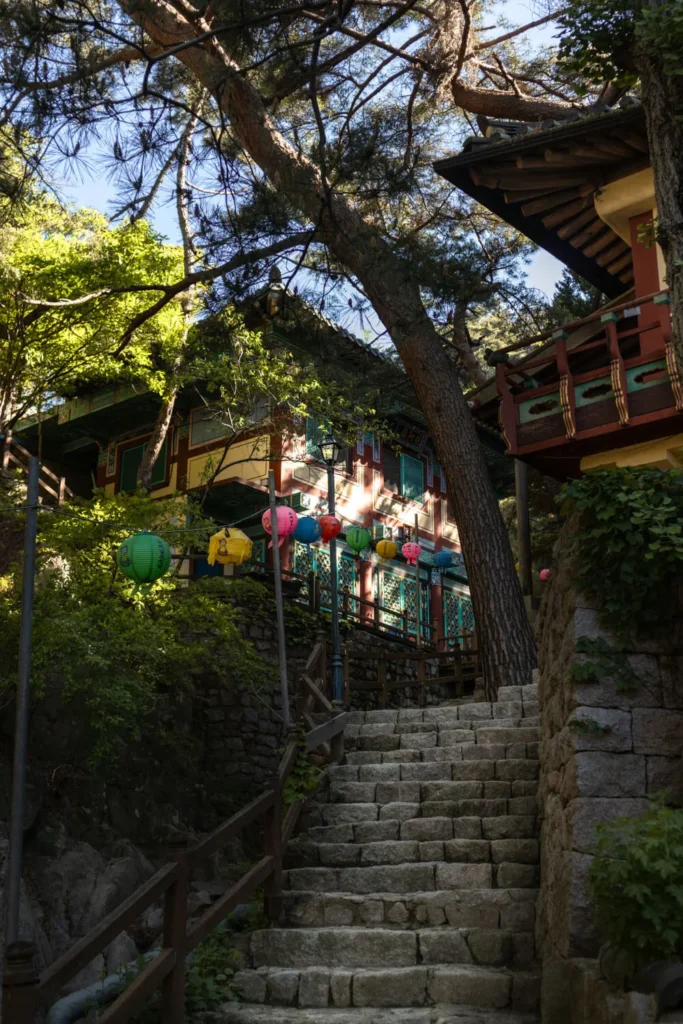
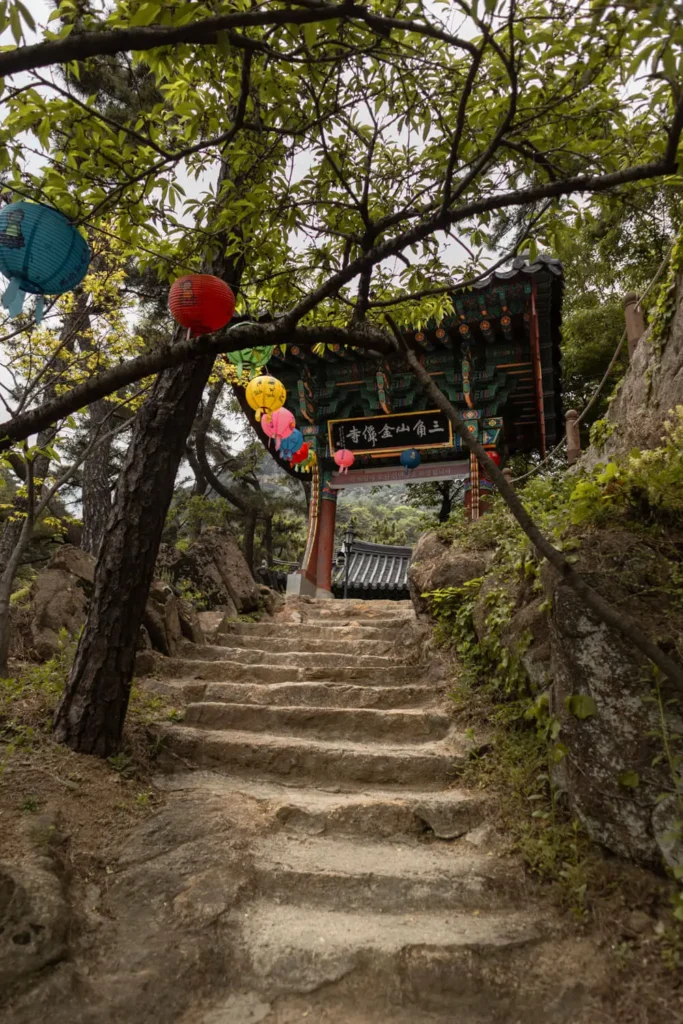
One of the biggest perks of doing a temple stay at Geumsunsa Temple is, undoubtedly, its convenient location right in the middle of Seoul. You can reach Geumsunsa Temple (금선사) by bus or car/taxi.
From central Seoul, Bus 7212 is the most direct route – it stops at The Committee for the Five Northern Korean Provinces, and then you need to walk about 15 minutes to the entrance of the Temple.
Alternatively, taxi apps like K-Ride and Uber are very popular and affordable – I requested a drop-off at the Temple entrance and then just walked up the trail to the Temple.

Tip: There is a small cable car for bringing luggage up to the Temple. You can leave your luggage there and the staff will pull it up.
However, for a comfortable stay, I’d actually recommend leaving any large luggage in a storage locker in Seoul. If you can, bring only your essential items for the stay.
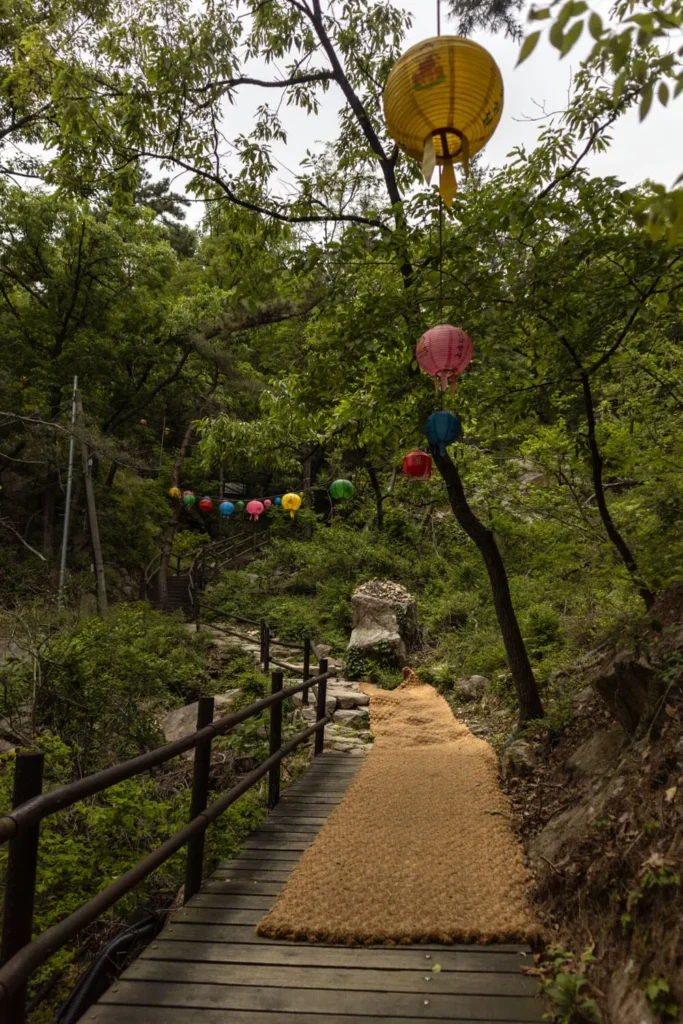
What to pack for a Korean temple stay
There are not a lot of specific requirements for what to pack for a Korean temple stay, but you should keep a few things in mind:
- Toiletries, towels & water bottle: Most temple stays like Geumsunsa Temple function as a retreat, so you shouldn’t expect the levels of service of a hotel. Bring your own towels and toiletries (including toothbrush and toothpaste) and a personal water bottle. Avoid bringing any food or rubbish into the temple.
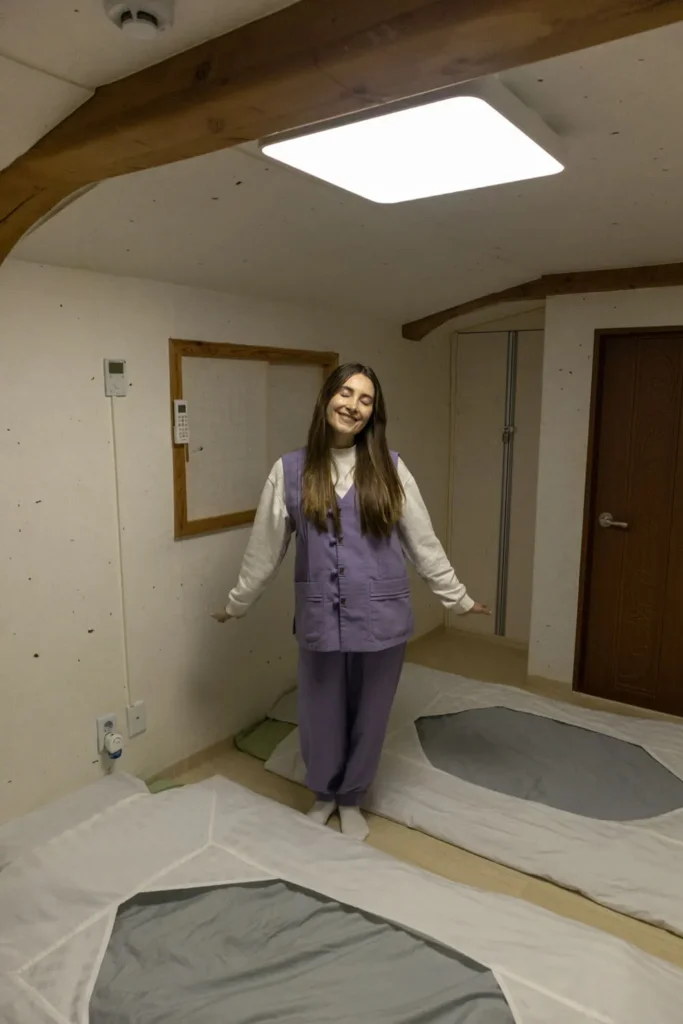
- T-shirt and/or long-sleeved jumper: You’ll be provided with a loose-fitting uniform to wear during the program. You should also wear a t-shirt or jumper with sleeves underneath it, as a sign of modesty and respect for Buddhist traditions.
- Easy-to-remove shoes & socks: During the temple stay, you will have to slip your shoes on and off multiple times, as it is the Korean custom not to wear shoes indoors. Packing a pair of shoes that you can easily slip on and off is much more convenient (please learn from my mistakes).
Note: Please note that Buddhist temples often don’t allow sleeveless shirts/tops or sandals/flip flops, so keep these in your luggage.
What does the temple stay program schedule look like?
The temple stay experience at Geumsunsa Temple follows a pre-programmed schedule of activities.
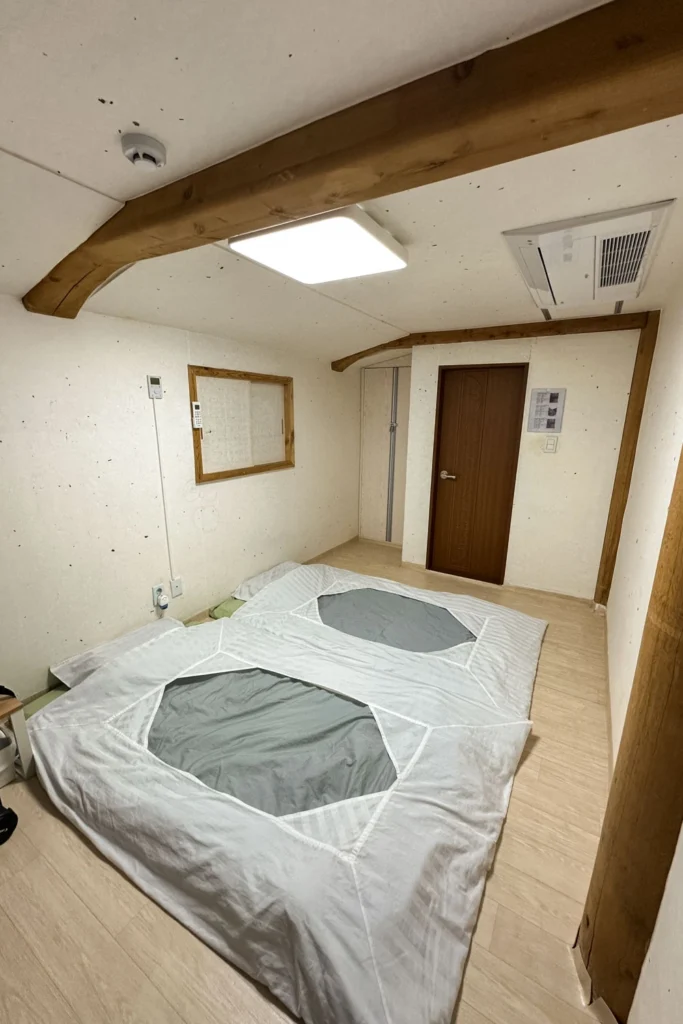
On arrival, we were led to a room to complete our check-in registration and pay for the stay (they accepted credit card). The staff provided us with our uniforms and bedding (traditional Korean floor mattresses and linen), and we then proceeded to our room to change into our temple attire.
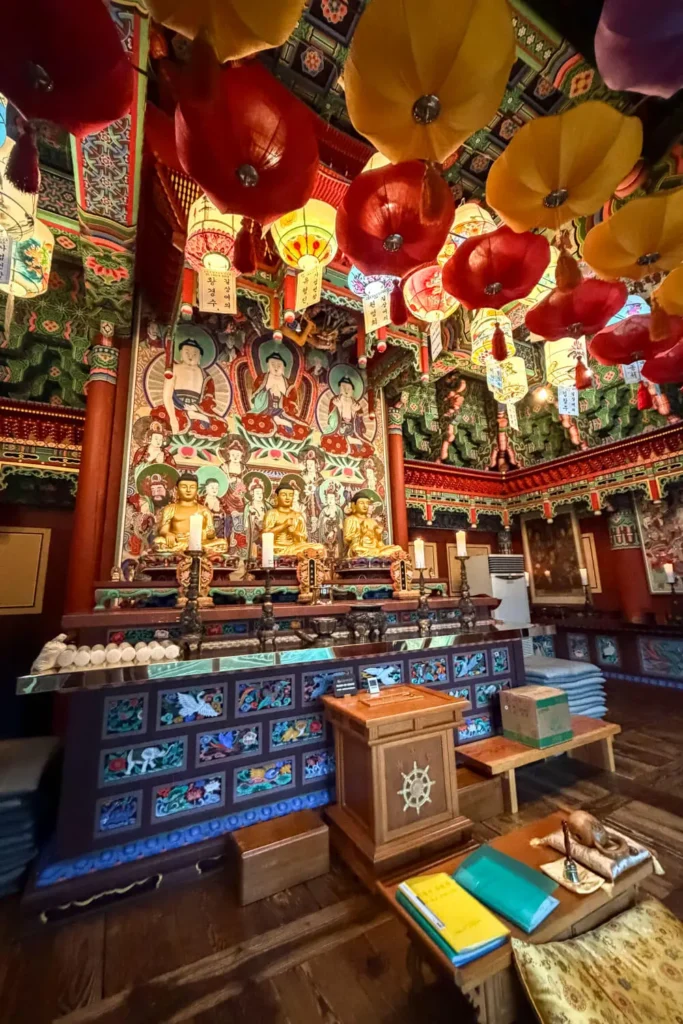
The program started with an orientation and temple tour, where the guide showed us around the temple grounds and the various spaces. She spoke both Korean and English, as our group had participants from mixed nationalities.
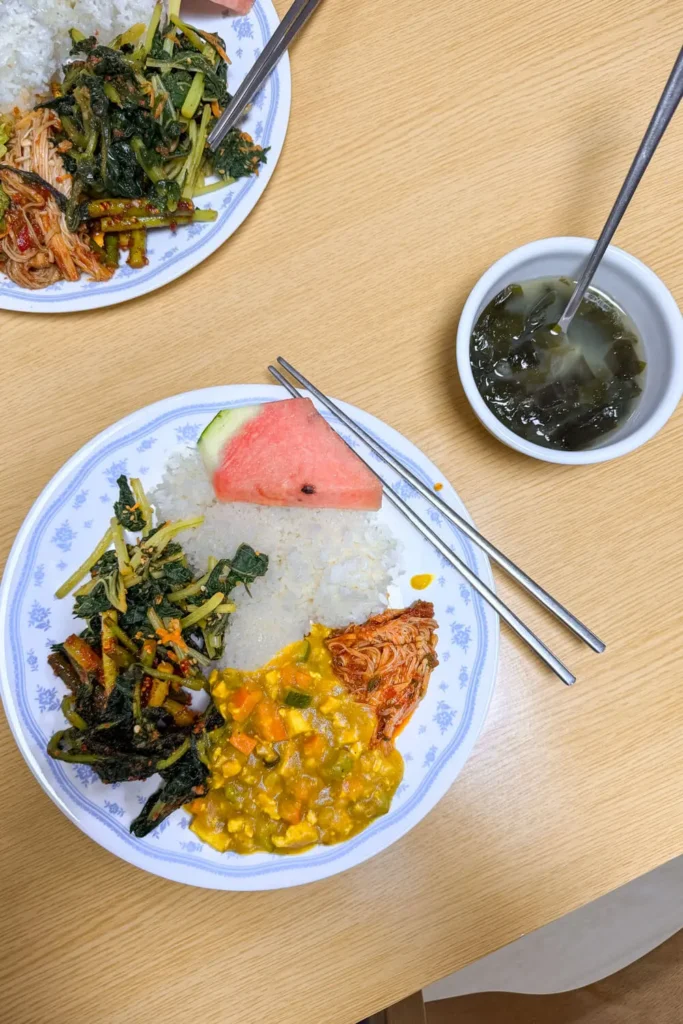
After the temple tour, we headed to the kitchen for dinner. The food served is a traditional Korean-style Buddhist vegetarian meal, including soup, vegetables, kimchi, rice, a vegetable stew or curry, and fruit. It’s served canteen-style, and each person is responsible for washing up their own dishes, as per the Buddhist custom.
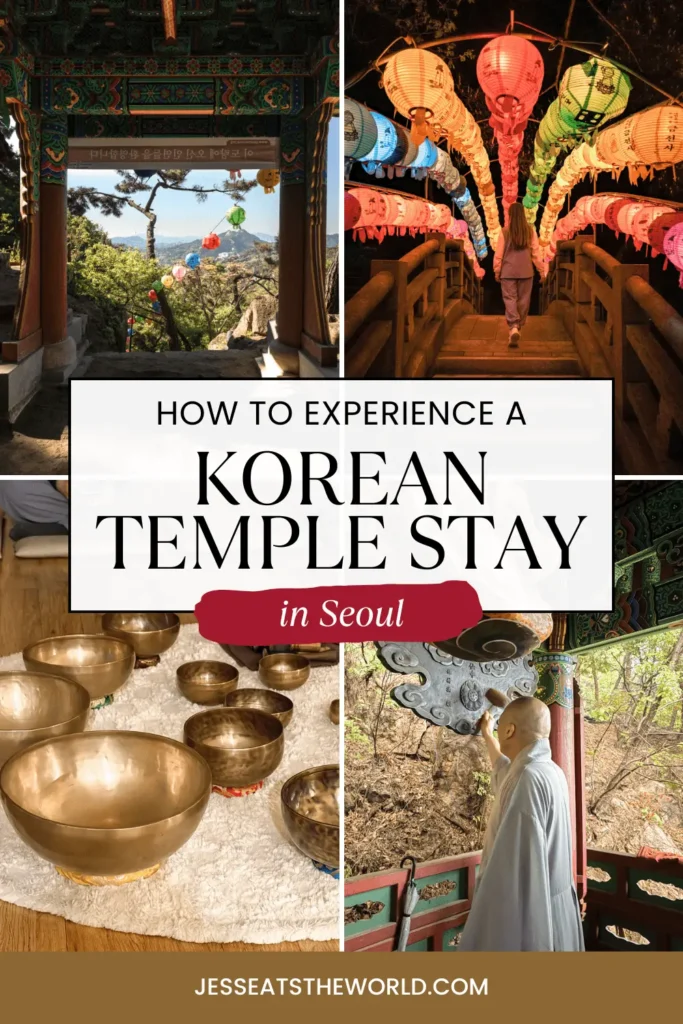
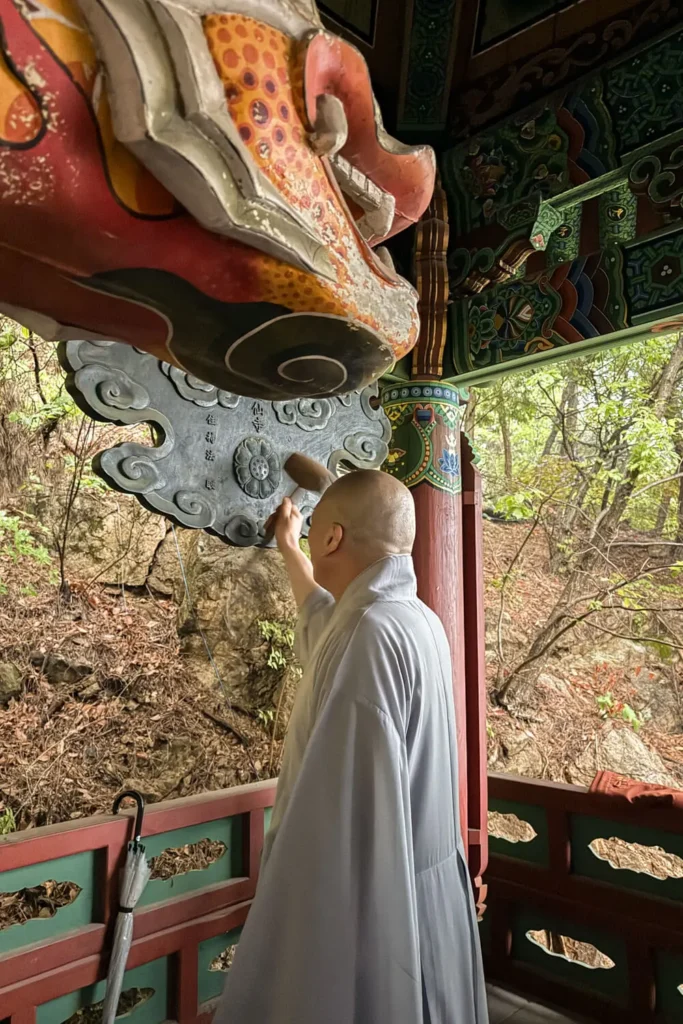
Following dinner, it was time for our session with the Temple’s head monk. We watched him perform the evening Dharma drum, ringing of the Bell, and chanting ceremony, before joining him to learn about the instruments. It was fun to have a go at ringing the Bell myself, too!
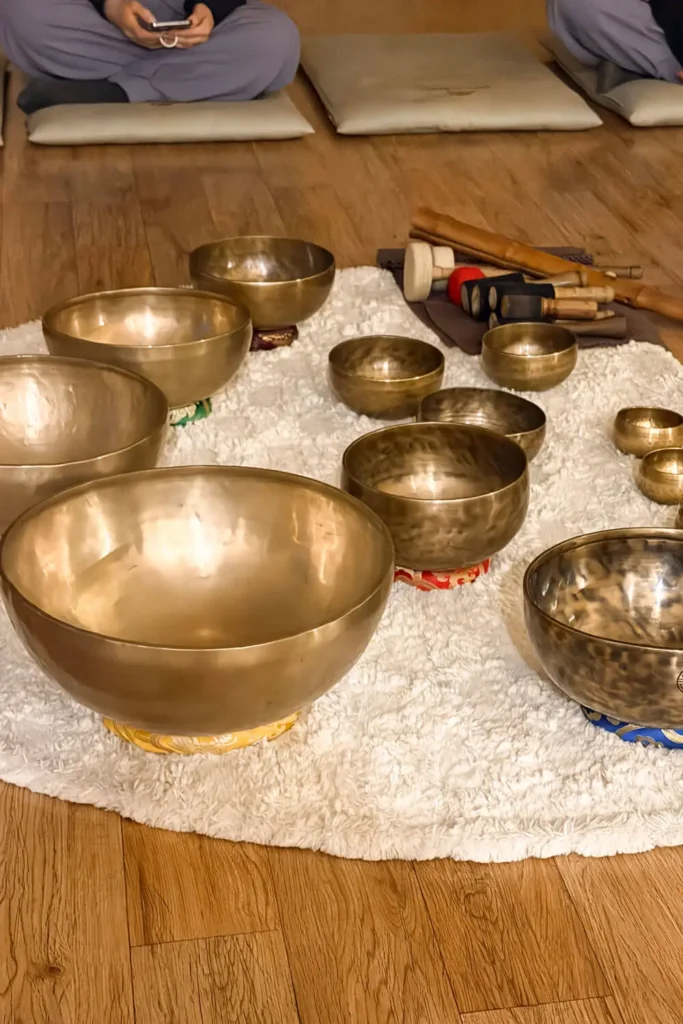
To end the day, we gathered in the Temple’s common room for a relaxing Singing Bowl meditation session. I always struggle to shut off my mind’s noise, but I was so relaxed that I may have dozed off a couple times!
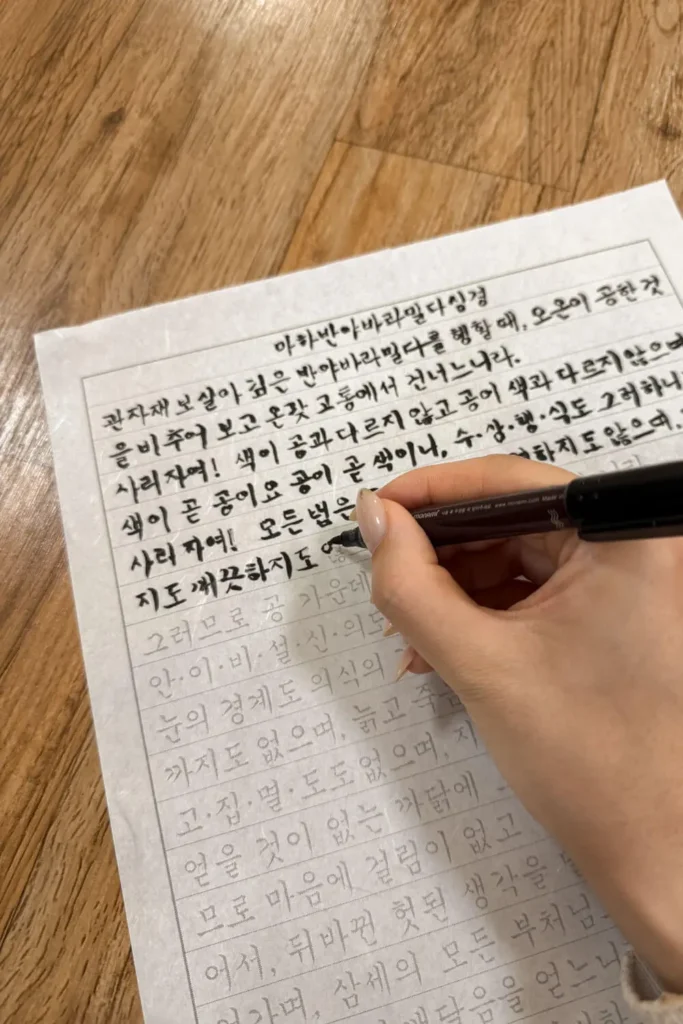
At the end of the session, we had free time to use the Singing Bowls and practise calligraphy before retreating to our rooms for lights-out time at 9:30 PM. This is relatively early because the Monk’s wake-up chant will start at 4:40 AM, ahead of the Dawn Buddhist Ceremony at 5 AM (not everyone joined this one, though!).
Tip: If this is your first time sleeping on a traditional Korean floor mattress, I recommend asking the temple staff if you can have two mattresses per person (especially for women).
I had a lot of trouble sleeping, as the temple mattresses were thinner than others I’d tried before, and my hip bones hurt from pressing against the floor. Doubling the mattresses for added cushioning definitely helps!
In the morning, breakfast was served back in the temple kitchen. Don’t expect an American or continental-style breakfast, though – you’ll be served Korean-style Buddhist cuisine, including rice, kimchi, vegetables, soup, and fruit.
After breakfast, there’s enough free time to tidy up your room and return the bedding and uniforms before checking out and leaving the Temple.
The staff were really kind all throughout our stay, and they even gifted us a Korean Buddhist bracelet from the Temple! This is something you can find at many souvenir shops across Korea, but to have one from a temple you stayed at is much more special, in my opinion!
FAQ: Seoul Temple Stay
Last thoughts
If experiencing a Buddhist temple stay is on your Korea bucket list, I hope my guide inspires and helps you to book yours in Seoul!
I’m very glad that I had this experience, and I actually consider it one of the must-dos for any trip to South Korea, regardless of whether it’s your first time visiting or not! I’m sure you will learn a lot and make meaningful memories from it.
Feel free to write any questions you may have in the comments – I’ll do my best to help!
Visiting soon? Check out my South Korea guides:
Looking to experience a temple stay in Seoul? Pin this guide to save it for later!